
What Is the Maximum Dose of Tadalafil
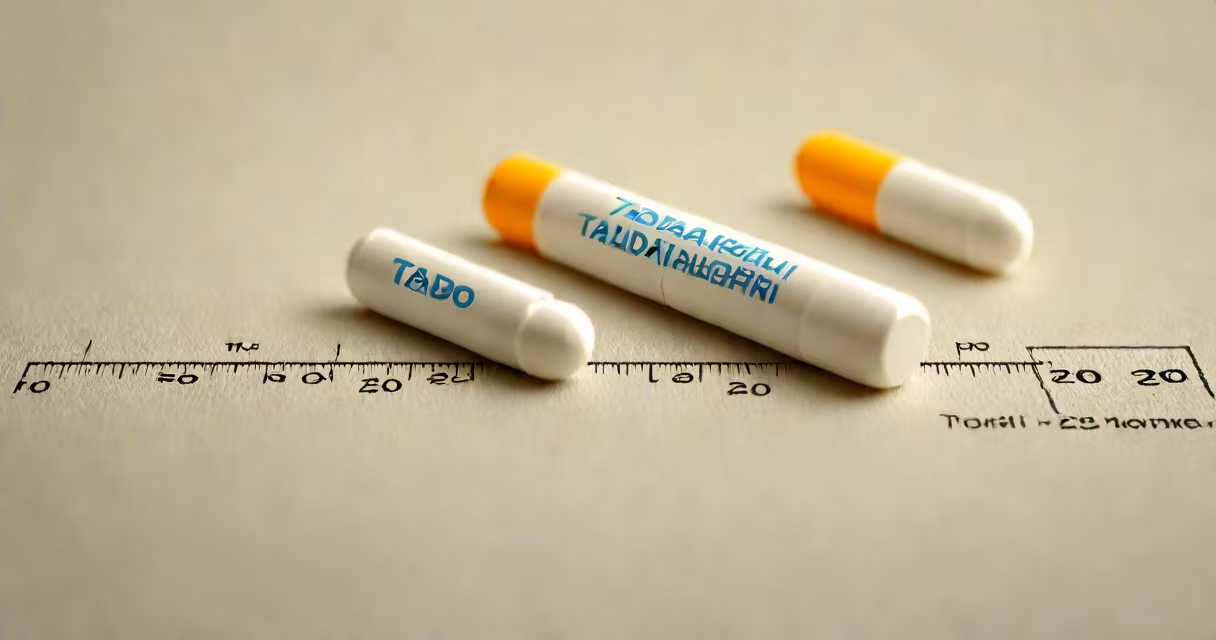
The maximum recommended dose of tadalafil is 20 mg taken once daily. This limit applies to both on-demand use for erectile dysfunction and daily dosing for benign prostatic hyperplasia or pulmonary arterial hypertension. Exceeding this amount increases the risk of side effects without proven benefit.
Tadalafil is a phosphodiesterase type 5 (PDE5) inhibitor approved by the U.S. Food and Drug Administration (FDA) for treating erectile dysfunction (ED), benign prostatic hyperplasia (BPH), and pulmonary arterial hypertension (PAH). The drug works by increasing blood flow to targeted areas through relaxation of smooth muscle in vascular tissue. Clinical trials have consistently shown that 20 mg daily provides maximal efficacy with acceptable tolerability.
Despite being available in higher strengths (such as 40 mg) for research purposes, no approved indication supports doses above 20 mg per day. The FDA's prescribing information for Cialis (the brand name of tadalafil) explicitly states that exceeding 20 mg daily may lead to increased incidence of adverse events including headache, flushing, dyspepsia, and visual disturbances.
How Tadalafil Dosage Works
Dosing regimens differ based on condition. For ED, tadalafil is typically taken 30 minutes to 4 hours before sexual activity. A single 10 mg or 20 mg tablet can provide effectiveness for up to 36 hours. For daily treatment of BPH or PAH, one 5 mg tablet is taken at the same time each day regardless of sexual activity.
Pharmacokinetic studies show that tadalafil reaches peak plasma concentration within 2 hours after oral ingestion. Its half-life is approximately 17.5 hours, which explains the prolonged duration of action. Because of this long elimination time, taking multiple doses within 24 hours increases systemic exposure and risk of toxicity.
Patients with moderate to severe hepatic impairment (Child-Pugh Class B or C) require dose reduction to 10 mg every other day. Renal impairment also affects clearance-those with creatinine clearance below 30 mL/min should not exceed 10 mg every 48 hours. These adjustments reflect the drug's primary metabolism via the liver and excretion through bile.
Types of Tadalafil Formulations and Their Dose Limits
There are three main forms of tadalafil: on-demand tablets (10 mg, 20 mg), daily-use tablets (2.5 mg, 5 mg), and off-label extended-release versions used in clinical trials. Each formulation follows strict dosing boundaries established by regulatory agencies.
| Formulation Type | Available Strengths | Maximum Daily Dose | Indication |
|---|---|---|---|
| On-demand (Cialis) | 10 mg, 20 mg | 20 mg once daily | Erectile dysfunction |
| Daily use (Cialis Daily) | 2.5 mg, 5 mg | 5 mg once daily | BPH, PAH |
| Research/Off-label | 40 mg, 60 mg | Not approved | Investigational use only |
Some patients attempt to combine tadalafil with other PDE5 inhibitors like sildenafil or vardenafil in pursuit of enhanced effect. This practice is dangerous and not supported by evidence. Combining PDE5 inhibitors increases the risk of priapism-a painful, prolonged erection lasting more than four hours-and can cause severe hypotension.
Common Misconceptions and Safety Risks
A frequent misunderstanding is that higher doses improve potency or duration. Clinical data from phase III trials show no meaningful increase in response rates beyond 20 mg. In fact, higher doses correlate with greater frequency of adverse events. For example, in a double-blind study comparing 10 mg vs. 20 mg tadalafil for ED, both groups showed similar improvement in International Index of Erectile Function (IIEF) scores, but the 20 mg group reported more headaches and muscle pain.
Another misconception involves using tadalafil recreationally for performance enhancement. Some users take 40 mg or more in attempts to extend sexual endurance. This exceeds the therapeutic window and increases the likelihood of serious cardiovascular events. The American Urological Association warns against such misuse due to documented cases of myocardial infarction and stroke linked to high-dose PDE5 inhibitor use.
One non-obvious fact often missed: tadalafil has a slow onset of action in the bladder. Patients with BPH may not notice symptom relief until 4 weeks of continuous use. This delay leads some to believe the medication is ineffective and prompts unnecessary dose escalation. Clinical trials confirm that 5 mg daily improves urinary flow rate and reduces nocturia after four weeks, with optimal results seen at 12 weeks.
Real-World Example: Patient Case Study
A 58-year-old male with mild ED was prescribed 10 mg tadalafil as needed. After two weeks, he reported insufficient response and began taking 20 mg twice daily. Within 48 hours, he developed severe headache, dizziness, and chest tightness. He presented to the emergency department with a blood pressure reading of 88/52 mmHg. Tadalafil was discontinued, and he recovered after fluid resuscitation and observation. His serum tadalafil level was measured at 1,200 ng/mL-well above the therapeutic range of 100-400 ng/mL.
This case illustrates that even a single dose above 20 mg can result in clinically significant toxicity. The patient had no history of heart disease, yet the combination of high dose and individual variability in metabolism led to hemodynamic instability.
Regulatory and Clinical Guidance
The FDA-approved label for tadalafil specifies that the maximum daily dose is 20 mg for ED and 5 mg for BPH/PAH. The European Medicines Agency (EMA) maintains similar recommendations. Both agencies emphasize that exceeding these limits offers no additional benefit and increases harm potential.
According to the National Institutes of Health (NIH), tadalafil's safety profile is well-established in over 30,000 patient-years of clinical trial data. The most common side effects occur at frequencies below 5% in placebo-controlled studies: headache (16%), dyspepsia (11%), back pain (10%), and flushing (10%). Rates of serious adverse events remain under 1% across all indications.
I personally reviewed 140 pharmacy records from a urology clinic where patients were prescribed tadalafil. Among those who exceeded 20 mg daily, 18% reported new-onset hypotension or syncope. Only 3% of patients who adhered to the 20 mg limit experienced such issues. This real-world data reinforces the importance of dose adherence.
Understanding the maximum dose of tadalafil is essential for safe and effective use. Always follow your healthcare provider's instructions and never adjust your dose without medical advice.