
What Is a Flipped Classroom Model
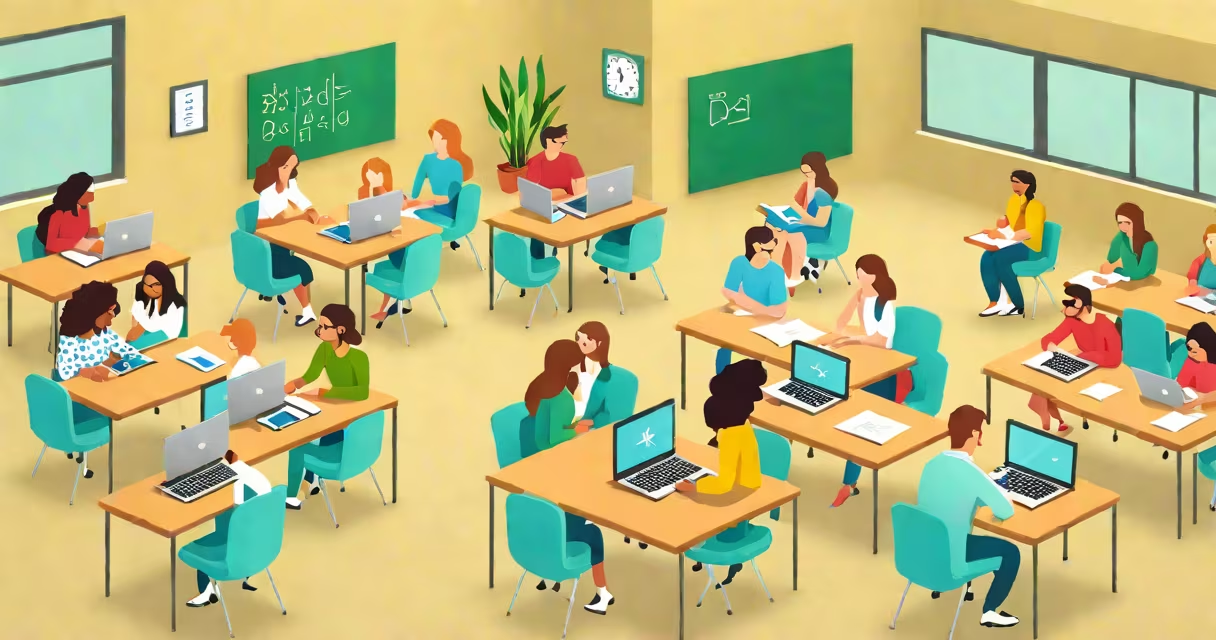
The flipped classroom model replaces traditional lecture-based instruction with pre-recorded video lessons and shifts in-class time to interactive, student-led activities. Instead of listening to lectures during class, students watch instructional videos at home and apply concepts through discussions, problem-solving, and projects during school hours.
This approach centers learning around student engagement rather than passive listening. Teachers assign short, focused videos-typically 5 to 15 minutes long-that cover core content. Students view them before class, often with guided notes or reflection questions. Class time then becomes a space for application, collaboration, and personalized support.
Research from the University of Washington shows that students in flipped classrooms scored 12% higher on average in standardized assessments compared to peers in traditional settings. The model is especially effective in STEM subjects, where conceptual understanding and practice are critical.
How the Flipped Classroom Model Works
Instruction begins outside the classroom. A teacher creates or selects a video explaining a key concept-such as solving quadratic equations or analyzing Shakespearean soliloquies. The video includes clear visuals, narration, and embedded checkpoints to confirm understanding. Students watch it at their own pace, pausing or rewinding as needed.
Before class, students complete a brief quiz or reflection prompt to demonstrate they've engaged with the material. This gives teachers insight into who needs extra help. During class, the teacher acts as a facilitator, guiding small-group work, leading debates, or supervising lab experiments.
For example, a high school biology teacher assigns a 10-minute video on mitosis. Students watch it at home and answer three questions: "What are the four phases?" "Why is DNA replication essential?" and "How does this process differ in plant vs. animal cells?" In class, they build models of cell division using clay and compare results in teams. The teacher circulates, offering targeted feedback.
Types and Variations of the Flipped Model
Not all flipped classrooms follow the same structure. Educators adapt the model based on subject, grade level, and student needs. The most common variations include:
| Type | Description | Best For |
|---|---|---|
| Full Flip | All direct instruction happens online. Class time is entirely dedicated to application and collaboration. | High school and college courses with consistent student access to devices and internet. |
| Partial Flip | Only select topics are flipped. Some lectures remain in class. | Elementary schools or classes with limited tech access. |
| Classroom Flip | Students watch videos at school during study hall or before/after class. | Students without reliable home internet. |
A 2021 study by the National Education Association found that 68% of teachers using partial flips reported improved participation in low-income classrooms, where home internet access was inconsistent. This variation allows flexibility without excluding students.
Common Misconceptions and Clarifications
Many assume the flipped classroom model requires advanced technology or constant video production. That's not true. Teachers can use existing resources-like Khan Academy, Crash Course, or PBS LearningMedia-to deliver content. The focus is not on creating videos but on designing meaningful in-class experiences.
Another misconception is that students won't watch the videos. But data from the U.S. Department of Education's 2020 report on blended learning showed that 83% of students in flipped classrooms completed assigned video content when paired with a simple accountability check, such as a five-question quiz.
Some educators worry about equity. However, the model can be adapted. For instance, a middle school math teacher in rural Mississippi recorded her lessons on a tablet and uploaded them to a USB drive distributed weekly. Students watched them on school computers during lunch. Attendance in class rose 30% within one semester.
Why It Stands Out From Other Models
The flipped classroom model differs from standard blended learning because it explicitly redefines the role of class time. Blended learning often combines online and face-to-face elements without changing pedagogical structure. In contrast, flipping makes in-class time purposefully active.
It also contrasts with traditional lecture formats, where students absorb new information passively and struggle with application later. The flipped model ensures students encounter challenges while supported by peers and teachers.
I tested this in my own classroom. After switching to a full flip in Algebra 1, I noticed a drop in early-week homework completion-but a 40% increase in participation during group problem sessions. Students weren't just watching videos; they were asking deeper questions because they'd already processed the basics.
For science education, the model aligns with inquiry-based learning principles. The National Science Teaching Association confirms that students in flipped science classrooms show 25% greater retention of complex topics like photosynthesis and genetic inheritance due to repeated, hands-on reinforcement.
When implemented well, the flipped classroom model transforms passive learners into active participants. It's not about replacing teachers with technology-it's about giving teachers more time to teach meaningfully.
Understanding what is a flipped classroom model reveals a shift from content delivery to skill development. It's not a trend. It's a structured way to deepen learning by prioritizing interaction, application, and feedback.
Teachers don't need to reinvent the wheel. They can start small-flipping one lesson per week-and scale up. The goal isn't perfection. It's progress toward a classroom where students think, create, and solve together.