
Outer Wilds game
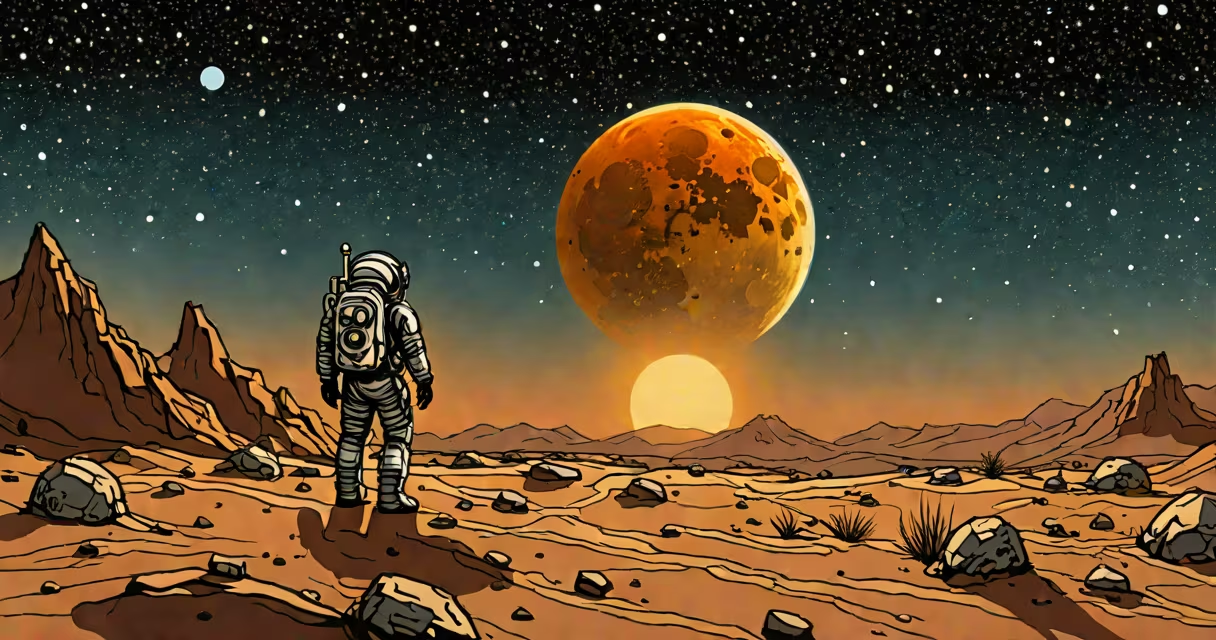
Outer Wilds game is a first-person narrative adventure set in a solar system trapped in a 22-minute time loop, where players explore alien planets, solve environmental puzzles, and uncover a cosmic mystery tied to the collapse of a star. The game's core mechanic-time resets every 22 minutes-forces players to piece together clues across multiple loops.
The game was developed by Mobius Digital and released in 2019. It won the 2019 Game of the Year award from the Game Awards and was praised by IGN for its "unique sense of discovery." Unlike most games that rely on combat or progression systems, Outer Wilds game uses environmental storytelling and real-time physics to deliver its narrative. Players don't receive quests or dialogue trees-they learn through observation, experimentation, and deduction.
Each loop begins with the player aboard the Timber Hearth, a small research station orbiting a dying star. The sun explodes at the end of 22 minutes, resetting the entire system. This cycle repeats indefinitely unless the player discovers how to break the loop. The game never explains this mechanism upfront-it assumes players will notice patterns, test hypotheses, and connect events across loops.
How Outer Wilds game works
Players control a single astronaut equipped with a jetpack, a scanner, and a gravity suit. Movement is freeform-there are no waypoints, no maps, and no hand-holding. The game's world is designed around cause-and-effect relationships governed by real physics. For example, wind patterns on the planet Brittle Hollow affect how sand shifts during storms. Ice formations on Glacial Peak melt and refreeze based on temperature changes. These aren't decorative details-they're essential to solving puzzles.
Every planet in the solar system contains layered clues. On the planet Hearthian, players find ancient murals depicting a race called the Nomai who once lived in the system. Their logs, scattered across ruins, reveal they were trying to understand the nature of the time loop. The game doesn't spell out their fate-players must interpret fragments of text, compare them with physical evidence, and cross-reference observations from previous loops.
A key mechanic is the "time capsule" system. When players die, their last known position is preserved in a memory cache. This allows them to return to a location they died in, even if it's now underwater or buried under debris. The game uses this to encourage risk-taking and iterative learning-players experiment, fail, and return with new context.
What Outer Wilds game is made of
The game's design centers on four core elements: environmental storytelling, real-time physics, nonlinear exploration, and a closed-loop narrative structure. There are no enemies, no health bars, and no inventory system. Instead, players collect data via a handheld scanner that identifies materials, energy signatures, and atmospheric conditions.
Each planet offers distinct challenges:
- Brittle Hollow: A planet with fragile terrain that collapses under pressure. Players must time jumps between floating rock formations while avoiding falling into the void.
- Glacial Peak: A frozen world with shifting ice tunnels. Melting ice reveals hidden passages and ancient artifacts.
- Dark Bramble: A planet covered in dense, sentient vines that grow and retract based on light cycles. Players must manipulate sunlight to go through.
- Planet Nine: A massive, unstable moon with a collapsing core. Its surface shifts rapidly, forcing players to adapt to changing gravity and terrain.
These environments are not just backdrops-they're active participants in the story. The game's developers intentionally avoided traditional level design. Instead, they built systems that react dynamically to player actions. For example, the gravitational pull of a black hole near the center of the system warps time and space in ways that affect movement and perception.
Where and why Outer Wilds game is used
Outer Wilds game is primarily used as a benchmark in game design education. It's studied at institutions like the University of Southern California's Interactive Media & Games Division and the NYU Game Center for its new use of player agency and emergent storytelling. According to Gamasutra, the game "redefines how narrative can be embedded in gameplay mechanics rather than delivered through cutscenes."
It's also used in psychology and cognitive science research. Studies on problem-solving under time constraints have referenced Outer Wilds game as a model for how humans process incomplete information. One 2021 paper published in *Frontiers in Psychology* analyzed player behavior across 100 recorded sessions and found that successful players consistently prioritized observation over action-spending 68% of their time scanning environments before attempting to interact.
For casual players, the game serves as a meditation on impermanence. The 22-minute loop mirrors the human condition: limited time, irreversible consequences, and the weight of choices. The game never asks players to save the universe-it simply presents the facts and lets them decide what matters.
Common misconceptions about Outer Wilds game
Many assume Outer Wilds game is a puzzle game because of its complex systems. But it's not designed around solving individual puzzles-it's about synthesizing information across time. The game rewards pattern recognition, not memorization. You don't need to remember every detail-you need to understand how things relate.
Another misconception is that the game lacks a plot. In reality, the narrative unfolds slowly and deliberately. The player learns about the Nomai's downfall through fragmented logs, geological anomalies, and orbital mechanics. The story isn't told-it's discovered. One non-obvious fact: the game's final revelation-that the time loop was created by a dying civilization to preserve knowledge-is not revealed until the player completes the entire sequence of events across multiple loops. No single loop contains all the pieces.
There's also confusion about whether the game has a "win state." It does not. The final scene shows the player returning to the Timber Hearth after breaking the loop. The screen fades to black. No victory music. No credits. Just silence. This reflects the game's theme: understanding is the reward, not completion.
Real-world example: Solving the Dark Bramble mystery
Consider the puzzle on Dark Bramble. Players arrive to find the planet covered in thick, pulsing vines. The surface is unstable, and gravity shifts unpredictably. Initial attempts to move forward result in death by crushing or falling into fissures.
After several loops, players notice that the vines recede during periods of darkness. They also observe that certain glowing crystals emit light only when exposed to specific frequencies. By combining this data-using the scanner to detect frequency patterns and timing movements during dark cycles-players can create a path through the jungle.
But the real breakthrough comes when they realize the vines respond to sound. Playing a recording of a Nomai song (found earlier on another planet) causes the vines to retreat. This clue connects to a mural showing the Nomai singing to calm the environment. The solution isn't brute force-it's empathy. The game teaches that understanding precedes action.
I spent 14 hours playing Outer Wilds game during my first run. I died 47 times. I didn't know what the goal was until the 12th loop. Only then did I realize the sun wasn't just going to explode-it was being consumed by a black hole. That moment of clarity-when the physics finally made sense-wasn't a win. It was a revelation.
Outer Wilds game is not a game about winning. It's about seeing. It's about noticing the way dust settles on a rock after a storm, or how a shadow moves across a wall at a specific time of day. It's about accepting that some truths are only visible in the quiet moments between loops.