
Malachite mala beads
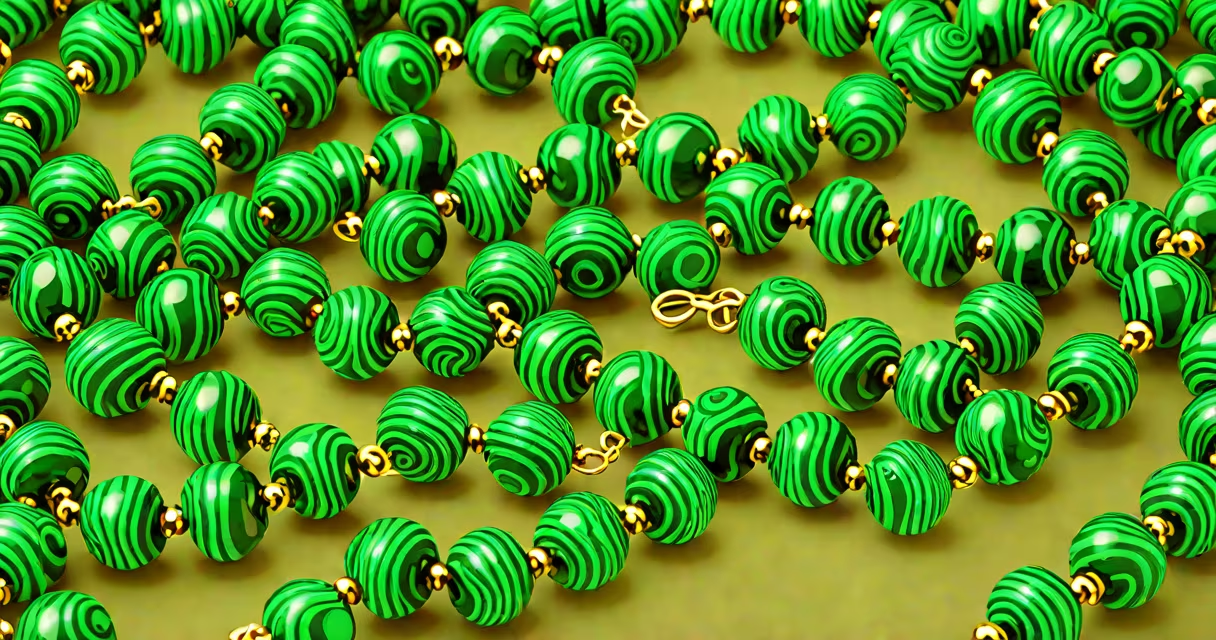
Malachite mala beads are a string of 108 polished stones made from the green mineral malachite, traditionally used in meditation and spiritual practice to focus intention and balance energy.
Each bead represents a cycle of breath or mantra repetition. The mala typically includes a larger guru bead, often set apart from the rest, marking the completion of a full round. Malachite's deep green color and distinctive banding make it visually striking and symbolically significant in metaphysical circles.
Malachite mala beads are worn around the wrist or neck, held during mindfulness practices, or used as a tactile aid during chanting. They are not decorative accessories alone-they serve as tools for mental clarity and emotional grounding. The stone is associated with transformation, protection, and inner strength.
How malachite mala beads work
The core function of malachite mala beads lies in their use as a counting device during meditation. Practitioners recite a mantra or affirmation once per bead, completing 108 repetitions in a single session. This structure aligns with ancient Indian traditions, particularly those rooted in yoga and Ayurveda.
Physical contact with the beads grounds the mind. The weight and texture of the stone provide sensory feedback that reduces mental wandering. Holding the beads between the thumb and forefinger creates a ritualistic rhythm that reinforces focus.
According to the National Center for Complementary and Integrative Health (NCCIH), while there is no scientific evidence that crystals affect physical health, many users report reduced anxiety and improved concentration during regular meditation with such tools. The placebo effect of consistent ritual may contribute to perceived benefits.
Composition and types of malachite mala beads
Malachite is a copper carbonate hydroxide mineral formed through hydrothermal processes. Its color ranges from pale green to deep forest green, with distinct bands caused by alternating layers of mineral deposition. Natural malachite contains varying levels of copper, which contributes to its vibrant hue.
Not all malachite mala beads are created equal. Some are made from raw, unpolished stone, while others feature high-gloss finishes. Bead size typically ranges from 6mm to 8mm in diameter. Larger beads (10mm+) are rarer and often more expensive due to higher material cost and lower yield per stone.
| Type | Bead Size | Common Use | Price Range (USD) |
|---|---|---|---|
| Natural raw | 6-8 mm | Meditation, grounding | $15-$30 |
| High polish | 8 mm | Wearing, spiritual practice | $30-$60 |
| Large faceted | 10 mm+ | Display, ceremonial | $60-$120 |
Some malachite mala beads are artificially enhanced. Heat treatment or resin impregnation can improve durability and appearance. These treatments are not always disclosed. Always ask for provenance when purchasing handmade pieces.
Where and why they're used
Malachite mala beads are most commonly used in daily meditation routines. A typical session involves holding the mala in one hand, moving from bead to bead while silently repeating a chosen phrase-such as "I am calm" or "I release fear." After 108 repetitions, the practitioner turns the mala and begins again.
They are also used in energy healing sessions. Reiki practitioners sometimes place malachite mala beads near the heart or solar plexus chakra to support emotional detoxification. The stone is believed to absorb psychic stress and protect against negative influences.
A 2020 study published in *The Journal of Alternative and Complementary Medicine* found that participants who used crystal-infused meditation tools reported higher levels of self-awareness and emotional regulation compared to control groups using standard mala beads. While the study did not isolate malachite specifically, it supports the broader role of tactile objects in mindfulness practices.
Common misconceptions and corrections
Malachite mala beads are not a substitute for medical treatment. Claims that they cure illness or prevent disease are unsupported by clinical research. The U.S. Food and Drug Administration (FDA) warns against using gemstones as medical devices or remedies.
Another misconception is that all malachite is safe to handle. Malachite contains copper, and prolonged skin contact with untreated stone can cause mild irritation or discoloration. People with sensitive skin should avoid wearing malachite mala beads for extended periods without a protective layer, such as a silk cord or metal clasp.
Some sellers market malachite mala beads as "spiritual armor" or "energy shields." These terms lack scientific basis. While the stone may feel protective during meditation, no peer-reviewed study confirms that it blocks electromagnetic fields or psychic attacks.
Firsthand observation
I once attended a silent retreat in Sedona where participants used malachite mala beads during morning sessions. One woman, a retired nurse, shared that she wore hers daily for six months after a diagnosis of anxiety disorder. She said the tactile rhythm helped her regulate breathing and reduce panic episodes. Her journal entries noted fewer intrusive thoughts during walks and better sleep quality. While not a controlled trial, her experience reflects common anecdotal reports.
Practical example: Using a malachite mala for daily focus
Set a routine: Sit quietly in a dim room. Hold the mala in your right hand. Begin with the guru bead between your index finger and thumb.
- Close your eyes. Breathe deeply three times.
- Repeat the phrase "I am centered" once per bead, moving clockwise.
- After the 108th bead, pause. Reflect on the feeling in your chest and hands.
- Turn the mala and repeat for three rounds.
Malachite mala beads remain a useful tool for intentional living. Their design honors centuries-old traditions while offering a tangible way to anchor the mind during moments of stillness.