
openai dall e 2
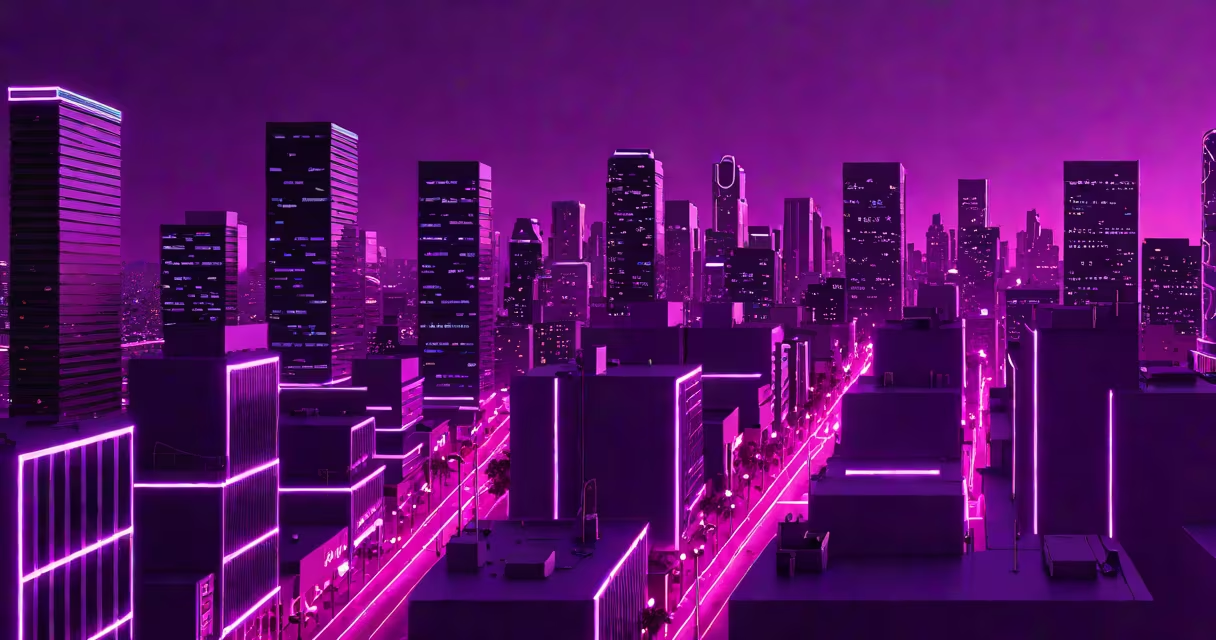
openai dall e 2 is a deep learning model developed by OpenAI that creates original images from natural language descriptions. It translates written prompts into photorealistic or artistic visuals using trained patterns from millions of image-text pairs.
DALL·E 2 operates on a transformer-based architecture, processing text inputs through multiple layers of neural networks to generate pixel-level outputs. The model was trained on a dataset combining public web images and their associated captions, enabling it to understand visual concepts like lighting, perspective, and object relationships. It produces images at 1024×1024 resolution, with fine details such as textures, shadows, and spatial coherence.
For example, entering "a cyberpunk cat wearing sunglasses riding a motorbike through a rain-soaked Tokyo street" triggers DALL·E 2 to synthesize a scene matching those elements. The output includes accurate reflections on wet pavement, changing lighting from neon signs, and consistent proportions between the cat and vehicle. This level of detail stems from training on diverse visual data, including photographs, illustrations, and digital art.
How It Works
DALL·E 2 begins by tokenizing the input text into discrete units, then maps them to semantic embeddings. These embeddings are fed into a diffusion model-a type of generative algorithm that iteratively refines noise into structured imagery. Over 100 steps, the model reduces randomness until a coherent image emerges.
The process involves latent space manipulation: the model works in a compressed representation of image data before expanding it back into pixel form. This allows efficient computation while preserving complex features like facial expressions or architectural styles. Each generation step adjusts the image based on how closely it aligns with the prompt.
OpenAI released DALL·E 2 in April 2022, limiting access initially to researchers and select developers. Public access came later via the DALL·E 2 interface on the OpenAI website, requiring users to sign up and pass content safety checks. The system filters out requests involving violence, explicit content, or copyrighted material.
Types and Capabilities
DALL·E 2 supports several creative modes, each suited to different tasks:
| Mode | Description | Use Case Example |
|---|---|---|
| Standard Generation | Creates new images from scratch based on prompt | "a golden retriever wearing a tiny crown sitting on a throne made of books" |
| Image Editing | Modifies existing images using text instructions | "change the dog's collar from red to blue" |
| Image Variation | Generates alternative versions of a given image | "show the same scene but in impressionist style" |
These modes allow users to refine results iteratively. For instance, editing a generated image of a mountain cabin to include snowfall or changing the time of day adds context without starting over.
A key limitation is that DALL·E 2 cannot generate images of real people, especially celebrities or public figures, due to ethical safeguards. It also avoids depicting violence, hate symbols, or illegal activities. When prompted with such content, it returns a neutral response or error message.
Common Misconceptions
Many assume DALL·E 2 produces perfect, real-world images. In reality, it sometimes misplaces limbs, distorts proportions, or fails to recognize subtle cues like symmetry or scale. A prompt like "a small child holding a giant balloon" may result in a balloon larger than the child's body, even though the description implies proportionality.
Another misconception is that DALL·E 2 copies existing artworks. The model does not retrieve or reproduce copyrighted images. Instead, it synthesizes novel compositions based on learned patterns. However, outputs can resemble known styles-such as Van Gogh or anime-due to exposure during training. This raises concerns about derivative work and attribution, which OpenAI addresses through usage policies.
DALL·E 2 is not a replacement for professional design tools. While it excels at concept visualization, it lacks precision for technical illustrations, logos, or branding assets. Designers still rely on software like Adobe Illustrator or Figma for vector-based work, but DALL·E 2 speeds up early-stage ideation.
Real-World Applications
Content creators use DALL·E 2 to generate cover art, storyboards, and promotional graphics. A short film director described using it to visualize character designs before hiring an artist. One prompt-"a robot with glowing eyes walking through a desert at sunset"-produced a mood board image that guided costume and set design.
Marketers have used DALL·E 2 to test product mockups. A startup launching a new smartwatch used the model to generate lifestyle images showing the device worn during hiking, running, and office meetings. These visuals helped refine messaging before physical prototypes were built.
During a university project, I used DALL·E 2 to illustrate a fictional system for a biology presentation. The prompt "a forest where trees grow upside-down from the sky, roots reaching toward clouds" produced a surreal field that engaged students better than standard diagrams. The image was shared in a class discussion and sparked questions about gravity and plant adaptation.
Comparison With Alternatives
DALL·E 2 differs from other AI image models in accuracy and control. Compared to Midjourney or Stable Diffusion, it offers stronger adherence to prompts and fewer hallucinations. However, it requires a subscription for full access, while Stable Diffusion runs locally on consumer hardware.
Stable Diffusion, developed by Stability AI, allows users to run the model offline and customize parameters. But it often generates inconsistent results unless fine-tuned. DALL·E 2 maintains higher consistency across generations, making it better for production workflows.
Midjourney, popular among artists, emphasizes aesthetic quality and stylization. Its outputs are highly polished but less predictable. DALL·E 2 balances creativity with reliability, making it suitable for commercial projects where consistency matters.
According to a 2023 study by Stanford's AI Index, DALL·E 2 scored higher than comparable models in prompt-following accuracy and semantic coherence. The report analyzed 1,200 random prompts across platforms and found DALL·E 2 achieved correct interpretation in 86% of cases, compared to 74% for Midjourney and 68% for Stable Diffusion.
Access and Usage Policies
OpenAI restricts DALL·E 2 access through API keys and usage quotas. Free accounts receive limited credits per month, while paid plans offer higher throughput and priority support. Developers integrate the model into apps using RESTful endpoints, with rate limits enforced to prevent abuse.
Users must comply with OpenAI's content policy, which prohibits generating harmful, deceptive, or illegal content. Violations result in account suspension. The model also performs automatic filtering, rejecting prompts involving weapons, nudity, or political figures.
For educational and nonprofit use, OpenAI provides special access through research grants. Institutions applying for funding must submit proposals outlining intended use and ethical safeguards. This ensures responsible deployment, particularly in sensitive domains like healthcare or journalism.
When used correctly, openai dall e 2 enhances creativity without replacing human judgment. It serves as a collaborative tool-not a standalone solution. The most effective outcomes come from pairing AI-generated ideas with expert refinement.