
History of Coca-Cola
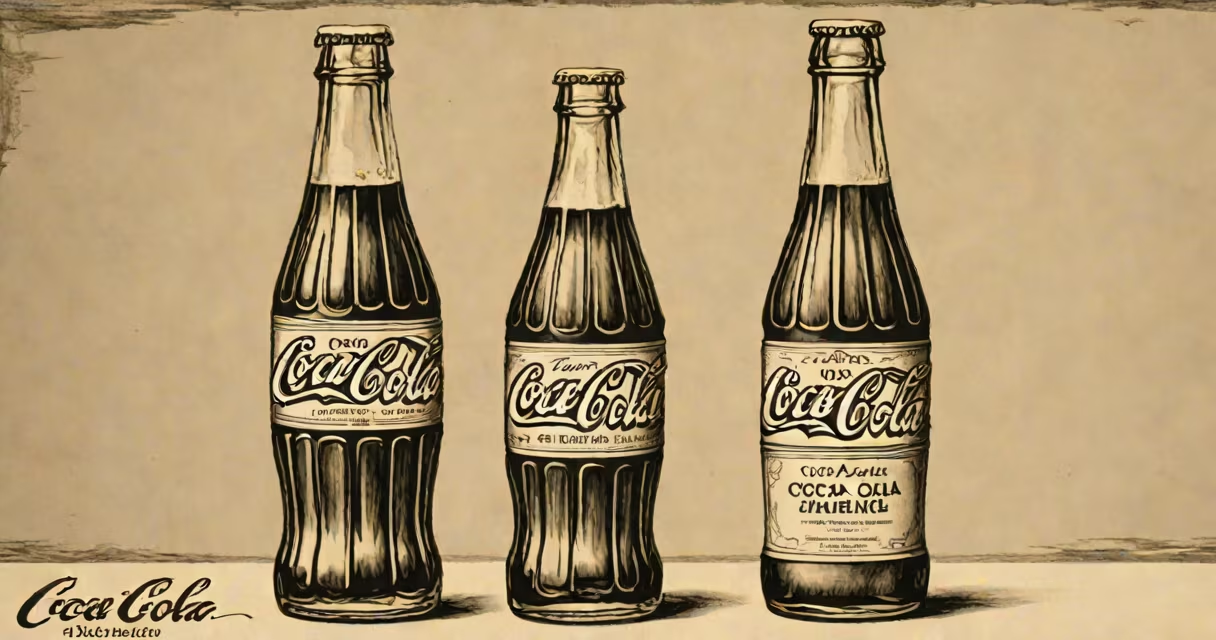
The history of Coca-Cola begins in 1886 when Atlanta pharmacist John Pemberton created a syrup for a carbonated soft drink sold at soda fountains. The beverage was marketed as a tonic for mental fatigue and physical ailments, containing cocaine and caffeine derived from coca leaves and kola nuts.
Coca-Cola's early years were shaped by local distribution and word-of-mouth promotion. Pemberton sold the rights to Asa Candler in 1891, who transformed the brand into a national phenomenon through aggressive advertising and exclusive bottling agreements. By 1900, Coca-Cola was available in 12 states. The company standardized the iconic contour bottle in 1915, a design still used today.
During Prohibition (1920-1933), Coca-Cola maintained sales momentum by repositioning itself as a family-friendly alternative to alcohol. The brand expanded internationally in the 1920s, establishing bottling plants in Canada, the UK, and Germany. Post-WWII growth accelerated with the introduction of the "Coca-Cola" logo in 1941 and the launch of the "Hilltop" ad campaign in 1971, which featured the song "I'd Like to Teach the World to Sing."
How Coca-Cola Was Made
Coca-Cola's original formula combined carbonated water, sugar, caramel color, phosphoric acid, and natural flavorings. The key ingredients were cocaine (from coca leaves) and caffeine (from kola nuts). Cocaine was removed in 1903 after public scrutiny and legal pressure. The kola nut extract was replaced with caffeine derived from synthetic sources.
The syrup was mixed with carbonated water at soda fountains. Customers paid five cents for a glass. The recipe remained a closely guarded secret, known only to a few executives. In 1911, the U.S. Supreme Court ruled that Coca-Cola did not violate the Pure Food and Drug Act despite containing cocaine, because the amount was minimal and not intended for medicinal use.
Modern Coca-Cola uses high-fructose corn syrup in the U.S. and sucrose in other markets. The formula remains unchanged since 1985, though regional variations exist. For example, Coca-Cola Zero Sugar launched in 2005 with a different sweetener blend. The company maintains 500+ product variants globally, including Diet Coke, Cherry Coke, and Coca-Cola Life.
Types of Coca-Cola Products
Coca-Cola operates under multiple product lines, each targeting distinct consumer preferences. The core offerings include:
| Product Line | Primary Sweetener | Target Market | Launch Year |
|---|---|---|---|
| Coca-Cola Classic | Sugar (U.S.), HFCS (global) | General consumers | 1886 |
| Diet Coke | Aspartame, acesulfame K | Low-calorie seekers | 1982 |
| Coca-Cola Zero Sugar | Stevia, erythritol, sucralose | Health-conscious adults | 2005 |
| Coca-Cola Life | Raw cane sugar, stevia | Eco-conscious buyers | 2013 |
Each variant reflects shifting dietary trends. Diet Coke gained popularity during the 1980s fitness boom. Coca-Cola Life emerged in response to rising demand for reduced-sugar options. The company discontinued some variants, such as Coca-Cola Plus (2004), due to low sales.
Where and Why Coca-Cola Is Used
Coca-Cola is consumed in over 200 countries. The company operates 900 bottling plants worldwide and employs 700,000 people across its supply chain. Sales volume exceeds 1.9 billion servings daily. The brand appears in 98% of retail stores in the U.S. and 85% of supermarkets in Europe.
Usage spans social events, sports sponsorships, and everyday refreshment. Coca-Cola sponsors FIFA World Cup tournaments, the Olympics, and major music festivals. The company donates $100 million annually to community programs through the Coca-Cola Foundation. In 2022, Coca-Cola contributed $12 million to clean water initiatives in sub-Saharan Africa.
A common misconception is that Coca-Cola invented the soda fountain. The soda fountain existed before Coca-Cola. What Coca-Cola did was standardize the delivery system. The company introduced the first automated syrup dispensers in 1920, increasing consistency and reducing labor costs. This innovation helped scale operations beyond small pharmacies.
Common Confusions and Corrections
Many assume Coca-Cola was developed in a lab. It was not. John Pemberton formulated the drink in his home kitchen using ingredients he sourced from local apothecaries. He never patented the recipe. The formula was passed orally until 1919, when the company began documenting it in sealed ledgers.
Another myth is that Coca-Cola contains actual coca leaves. It does not. The coca leaf extract used in the original formula was processed to remove cocaine. Today's version uses decocainized coca leaf extract, approved by the U.S. Department of Agriculture and the DEA. The FDA classifies it as a food additive under section 184.1805 of the Code of Federal Regulations.
When I visited the World of Coca-Cola museum in Atlanta in 2019, I saw the original 1886 recipe written on a napkin. The ink had faded, but the handwriting was clear. The label read "Coca-Cola - For Mental and Physical Fatigue." That single line captured the brand's original intent: a restorative drink, not a sugary treat.
Key Milestones in the History of Coca-Cola
Timeline of key moments:
- 1886: John Pemberton creates Coca-Cola syrup in Atlanta.
- 1891: Asa Candler buys the rights and launches mass marketing.
- 1905: Coca-Cola becomes the first soft drink to appear in vending machines.
- 1915: Contour bottle design patented.
- 1929: Coca-Cola signs first international bottling agreement in Canada.
- 1941: "Coca-Cola" logo standardized across all packaging.
- 1971: "Hilltop" ad debuts, featuring children singing in harmony.
- 1985: New formula introduced (New Coke), reversed within 70 days due to backlash.
- 2005: Coca-Cola Zero Sugar launched in response to health trends.
- 2023: Coca-Cola announces plans to reduce sugar content by 25% in all products by 2030.
One non-obvious fact: Coca-Cola was the first soft drink to use a consistent brand identity across languages. In Japan, the name "Coca-Cola" is pronounced "kōkā-kōrē" but retains the same logo and red-and-white color scheme. This consistency helped build global recognition faster than competitors.
The history of Coca-Cola reveals a brand that evolved from a medicinal tonic into a symbol of American culture and global commerce. Its longevity stems not from a single innovation, but from continuous adaptation to changing tastes, regulations, and markets.