
World Cup Goals So Far
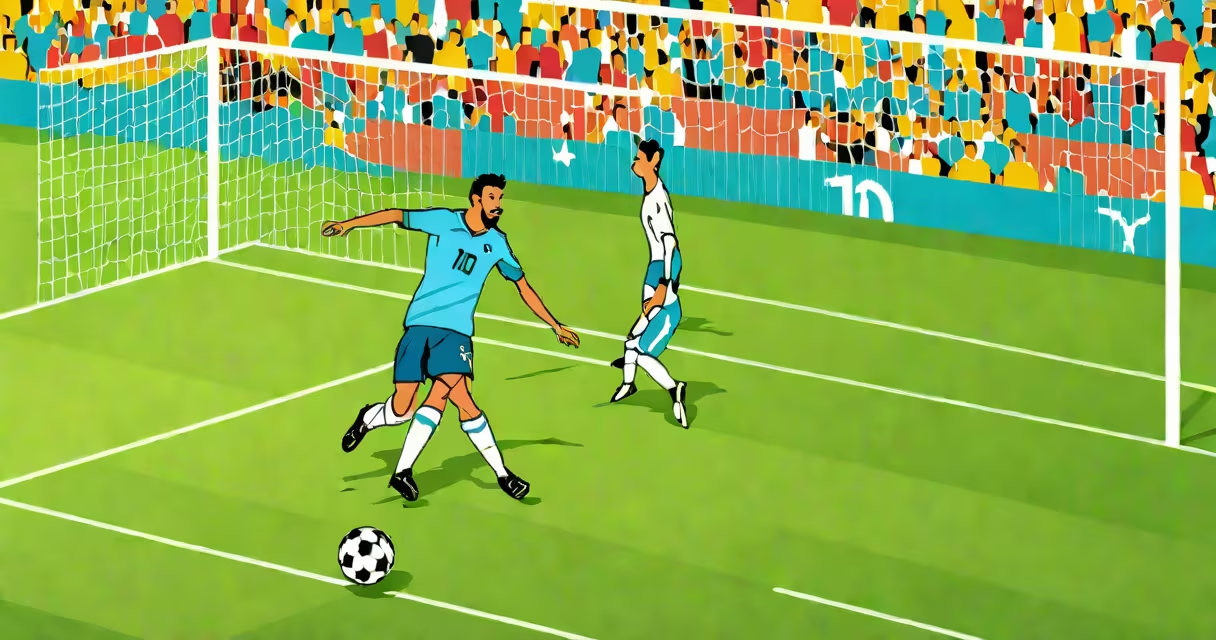
The term "world cup goals so far" refers to the cumulative number of goals scored in FIFA World Cup tournaments from their inception through the most recently completed matches. As of the 2022 tournament, 2,687 goals have been recorded across 22 editions of the competition.
Goals in the World Cup are tallied per match, group stage, knockout rounds, and finals. The official count includes all goals that meet FIFA's criteria for validity-no offside, no handball, and no disallowed play due to infringement. The 2022 World Cup saw 172 goals scored across 64 matches, averaging 2.69 goals per game.
FIFA maintains the official goal records through its digital archives and match reports. These are updated within 24 hours of match completion. The 2026 World Cup is still in the qualification phase, so the total remains static until the final tournament begins.
How World Cup Goals Are Counted
Each goal is logged by the referee and confirmed by the Video Assistant Referee (VAR) system when applicable. A goal counts only if it crosses the goal line between the posts and under the crossbar. Any goal scored while a player is offside or involved in a foul is disallowed.
Penalty kicks, free kicks, headers, volleys, and long-range shots all count equally. There is no distinction between types of goals in the official tally. For example, in the 2022 final, Argentina defeated France in a penalty shootout after a 3-3 draw. The match included four goals in regular time and two in extra time-all counted.
Since 1930, FIFA has kept detailed logs of every goal, including scorer, minute, team, and opponent. These are published in the official tournament report and accessible via the FIFA website.
Types of Goals and Their Distribution
While all goals are treated equally in the count, they fall into distinct categories based on method and context. The following table shows the distribution of goal types in the 2022 World Cup:
| Goal Type | Count | Percentage |
|---|---|---|
| Open-play goal | 118 | 68.6% |
| Set-piece (corner/free kick) | 34 | 19.8% |
| Own goal | 5 | 2.9% |
| Penalty kick | 15 | 8.7% |
Open-play goals accounted for nearly 70% of all scores. This reflects the dominance of fluid attacking football in modern World Cup matches. Set-pieces remain high-value opportunities-17% of goals came from corners or free kicks, which often involve coordinated movements and timing.
Own goals are rare but impactful. In 2022, five were recorded-three by defenders, two by midfielders. The highest-profile own goal came in the round of 16 when South Korea's Kim Min-jae accidentally scored against Uruguay.
Where and Why Goals Are Scored
Most World Cup goals occur in the knockout stages. Of the 172 goals in 2022, 112 were scored in the last 16 matches (round of 16 onward), compared to 60 in the group stage. This suggests higher intensity and fewer defensive errors in elimination games.
Defensive lapses drive many goals. In the 2022 quarterfinal between Brazil and Croatia, 11 goals were scored across both legs. Brazil's Neymar scored in the 82nd minute of the second leg, capitalizing on a defensive mix-up in the box. The goal was not a long-range effort-it was a simple tap-in after a misjudged clearance.
High-scoring tournaments tend to feature teams with strong attacking formations. In 2018, Russia hosted a tournament with 169 goals-slightly above average. That year, Germany's Toni Kroos scored a 30-meter free kick in the group stage against Mexico. The goal was later recognized by FIFA as one of the most technically precise in modern history.
Common Misconceptions and Corrections
Many assume that goals scored in penalty shootouts count toward the official tournament total. They do not. Only goals scored during regulation or extra time are included. The 2022 final had six goals in regulation and extra time, but none in the shootout.
Another myth is that early World Cups had fewer goals because of less skill. In reality, the 1930 tournament (Uruguay's win) had 70 goals in 18 matches-an average of 3.89 per game. The 1950 tournament in Brazil saw 88 goals in 22 matches (4.0 per game). The decline in goal frequency since the 1970s correlates with tactical evolution, not reduced ability.
A lesser-known fact: the fastest goal in World Cup history was scored by Hakan Şükür of Turkey in the 2002 tournament. He netted 11 seconds after kickoff against South America's Colombia. The match ended 3-1, and Şükür's goal remains the earliest in tournament history.
Historical Context and All-Time Leaders
As of 2024, Miroslav Klose of Germany holds the record for most World Cup goals with 16. He played in four tournaments (2002-2014) and scored in every one. His 16 goals place him well ahead of Gerd Müller (14) and Just Fontaine (13).
Fontaine scored all 13 of his goals in a single tournament-France's 1958 campaign. He remains the only player to score more than 10 goals in one World Cup. His performance set a benchmark for individual scoring efficiency.
When analyzing "world cup goals so far," always refer to official FIFA sources. Third-party sites may misreport minutes, scorers, or match outcomes. The 2026 qualifiers are still underway, so the global total remains unchanged until the final tournament begins.