
What Is Meant by Cognitive Development
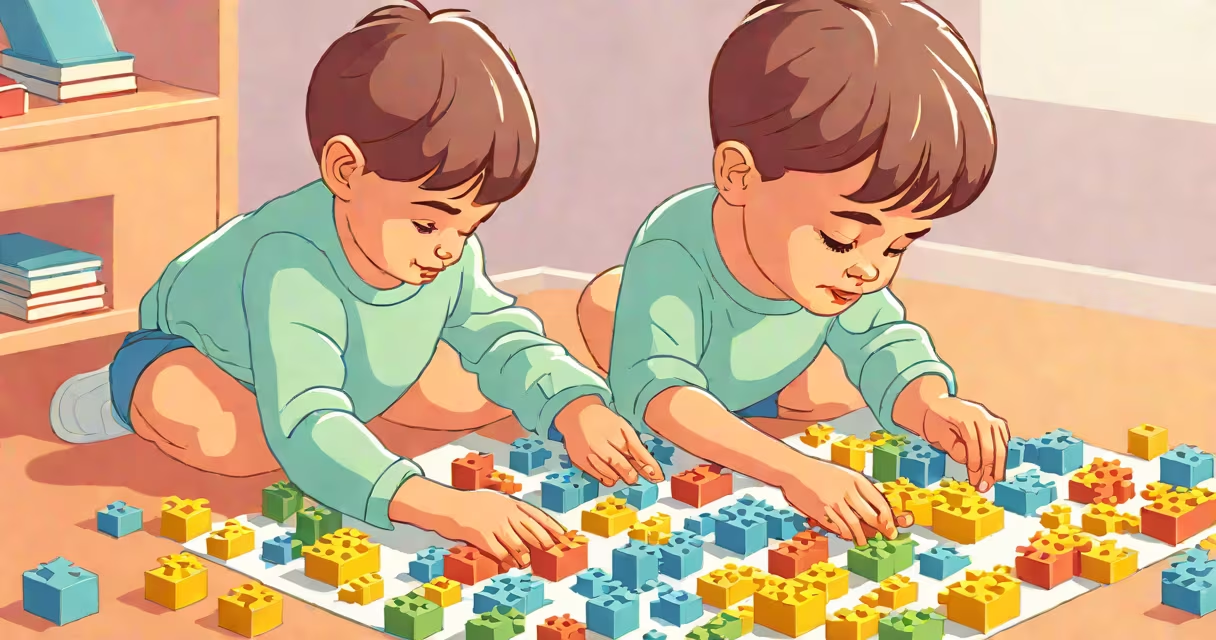
Cognitive development describes the progressive growth of mental processes such as memory, reasoning, problem-solving, language, and perception from infancy to adulthood. It reflects how people understand, think, and learn about the world around them.
This concept emerged from research in child psychology and neuroscience, showing that thinking doesn't appear fully formed-it develops over time through interaction with environment and experience. The term applies to both children and adults, though most foundational theories focus on early life stages.
For example, a 2-year-old may not grasp that a toy hidden under a blanket still exists-a key milestone in cognitive development known as object permanence. By age 6, most children can solve basic logic puzzles and understand cause-and-effect relationships. These shifts mark measurable progress in cognitive abilities.
How Cognitive Development Works
Cognitive development unfolds through structured stages, each building on the last. Children don't skip steps; they progress through predictable phases shaped by biological maturation and environmental input.
Neuroscience confirms that brain regions responsible for attention, memory, and decision-making grow and connect during childhood. Synaptic pruning-the elimination of unused neural connections-refines brain function, making thought more efficient over time.
Environmental factors play a critical role. A child exposed to rich language, consistent routines, and problem-solving opportunities shows faster cognitive advancement than one raised in low-stimulation settings. This aligns with findings from the National Institute of Child Health and Human Development, which found that early language exposure correlates strongly with later IQ scores.
Key Theories and Stages
Two major frameworks define modern understanding of cognitive development: Jean Piaget's stage theory and Lev Vygotsky's sociocultural model.
Piaget proposed four distinct stages based on observable behaviors:
| Stage | Age Range | Key Milestone | Example Behavior |
|---|---|---|---|
| Sensorimotor | Birth - 2 years | Object permanence | Searching for a toy hidden under a cloth |
| Preoperational | 2 - 7 years | Symbolic thinking | Using a stick as a pretend sword |
| Concrete operational | 7 - 11 years | Logical reasoning | Understanding that pouring water into a tall glass doesn't increase volume |
| Formal operational | 12+ years | Hypothetical thinking | Debating moral dilemmas using abstract principles |
Vygotsky emphasized social interaction. He introduced the zone of proximal development-the gap between what a child can do alone and what they can achieve with guidance. A parent helping a child tie shoelaces illustrates this: the child learns through scaffolding, where support is gradually removed as competence grows.
Both models remain widely referenced. The American Psychological Association notes that while Piaget's stages have been refined, his core insight-that children think differently than adults-remains valid.
Common Misconceptions
Cognitive development is often mistaken for academic achievement. A child who excels in math or reading does not necessarily demonstrate advanced cognitive development. Some children master rote skills early but struggle with abstract reasoning or emotional regulation.
Another error is assuming development is purely innate. While genetics influence brain structure, experiences shape how those structures function. A 2018 study published in Child Development showed that children from low-income families who received high-quality early education caught up in cognitive measures by age 5-even if they started behind.
Cognitive development does not stop at adolescence. Adults continue refining judgment, planning, and metacognition (thinking about thinking). For example, a 40-year-old learning to manage finances independently demonstrates formal operational thinking-evaluating long-term consequences and hypothetical outcomes.
Real-World Applications
Understanding cognitive development guides education, parenting, and clinical practice. Teachers use stage-based curricula to match lesson complexity to student readiness. A kindergarten teacher introducing sorting games taps into preoperational thinking, where children group objects by color or size.
In therapy, clinicians assess cognitive milestones to detect delays. A child who cannot follow two-step instructions by age 3 may benefit from early intervention. The Centers for Disease Control and Prevention lists delayed language and motor skills as red flags requiring evaluation.
I once observed a preschool classroom where a teacher asked children to predict whether a ball would roll faster down a steep ramp or a shallow one. Most guessed "steep," but one child said, "The ball goes slow because it's heavy." That response revealed a misunderstanding of gravity and mass-common in preoperational thinkers. The teacher didn't correct it directly. Instead, she set up a test. After watching the ball roll, the child revised their idea. That moment demonstrated cognitive development in action: testing beliefs through experience.
What It's Not
Cognitive development is not synonymous with intelligence. IQ tests measure specific cognitive abilities like verbal reasoning and pattern recognition, but they don't capture the full picture of how someone thinks, adapts, or solves problems in real-life situations.
It also differs from emotional development. While related, emotional regulation and cognitive control are distinct processes. A teenager may understand that lying is wrong (cognitive awareness) but still lie due to peer pressure or impulse control challenges.
Developmental milestones are not rigid. Some children reach milestones earlier; others later. Variability within normal ranges is expected. The World Health Organization states that developmental delays should not be diagnosed until a child consistently falls below expected benchmarks across multiple domains.