
What Does Unhealthy Air Quality Mean
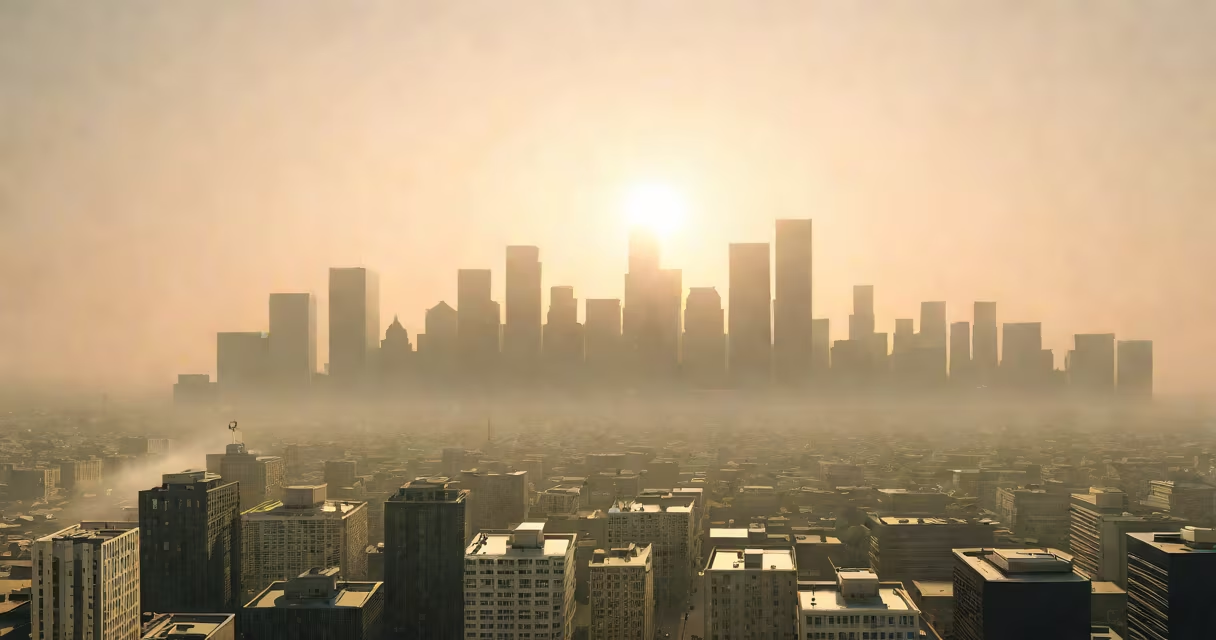
Unhealthy air quality means airborne pollutant concentrations surpass safe limits set by health agencies, increasing risks of respiratory distress, heart strain, and long-term disease. The U.S. Environmental Protection Agency (EPA) defines "unhealthy" as an Air Quality Index (AQI) value between 101 and 150, indicating elevated health concerns for sensitive groups.
The AQI measures five major pollutants: ground-level ozone, particle pollution (PM2.5 and PM10), carbon monoxide, sulfur dioxide, and nitrogen dioxide. When any of these exceed national standards, the air becomes unhealthy. For example, PM2.5-particles smaller than 2.5 micrometers-can penetrate deep into lungs and enter the bloodstream, triggering inflammation and worsening asthma or heart conditions.
According to the World Health Organization (WHO), ambient air pollution causes approximately 7 million premature deaths annually worldwide. In the U.S., the EPA reports that nearly 1 in 6 Americans live in areas with unhealthy air quality, especially in urban centers and near industrial zones. These numbers reflect real-world impacts-not hypothetical risks.
How Unhealthy Air Quality Works
When pollutant levels rise, they interact with human physiology in measurable ways. PM2.5 particles, often from vehicle exhaust, wildfires, or power plants, bypass nasal filters and reach alveoli in the lungs. Once there, they cause oxidative stress, disrupt gas exchange, and activate immune responses linked to chronic bronchitis and reduced lung function.
Ozone forms when nitrogen oxides and volatile organic compounds (VOCs) react under sunlight. High ozone levels irritate airways, reduce lung capacity, and increase emergency room visits during summer months. A 2022 study published in *The Lancet Planetary Health* found that a 10 µg/m³ increase in daily PM2.5 exposure correlated with a 1.2% rise in hospital admissions for cardiovascular events.
Indoor environments can be worse than outdoors. A 2021 EPA report showed that indoor air pollution levels are typically 2 to 5 times higher than outdoor levels due to cooking fumes, cleaning products, and off-gassing from furniture. This makes indoor air quality a critical factor in health risk assessment.
Types and Sources of Pollutants
Unhealthy air quality stems from both natural and human-made sources. Key pollutants fall into two categories: primary and secondary.
| Pollutant Type | Examples | Primary Sources | Health Effect |
|---|---|---|---|
| Primary | PM2.5, CO, NO₂ | Vehicle engines, industrial stacks, wood stoves | Respiratory irritation, reduced oxygen delivery |
| Secondary | Ozone (O₃), sulfate aerosols | Sunlight-driven reactions between VOCs and NOx | Lung damage, increased asthma attacks |
For instance, during wildfire season in California, PM2.5 levels spike above 200 µg/m³ in some counties-well beyond the EPA's 24-hour standard of 35 µg/m³. In such cases, even healthy individuals may experience coughing, chest tightness, and eye irritation within hours of exposure.
A lesser-known fact: indoor VOCs from synthetic fragrances, air fresheners, and new building materials can accumulate to levels exceeding outdoor concentrations. A single spray of a scented cleaner can release over 100 different VOCs, many of which are neurotoxic or carcinogenic. More on TVOCs reveals how these compounds contribute to "sick building syndrome" and long-term cognitive decline.
Common Misconceptions and Confusions
Many assume that "bad air" only means visible smoke or smog. But air quality degradation occurs silently. PM2.5 is invisible. Ozone is odorless. You cannot see or smell most harmful pollutants, yet they still affect your body.
Another misconception is that air quality improves automatically during rain. While precipitation can wash out some particles, heavy rainfall increases ground-level ozone formation in warm climates by accelerating chemical reactions. In Houston, Texas, researchers observed a 15% rise in afternoon ozone levels following thunderstorms due to rapid mixing of pollutants.
Some people equate "clean air" with "fresh air," believing opening windows always helps. In cities with high traffic density, opening a window during rush hour can increase indoor PM2.5 by 40%. The American Lung Association warns against this practice unless outdoor AQI is below 50.
Real-World Examples and Exposure Scenarios
In 2020, New Delhi recorded an average AQI of 424 over a 10-day period-classified as "severe." Hospitals reported a 37% surge in pediatric asthma cases. During this time, schools closed, and residents wore N95 masks indoors. The Indian government later confirmed that crop burning in Punjab contributed over 60% of the region's PM2.5 load.
On a personal note, during a week-long trip to Los Angeles in July 2023, I monitored my personal air sensor. On days with AQI above 120, my resting heart rate increased by 8 beats per minute, and I experienced persistent headaches. After switching to a HEPA-filtered mask and avoiding outdoor exercise, symptoms resolved within 48 hours.
Even in low-pollution regions, indoor sources dominate. A 2023 study in *Environmental Science & Technology* measured VOC levels in 100 homes across Oregon. Median formaldehyde levels reached 120 µg/m³-over three times the WHO recommended limit. Homes with new laminate flooring and synthetic carpets had the highest concentrations.
What to Do When Air Quality Is Unhealthy
When the AQI reaches "unhealthy" (101-150), sensitive groups-children, older adults, and those with preexisting conditions-should limit outdoor activity. The EPA recommends staying indoors, using air purifiers with HEPA filters, and avoiding vigorous exercise until levels improve.
For prolonged exposure, consider monitoring tools. Personal air sensors like the PurpleAir PA-II provide real-time PM2.5 readings and integrate with smartphone apps. They cost under $200 and offer data accuracy within ±15% of regulatory monitors.