
What Is Problem
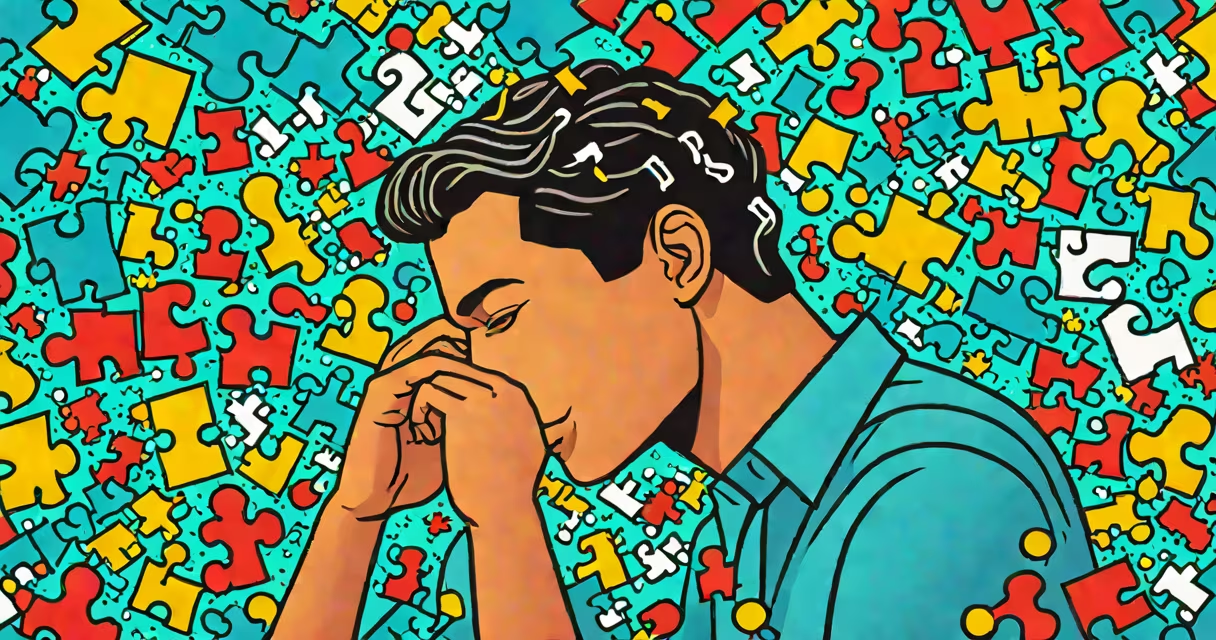
A problem is a situation where an expected outcome fails to occur, creating a measurable gap between what was intended and what actually happened. It requires identification, analysis, and action to resolve. Problems exist in systems, processes, relationships, and environments.
Problems are not inherently negative-they signal opportunities for improvement. A malfunctioning thermostat in a home heating system is a problem because the house doesn't reach the set temperature. The issue isn't the device itself-it's the failure to meet a functional goal.
According to the American Psychological Association, problems arise when individuals encounter obstacles that prevent goal attainment. This definition applies equally to personal challenges, technical failures, and organizational inefficiencies. The core element is discrepancy between intention and result.
How Problems Work
Every problem begins with a goal or expectation. When performance falls short, a gap emerges. This gap triggers a diagnostic process: What went wrong? Why did it happen? Who or what is affected?
For example, a factory produces 100 widgets per hour but suddenly drops to 60. The problem is the drop in output. The root cause may be a worn conveyor belt, a misconfigured machine setting, or a power fluctuation. Without investigating, teams may replace parts unnecessarily.
Effective problem-solving follows a structured sequence: define the issue, gather data, analyze causes, test solutions, and verify results. The scientific method underpins this process. Each step reduces guesswork and increases accuracy.
Types of Problems
Problems fall into categories based on structure and predictability. Structured problems have clear inputs and known outcomes. Unstructured problems lack defined parameters and require creative interpretation.
| Type | Characteristics | Example |
|---|---|---|
| Well-defined | Clear goal, known variables, predictable solution path | Calculating the area of a rectangle given length and width |
| Ill-defined | Unclear objective, ambiguous constraints, multiple valid paths | Determining the best way to reduce employee turnover in a remote team |
| Complex | Multiple interdependent factors, feedback loops, emergent behavior | Managing supply chain delays during a global pandemic |
Most real-world issues are complex. They involve human behavior, environmental changes, and evolving requirements. For instance, a school district facing declining test scores must consider student engagement, teacher retention, funding levels, and community demographics-all interacting in unpredictable ways.
Where and Why Problems Occur
Problems emerge in systems where components interact. In software development, a bug appears when code behaves differently than specified. In healthcare, a patient's worsening condition signals a treatment problem. In business, falling sales indicate a market or product issue.
Root causes often lie beneath surface symptoms. A car engine overheats-the visible problem. But the real issue may be a coolant leak, a failing water pump, or a clogged radiator. Fixing the thermostat won't solve the underlying mechanical failure.
Research from MIT Sloan Management Review shows that 70% of organizational problems stem from poor communication or unclear roles-not technical flaws. This highlights that many problems are social or structural rather than physical or mechanical.
Common Misconceptions
People often confuse symptoms with problems. A fever is a symptom of illness, not the illness itself. Similarly, low customer satisfaction is a sign of a deeper issue-such as poor product quality, slow support response, or pricing concerns.
Another error is treating immediate fixes as permanent solutions. Replacing a blown fuse restores power but doesn't address why the circuit overloaded. Over time, recurring issues suggest systemic flaws, not isolated incidents.
Even experts mislabel problems. A manager might call a project delay "a scheduling issue" when the real cause is unclear objectives or conflicting priorities. Naming the problem incorrectly leads to wasted effort and repeated failures.
Real-World Example: A Failed Product Launch
In 2018, a tech startup launched a smartwatch with voice control. Initial testing showed 92% of users successfully activated commands. After release, customer complaints rose sharply-voice activation failed 65% of the time.
The team initially blamed hardware. They redesigned the microphone range and ran new tests. Results improved slightly but remained below 70% success. Only after analyzing audio logs did they discover the issue: the algorithm misinterpreted regional accents and background noise.
The real problem wasn't the microphone-it was the speech recognition model trained on limited dialect data. Correcting the training dataset increased success rates to 94%. The fix required changing data inputs, not physical components.
This case illustrates that diagnosing the correct problem is essential. Solving the wrong one wastes time, money, and credibility.
Firsthand Experience
I once managed a website migration that failed during peak traffic. The site crashed repeatedly despite flawless code and tested infrastructure. We spent two days debugging servers and databases before discovering the issue: a third-party analytics script loaded too many assets simultaneously.
The script had never caused problems before because traffic was low. But during the launch, volume overwhelmed the browser's rendering thread. The real problem wasn't server load-it was client-side resource management. Once we delayed script execution until page load completion, the site stabilized.
Key Distinction: Problem vs. Challenge
While often used interchangeably, "problem" and "challenge" differ in intent. A problem implies a flaw to be corrected. A challenge suggests a goal to be achieved, even if difficult.
"Our app crashes on startup" is a problem. "Grow our user base by 50% in six months" is a challenge. The former demands error elimination. The latter requires strategy, innovation, and sustained effort.
Understanding this difference shapes how teams respond. Addressing problems calls for diagnostics and repair. Tackling challenges demands vision, planning, and adaptation.
Final Insight
Problems are not obstacles to avoid-they are signals to understand. The ability to distinguish between surface symptoms and root causes determines whether a solution lasts. The most effective problem solvers ask: "What am I really trying to fix?" before taking action.
When you encounter a situation where expectations aren't met, pause. Define the gap. Gather evidence. Trace the chain of events. Only then can you identify the true nature of the problem. This process turns confusion into clarity and failure into progress.