
Make ice cream
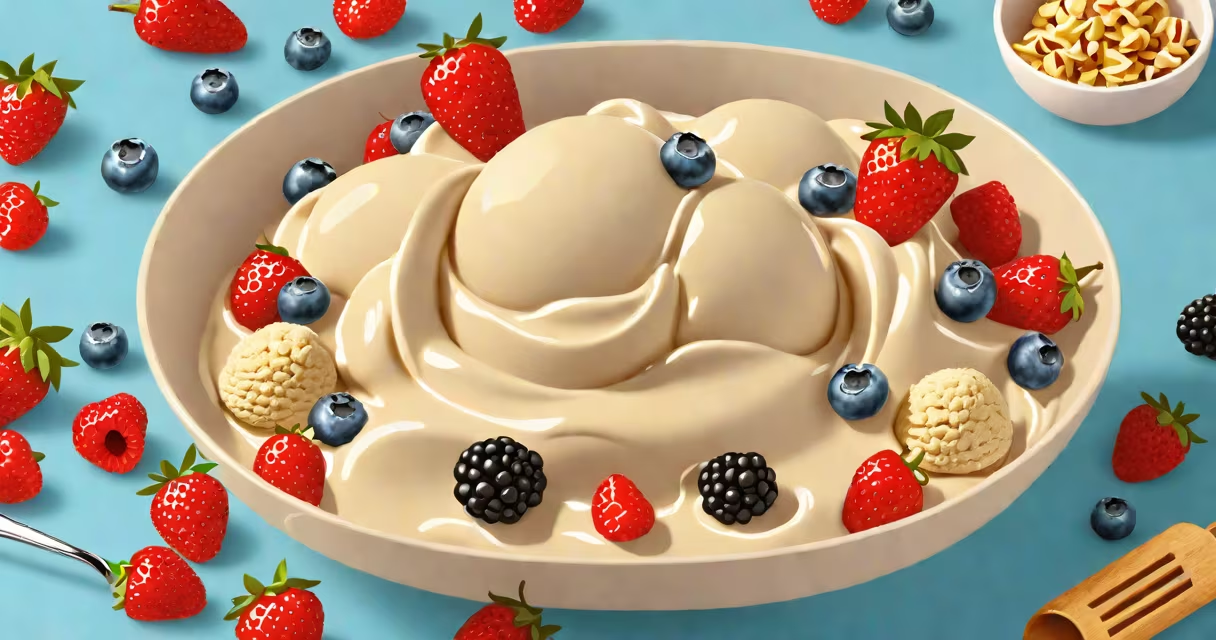
Make ice cream by combining sweetened dairy or plant-based base with flavorings, then freezing it slowly to form a smooth, cold dessert. The process relies on controlling ice crystal formation through agitation and fat content.
Ice cream forms when a mixture of milk, cream, sugar, and flavorings cools below 0°C (32°F). As it freezes, tiny ice crystals grow. Without control, they clump together and make the texture grainy. Churning during freezing breaks up large crystals and traps air, creating a light, creamy consistency. Commercial machines do this automatically. At home, manual stirring or a hand mixer can achieve similar results.
Most recipes start with a custard base made from eggs, cream, and sugar. The eggs act as emulsifiers, binding fat and water to prevent separation. This method produces richer, smoother ice cream. No-churn versions skip cooking and rely on whipped heavy cream to provide volume and texture. These are faster but less stable over time.
How it works: The science behind frozen sweetness
Freezing stops molecular movement, locking flavors and textures in place. But rapid freezing creates small ice crystals. Slow freezing leads to larger ones, which feel gritty. A consistent churning motion maintains low temperatures while breaking up forming crystals. This is why even simple methods work: stirring prevents large clusters from developing.
Emulsification is key. Fat molecules in cream coat ice crystals, slowing their growth. Egg yolks contain lecithin, a natural emulsifier that stabilizes the mix. Without fat, ice cream becomes icy and hard. A minimum of 10% fat is needed for a satisfying mouthfeel. Lower-fat versions may taste watery or lack body.
For no-churn ice cream, whipped cream provides both volume and stability. When folded into a chilled base, it traps air bubbles. These remain locked in during freezing, giving the final product a soft, airy texture. However, no-churn ice cream tends to melt faster and may separate slightly over time due to less uniform structure.
Types and variations: From custard to no-churn
Different approaches suit different goals. Custard-based ice creams offer depth and richness. No-churn styles prioritize speed and simplicity. Plant-based versions use coconut milk, oat milk, or cashew cream as dairy substitutes.
| Type | Base Ingredients | Churning Needed? | Best For |
|---|---|---|---|
| Custard-based | Eggs, cream, sugar, flavorings | Yes (machine or hand) | Rich, smooth texture; long-term storage |
| No-churn | Whipped cream, condensed milk, flavorings | No | Quick prep; minimal equipment |
| Plant-based | Oat milk, coconut milk, cashew cream | Yes (optional) | Dairy-free diets; vegan options |
One common mistake is adding too much sugar. While sugar lowers the freezing point and keeps ice cream soft, excess amounts make it overly sweet and slow freezing. The ideal sugar-to-dairy ratio is about 12-15% by weight. Too little sugar causes hardness; too much makes it sticky.
A non-obvious fact: freezing temperature affects texture more than flavor. A batch frozen at -18°C (0°F) will have finer crystals than one frozen at -10°C (14°F), even if both use the same recipe. Home freezers often run warmer than commercial units, so ice cream may freeze unevenly unless stirred regularly.
Common mistakes and how to avoid them
Over-churning leads to excessive air incorporation, making ice cream fluffy but less dense. Under-churning leaves large ice crystals. The goal is steady, gentle motion-about 10-15 minutes of continuous stirring during freezing.
Using cold ingredients slows the process. Room-temperature cream mixes faster and integrates better. Always chill the mixing bowl and whisk in advance. For no-churn ice cream, ensure the base is fully cooled before folding in whipped cream. Warm mixtures cause deflation and collapse.
I once made a batch of mint chocolate chip using store-bought chocolate chips. After freezing, the chocolate formed hard lumps. The issue wasn't the recipe-it was the ingredient. Chocolate chips meant for baking contain higher melting points and don't distribute evenly. Using chopped dark chocolate or chocolate chunks designed for freezing improved texture.
Where and why people make ice cream
Home ice cream makers value control over ingredients and customization. Store-bought versions often contain stabilizers like guar gum or carrageenan. Making your own lets you omit additives and adjust sweetness, fat, and flavor intensity.
Some people make ice cream to reduce waste. Leftover fruit, leftover yogurt, or expired milk can be repurposed into dessert. A single batch of banana ice cream using overripe bananas and leftover yogurt took 20 minutes and used ingredients already in my fridge.
Getting started: A simple recipe
Try this no-churn chocolate ice cream:
- Beat 2 cups heavy cream until stiff peaks form.
- Mix 1 can sweetened condensed milk (397g) and 1/2 cup cocoa powder in a bowl.
- Gently fold in the whipped cream until fully combined.
- Pour into a freezer-safe container. Cover and freeze for 6 hours.
- Stir once after 3 hours to break up ice crystals.
Serve scooped and topped with crushed cookies or fresh berries. This recipe yields ~4 servings. It requires no machine, no cooking, and only 15 minutes of hands-on time.
For a custard version, heat 2 cups whole milk with 1/2 cup sugar and 1 tsp vanilla until steaming. Whisk 4 egg yolks in a bowl. Slowly pour hot milk into yolks while stirring. Return mixture to saucepan and cook over low heat until thick enough to coat the back of a spoon (about 80°C/175°F). Cool completely before freezing.
Both methods produce edible, enjoyable results. The choice depends on available tools, time, and desired outcome. Making ice cream isn't about perfection-it's about experimentation and enjoyment.
Understanding how to make ice cream gives you control over flavor, texture, and ingredients. folding whipped cream by hand, the core principles remain the same: manage freezing speed, stabilize fats, and balance sweetness.