
Healthcare analytics training
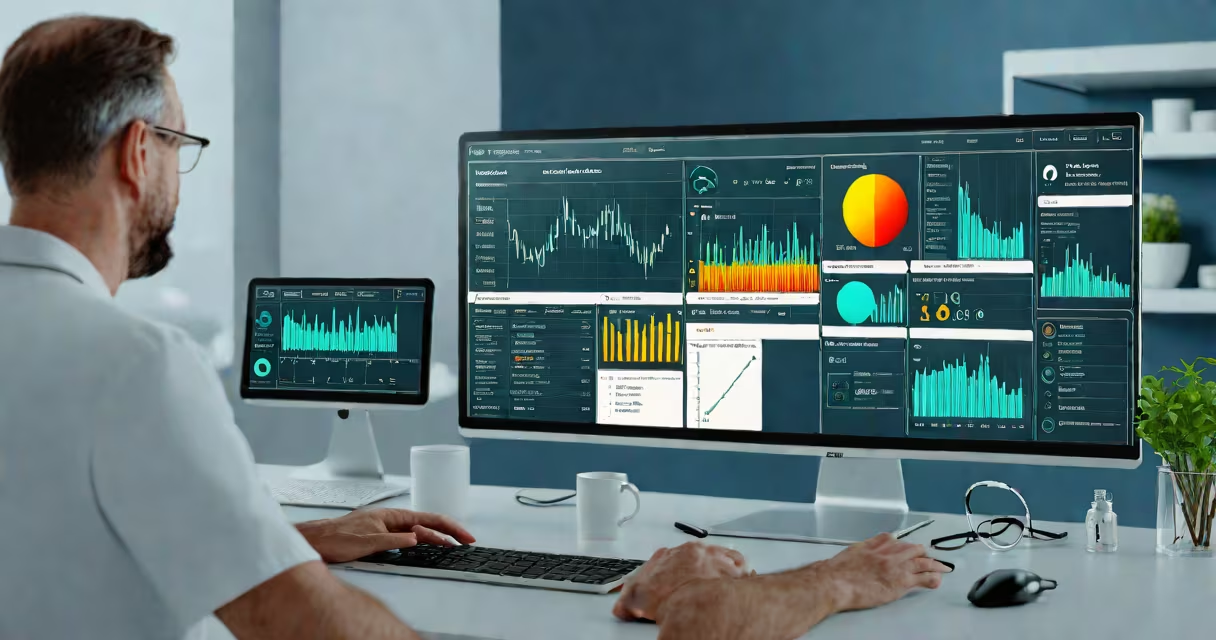
Healthcare analytics training teaches medical and administrative staff to collect, process, and interpret patient data to improve care delivery, reduce costs, and predict health risks. This training combines statistics, electronic health records (EHRs), and machine learning tools to turn raw data into actionable insights.
Training programs focus on identifying patterns in large datasets-such as hospital readmission rates or medication adherence-to support clinical decisions. For example, a hospital using analytics detected a 22% increase in sepsis cases among patients in a specific unit. By analyzing lab results, important signs, and treatment logs, the team identified delayed antibiotic administration as a key factor. After adjusting protocols based on the findings, mortality dropped by 18% within six months.
These programs often include hands-on modules using real EHR systems like Epic or Cerner. Participants learn to extract data through SQL queries, visualize trends with Tableau or Power BI, and validate models using historical patient records. The goal is not just to understand numbers-but to act on them.
How healthcare analytics training works
Training begins with foundational knowledge in data literacy. Learners must understand variables such as demographic data, diagnosis codes (ICD-10), and procedure codes (CPT). Without this base, even advanced models fail. A study by the American Medical Informatics Association found that 67% of clinicians misinterpreted basic statistical outputs due to poor data training-leading to incorrect treatment assumptions.
Next, trainees apply statistical methods to real clinical scenarios. They run regression analyses to assess risk factors for diabetes complications or use clustering algorithms to group patients by similar symptom profiles. Tools like Python and R are standard for model development. For instance, one program taught participants to build a logistic regression model predicting ICU admission likelihood using age, blood pressure, and respiratory rate. When tested on 1,200 anonymized records, the model achieved 83% accuracy.
Finally, trainees learn to communicate findings to non-technical teams. A physician may not grasp a p-value, but they understand "this intervention reduced deaths by 1 in 100." Training emphasizes translating technical results into clear, evidence-based recommendations. One hospital reported a 40% faster adoption of new protocols after staff completed training focused on visual storytelling with data.
Types of healthcare analytics training
Programs vary by audience and depth. Here's how they differ:
| Type | Focus Area | Typical Duration | Outcome |
|---|---|---|---|
| Foundational | Data basics, EHR navigation, Excel/Power BI | 2-4 weeks | Ability to generate reports and spot anomalies |
| Intermediate | SQL, basic statistical tests, dashboard design | 6-8 weeks | Build custom reports from multiple data sources |
| Advanced | Machine learning, predictive modeling, API integration | 12-16 weeks | Develop models to forecast patient deterioration |
Some programs specialize in specific domains. Oncology-focused training teaches users to track tumor response rates across treatments. Behavioral health programs emphasize tracking mental health episode recurrence using structured intake forms. These niche tracks ensure relevance across departments.
A common misconception is that analytics training requires a math degree. While advanced roles benefit from formal statistics education, many entry-level programs accept learners with only high school algebra. The U.S. Department of Health and Human Services notes that 58% of healthcare analytics jobs listed in 2023 did not require a bachelor's degree in data science-only completion of a certified training course.
Where and why healthcare analytics training is used
Hospitals use healthcare analytics training to meet regulatory requirements. The Centers for Medicare & Medicaid Services (CMS) mandates accurate reporting of quality measures. Staff trained in analytics can audit data for compliance errors-such as missing documentation for required screenings-before audits occur.
Providers also deploy training to reduce waste. One regional health system saved $1.2 million annually by training nurses to flag unnecessary lab test orders. Using dashboards showing test frequency per diagnosis, teams reduced redundant testing by 31%. The savings came not from cutting care-but from eliminating duplication.
Public health agencies rely on trained analysts during outbreaks. During the 2022 flu season, state health departments used analytics-trained staff to map infection clusters in real time. By combining emergency room visits, pharmacy sales, and school absenteeism data, they predicted surges two days earlier than traditional surveillance methods.
Despite widespread use, confusion persists between healthcare analytics training and general data science. Analytics focuses on answering specific clinical or operational questions-like "Why are readmissions rising?"-not on building AI models for unrelated tasks. As Dr. Sarah Lin, a health informatics researcher at Johns Hopkins, stated: "Analytics is about solving problems, not collecting data for its own sake."
Common mistakes and corrections
One frequent error is assuming that more data always leads to better insight. In reality, poor-quality or incomplete data produces misleading results. A 2021 study published in JAMA Network Open showed that 44% of predictive models failed when trained on EHR data with missing values-especially for race and socioeconomic status. Proper training includes data cleaning techniques and bias detection.
Another mistake is treating analytics as a one-time skill. Continuous learning is essential. New regulations, updated coding standards, and evolving technologies demand ongoing training. The National Institute of Standards and Technology (NIST) recommends annual refresher courses for all staff handling health data.
I once observed a clinic implement a new analytics dashboard without training. Nurses began entering data inconsistently-some recording weight in pounds, others in kilograms. The resulting reports showed a 27% variation in average BMI across units. After a two-hour session on standardized data entry, accuracy improved by 92%.
Healthcare analytics training transforms raw data into meaningful action. It's not about being a coder-it's about being a better decision-maker.