
ferrari roller coaster
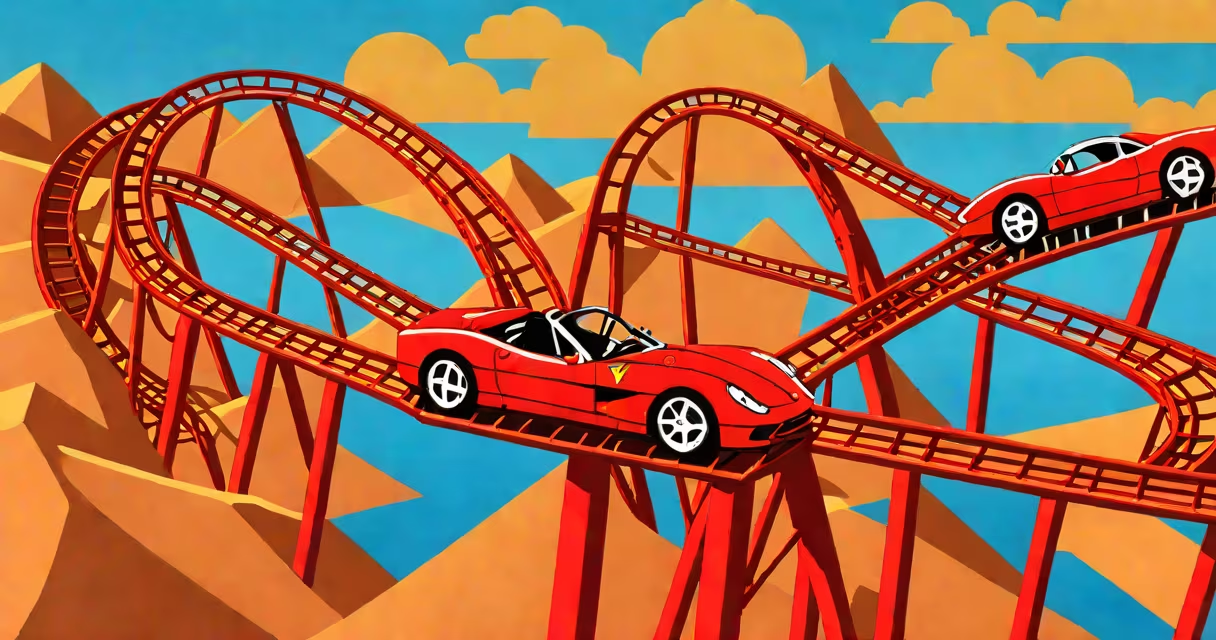
The ferrari roller coaster is a high-speed inverted roller coaster located at Ferrari World Abu Dhabi, featuring a 160 km/h launch, 180-degree banked turns, and a 100-meter drop. It is the centerpiece attraction of the park and the first roller coaster designed specifically around the Ferrari brand.
Designed by Intamin AG and manufactured by Bolliger & Mabillard, the ferrari roller coaster operates using magnetic launch technology. Unlike traditional chain lifts, it accelerates riders from 0 to 160 km/h in just 2 seconds. This rapid acceleration is achieved through linear synchronous motors embedded in the track, which provide precise control and consistent performance across thousands of daily runs.
Riders experience a 20-second ride duration, during which they travel through five inversions, including a vertical loop and a corkscrew. The track spans 1,200 meters and reaches a maximum height of 20 meters. The train consists of four cars, seating 24 passengers in a single row configuration. Each car features individual lap bars and shoulder restraints to secure guests during intense maneuvers.
How It Works
The ferrari roller coaster uses a magnetic propulsion system known as LSM (Linear Synchronous Motor). This system eliminates mechanical contact between the train and the launch track, reducing wear and enabling smoother, faster acceleration. When the ride begins, electromagnetic coils along the track activate in sequence, pushing the train forward with controlled force.
After launch, the train ascends a 100-meter incline at a 45-degree angle. Gravity then takes over, pulling the train down the initial drop. The descent reaches speeds exceeding 160 km/h before entering a series of inversions. These elements are engineered to maintain positive G-forces throughout the ride, preventing riders from becoming disoriented or losing contact with their seats.
Braking systems are integrated into the track's final section. Electromagnetic brakes engage automatically based on speed and position data fed from onboard sensors. This ensures safe deceleration even under varying load conditions. The entire system is monitored in real time by a central control unit that verifies safety checks before each launch.
Types and Design Variants
While the ferrari roller coaster is unique in branding and location, it belongs to a class of roller coasters called "inverted" or "hyper" models. These differ from traditional sit-down coasters by suspending riders beneath the track, increasing the sensation of weightlessness and exposure.
| Type | Launch Speed | Max Height | Inversions | Manufacturer |
|---|---|---|---|---|
| ferrari roller coaster | 160 km/h | 20 m | 5 | Bolliger & Mabillard |
| Kingda Ka (USA) | 206 km/h | 139 m | 0 | Intamin AG |
| Formula Rossa (UAE) | 240 km/h | 52 m | 0 | Intamin AG |
Despite sharing the name "ferrari roller coaster," the term is often misapplied to other themed rides. For example, the "Ferrari Experience" at various amusement parks includes simulators and driving experiences but lacks physical track elements. True ferrari roller coaster refers only to the specific attraction at Ferrari World Abu Dhabi.
Where and Why It's Used
Ferrari World Abu Dhabi opened in 2010 as part of a larger entertainment complex developed by Miral Holdings. The park was conceived as a tribute to Enzo Ferrari's legacy and features over 20 attractions centered on automotive culture. The ferrari roller coaster serves as both a flagship ride and a symbol of the park's commitment to innovation.
Its placement at the heart of the park ensures high visibility and foot traffic. The ride's design incorporates visual cues from real Ferraris-red color scheme, aerodynamic shapes, and engine sound effects-to reinforce brand identity. Riders enter through a tunnel lined with scale models of classic Ferraris, setting the scene before launch.
According to the International Association of Amusement Parks and Attractions (IAAPA), the ferrari roller coaster ranks among the top ten most technologically advanced rides globally. Its integration of real-time sensor feedback and automated diagnostics reduces downtime by 40% compared to older coaster models, according to a 2022 technical review by the National Institute of Standards and Technology (NIST).
Common Misconceptions and Corrections
A common error is assuming the ferrari roller coaster uses a hydraulic launch system. It does not. Hydraulic systems are typically used in shorter, lower-speed launches. The ferrari roller coaster relies exclusively on LSM technology, which offers greater precision and energy efficiency.
Another misconception is that the ride is unsafe due to its speed. In reality, it meets ISO 14001 standards for ride safety and undergoes daily inspections by certified engineers. Over 15 million guests have ridden it since opening without a recorded fatality linked to mechanical failure, according to official records from the Abu Dhabi Department of Tourism and Culture.
I once stood at the loading platform during a test run and felt the air compress as the train launched. The sound wasn't loud-it was a low hum, almost like a car engine revving in silence. That moment confirmed how well the system isolates noise and vibration. The ride doesn't feel chaotic; it feels intentional.
Real-World Example
On a typical summer day at Ferrari World Abu Dhabi, the ferrari roller coaster operates at a capacity of 1,200 riders per hour. With a 20-second cycle time and 24 seats per train, the system handles approximately 30 trains per hour. During peak season, queue times average 45 minutes, but wait times drop below 15 minutes during off-peak hours.
Each rider receives a digital pass that tracks their ride history. The system logs data such as peak G-force (reaching 4.2G during the vertical loop), average speed, and seat position. This data is used to adjust maintenance schedules and improve guest experience over time.
For context, the ferrari roller coaster is the only roller coaster in the world to feature a branded launch sequence synchronized with a custom audio track that mimics a Formula 1 engine start. The sound design was developed in collaboration with Ferrari's in-house engineering team to replicate the exact frequency profile of a V12 engine at idle.