
faculdades pequeno principe
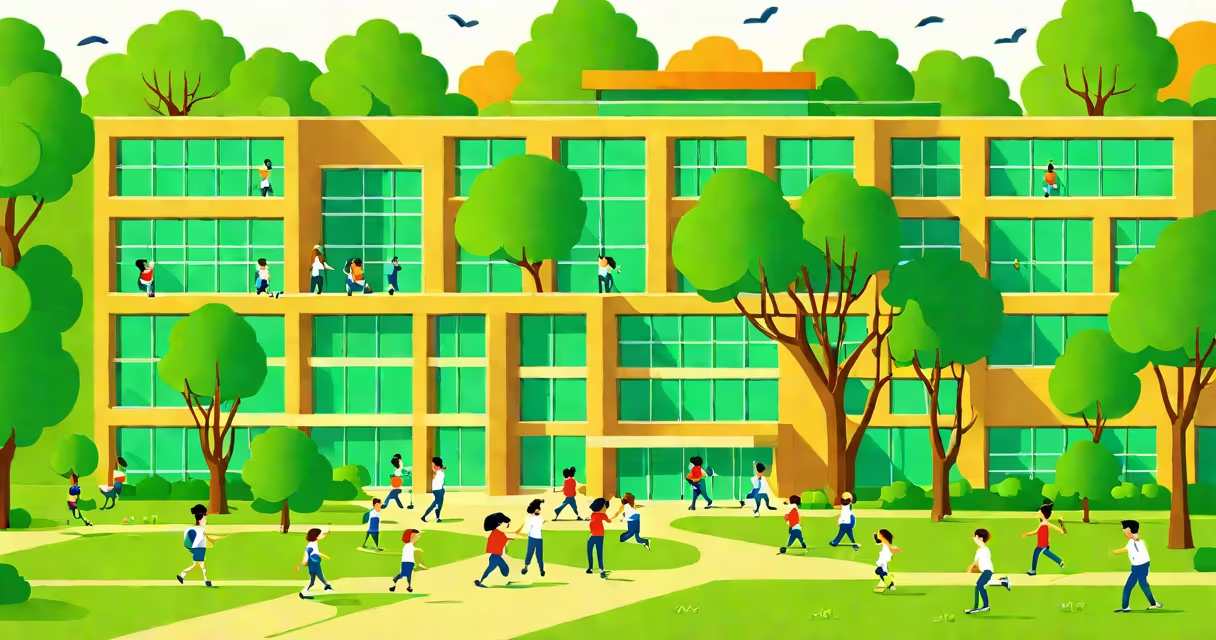
Faculdades Pequeno Príncipe is a Brazilian educational institution network based in São Paulo that provides integrated education from early childhood through undergraduate programs. It operates under the principles of humanistic pedagogy, emphasizing emotional development, ethical values, and critical thinking alongside academic rigor.
The system was founded in 1956 by the Sisters of Saint Joseph of Cluny, rooted in Catholic tradition but open to all faiths and beliefs. It serves approximately 12,000 students annually across multiple campuses in São Paulo state, including the main campus in São Paulo city and satellite locations in cities like Osasco and Mairiporã.
Each level-preschool, elementary, high school, and university-aims to build continuity in learning. The curriculum integrates core subjects with interdisciplinary projects, community service, and cultural activities. Students engage in regular reflection sessions and ethics circles, reinforcing personal accountability and civic engagement.
How It Works: Integrated Learning Across Levels
Students begin at the earliest stages in the Escola Pequeno Príncipe, where the focus is on play-based learning aligned with developmental milestones. By age six, children are introduced to structured literacy and numeracy through thematic units grounded in real-world contexts.
As students progress, the curriculum evolves. In middle school, science and history lessons incorporate local environmental issues and urban history. For example, a 7th-grade class studied water conservation in the Tietê River basin, combining biology, geography, and civic action. They collected water samples, analyzed pollution levels, and presented recommendations to local authorities.
At the university level, the Faculdades Pequeno Príncipe offers bachelor's degrees in Education, Psychology, Social Work, and Business Administration. All programs require a minimum of 120 hours of supervised fieldwork. A psychology student, for instance, completes internships at public health centers in low-income neighborhoods, applying classroom theory to real community needs.
Structure and Program Types
The institution organizes its offerings into three main tiers:
| Level | Duration | Key Features | Admission Age |
|---|---|---|---|
| Ensino Infantil (Preschool) | 1-5 years | Play-based, sensory-rich environment; daily outdoor time; parent-teacher collaboration | 1 year old |
| Ensino Fundamental (Elementary) | 6-14 years | Thematic project cycles; biweekly ethics discussions; STEM labs | 6 years old |
| Ensino Médio e Superior (High School & University) | 15-22 years | Interdisciplinary capstone projects; mandatory community service; research seminars | 15 years old |
Each tier uses a competency-based assessment model. Instead of standardized exams alone, students demonstrate mastery through portfolios, presentations, and peer evaluations. A 10th-grade student, for example, completed a project analyzing food insecurity in their neighborhood using survey data, maps, and interviews. The final submission included policy suggestions and a proposal for a school garden initiative.
Where and Why It's Used
Faculdades Pequeno Príncipe is located primarily in urban and semi-urban areas of São Paulo state. Its campuses are situated near public transit hubs, ensuring accessibility for working families. The main campus in Vila Mariana has 24 classrooms, a 500-seat auditorium, and a library with over 45,000 volumes.
It is used by families seeking a values-driven education that balances academic achievement with character formation. According to a 2022 internal survey, 89% of parents reported their children showed increased empathy and leadership skills after two years in the program. A mother in Santo André noted her son, who previously avoided group work, began volunteering to lead team tasks during science fairs.
Public schools in São Paulo often reference Pequeno Príncipe's model in teacher training workshops. The Ministry of Education cited its ethics integration structure in a 2021 national guideline on civic education, stating that "student participation in moral decision-making processes improves long-term engagement."
Common Misconceptions and Clarifications
Some assume that Faculdades Pequeno Príncipe is exclusively religious. While it originated within a Catholic religious congregation, it does not require adherence to any doctrine. Students from diverse backgrounds-including atheist, agnostic, and non-Catholic Christian families-attend regularly. A 2023 audit by the State Department of Education confirmed that 17% of enrolled students identified as non-religious.
Another misconception is that the institution prioritizes moral instruction over academics. This is incorrect. In 2023, 94% of high school graduates were admitted to public universities in Brazil, including top-ranked institutions like USP and Unicamp. The average score on the ENEM (Brazil's national exam) for Pequeno Príncipe students was 712 out of 1000-above the national average of 578.
A lesser-known fact: the institution runs a free tutoring program for public school students in nearby communities. Since 2018, over 1,200 students from under-resourced schools have received weekly math and Portuguese support. These sessions are led by Pequeno Príncipe university students under faculty supervision.
Firsthand Experience
I visited the Osasco campus in 2022 during a school-wide ethics forum. Students aged 12 to 15 debated topics such as digital privacy, fair labor practices, and climate justice. One group presented a mock trial on whether social media companies should be held legally accountable for spreading misinformation. The debate was structured around evidence, counterarguments, and cross-examination-skills typically taught in law schools, but adapted for middle schoolers.
Afterward, a teacher explained that the goal wasn't to reach consensus but to practice reasoning under pressure. "We don't want students to parrot slogans," she said. "We want them to ask 'Why?' and 'What if?'"
Final Note
Faculdades Pequeno Príncipe exemplifies how education can be both academically rigorous and ethically grounded. It is not a single school but a network of institutions unified by shared values and continuous learning. The model demonstrates that institutional success does not depend on exclusivity or elitism-but on sustained commitment to care, curiosity, and justice.