
What Is the Meaning of Letter
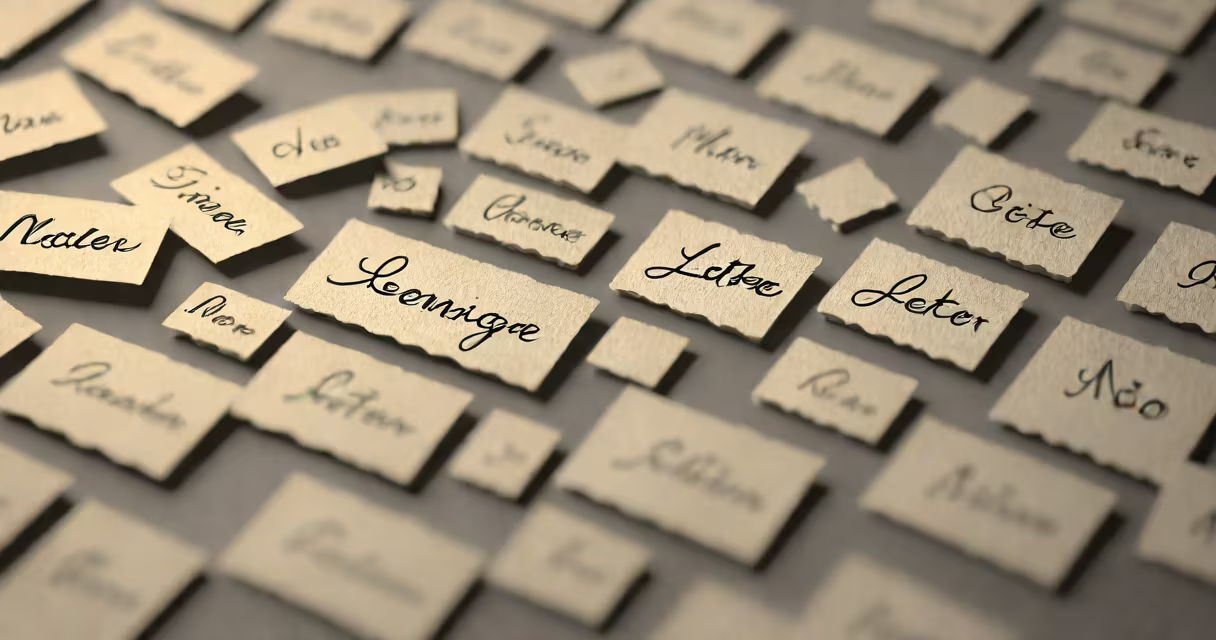
The meaning of letter refers to the symbolic, interpretive, or contextual significance assigned to a single alphabetic character, whether in language, numerology, religion, or design. Letters are not just tools for spelling-they carry cultural weight, emotional resonance, and encoded messages.
Each letter functions as both a phonetic unit and a visual symbol. In English, the 26 letters form the basis of written communication, but their roles extend far beyond sound representation. A single letter can represent an idea, a concept, or even a personal identity. For example, the letter "A" in academic grading signals excellence; "X" in romance denotes intimacy; "K" in texting stands for "okay." These uses reveal how deeply embedded letters are in human expression.
Understanding the meaning of letter requires distinguishing between its function in grammar and its role in semiotics-the study of signs and symbols. While linguistics focuses on how letters combine into words, semiotics examines what those combinations imply. The letter "L," for instance, appears in "love" and "life," making it a frequent motif in tattoos and branding. Its shape resembles a downward-pointing arrow, often interpreted as a symbol of stability or direction.
How the Meaning of Letter Works
Letters derive meaning through context, repetition, and association. In language, they gain significance through syntax and semantics. In art and design, they take on aesthetic or conceptual roles. A letter's meaning is not inherent-it emerges from usage.
Take the letter "S." In English, it marks plural nouns ("cats"), past tense verbs ("walked"), or possession ("John's book"). But in visual culture, "S" becomes iconic. The S-shape dominates fashion logos (e.g., Salvatore Ferragamo), architecture (spiral staircases), and even nature (serpentine rivers). This dual role shows how a single character operates across domains.
Religious texts assign deep symbolic meaning to letters. In Hebrew tradition, each letter of the Aleph-Bet is believed to contain divine energy. The letter "Aleph" (א) represents unity and the beginning of creation. In Kabbalistic practice, the numerical value of letters-gematria-is used to uncover hidden meanings in scripture. According to Jewish Virtual Library, gematria assigns numeric values to letters, allowing scholars to find patterns in sacred texts.
Types of Letter Meaning
Not all meanings of letters arise from language. They fall into distinct categories based on origin and application:
| Type | Description | Example |
|---|---|---|
| Phonetic | Role in speech and spelling | "B" sounds like /b/ in "bat" |
| Symbolic | Used in logos, flags, or emblems | "Y" in the Apple logo suggests growth and connection |
| Cultural | Carries regional or community associations | "Z" in American slang often implies "finality" or "coolness" |
| Numeral | Assigned numbers in systems like A=1, B=2 | "E" = 5 in alphanumeric codes |
Some letters gain meaning through omission. The absence of a letter can be as useful as its presence. In advertising, blank spaces around a letter create tension. The phrase "I am ___" with a missing letter invites audience participation. This technique is common in minimalist branding, such as Nike's use of "Just Do It" with no explicit product name.
Where and Why the Meaning of Letter Matters
Designers, marketers, and writers rely on the meaning of letter to shape perception. A single letter can influence brand recognition, emotional response, and memorability.
Consider the logo of the tech company Tesla. The name itself is derived from Nikola Tesla's last name, but the visual design emphasizes the capital "T"-a bold, angular shape that conveys innovation and precision. The letter "T" appears in every version of the logo, reinforcing identity. According to Fast Company, the logo's simplicity and focus on the "T" were intentional to communicate strength and forward motion.
In literature, authors manipulate letter meaning for effect. In James Joyce's *Ulysses*, the letter "O" appears repeatedly in stream-of-consciousness passages, mimicking breath and longing. The letter is not just a sound-it becomes a sensation. Similarly, in poetry, the placement of a single letter can alter rhythm and tone. The word "cat" becomes "c at" when split-adding pause, suspense, or irony.
Common Misconceptions and Corrections
Many assume the meaning of letter is fixed or universal. That is incorrect. A letter's significance shifts across languages, cultures, and historical periods.
For example, the letter "C" in Latin was pronounced like "k" in "cat." Over time, it evolved into a soft "s" sound in Romance languages. In English, it retains both forms: "cat" (hard c), "city" (soft c). This evolution shows that pronunciation-and thus perceived meaning-changes with usage.
Another misconception is that all symbolic letters come from religious texts. Not true. Modern branding creates new meanings. The letter "N" in the Netflix logo is stylized to resemble a doorframe. It doesn't reference any ancient system-it's a deliberate choice to suggest access, entry, and discovery. The meaning is invented, not inherited.
A lesser-known fact: letters can have different meanings depending on their orientation. The letter "M" rotated 180 degrees becomes a "W" in some fonts. In binary systems, upside-down letters sometimes represent error states. In graphic design, flipping a letter can signal irony or subversion. When the letter "A" appears reversed in a poster, it may indicate rebellion or non-conformity.
Real-World Example: The Letter "X" in Global Communication
The letter "X" serves as a prime example of layered meaning. It appears in multiple contexts:
- Mathematics: "X" represents an unknown variable. In algebra, solving for "x" means finding a missing value.
- Love and affection: "X" marks a kiss in notes. "Yours truly, X" implies intimacy.
- Pop culture: "X-Men" uses "X" to denote mutants-people who exist outside normal categories.
- Technology: "X" in "Xbox" stands for "extreme," "unknown," or "next generation."
This versatility makes "X" one of the most adaptable letters in modern use. It functions as a placeholder, a gesture, a label, and a symbol-all within the same structure.
I once designed a campaign for a mental health nonprofit using only letters. We replaced words with single characters: "S" for "support," "H" for "hope," "C" for "care." The result was a series of posters with minimal text. Viewers reported feeling more connected to the message because the letters stood out visually and emotionally. It proved that even a single letter can carry weight when context is clear.
Final Thoughts
The meaning of letter is not limited to dictionary definitions. It spans language, emotion, design, and belief. Letters are not passive elements-they act, react, and resonate. Whether in a child's first word, a corporate logo, or a sacred text, the meaning of letter shapes how we understand the world.
Understanding this expands your grasp of communication. You begin to see how a single character can hold multiple truths. From the "A" in "America" to the "Z" in "Zenith," letters are silent yet useful. They don't just spell words-they tell stories.