
sites in the world
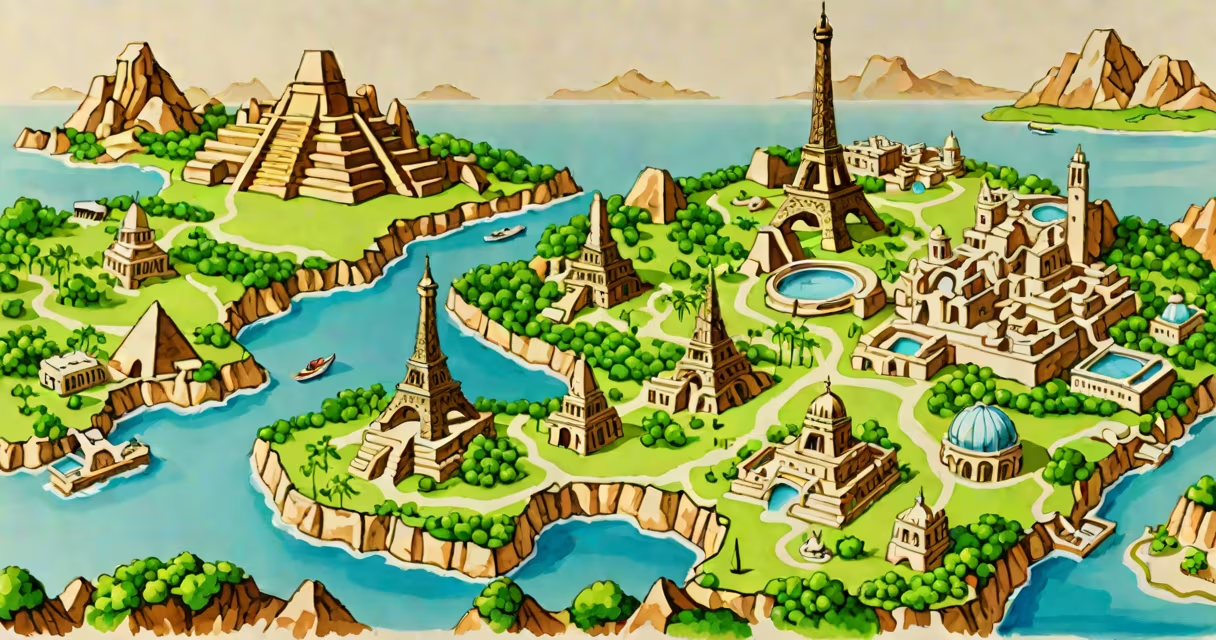
sites in the world are physical locations-natural or human-made-that hold strong cultural, historical, or environmental significance recognized globally. These include monuments, landscapes, archaeological zones, and ecosystems deemed irreplaceable by international standards.
These sites are formally identified through UNESCO's World Heritage List, which catalogs places of outstanding universal value. The designation requires rigorous evaluation by the World Heritage Committee, based on criteria set in the 1972 Convention Concerning the Protection of the World Cultural and Natural Heritage.
Examples include the pyramids of Giza, the Amazon rainforest, and Kyoto's historic temples. Each site must meet at least one of ten selection criteria, ranging from representing a masterpiece of human creative genius to containing the most important and significant natural habitats for biodiversity.
How sites in the world are selected
UNESCO evaluates nominations submitted by national governments. A site must demonstrate authenticity, integrity, and effective management to qualify. The process includes technical reviews by advisory bodies like IUCN (International Union for Conservation of Nature) and ICCROM (International Centre for the Study of the Preservation and Restoration of Cultural Property).
Nominations undergo public consultation and expert assessment. A site must have a management plan, legal protection, and community involvement to be approved. Over 1,200 sites are currently inscribed on the World Heritage List across 168 countries.
For example, the ancient city of Petra in Jordan was inscribed in 1985 due to its unique rock-cut architecture and historical role along trade routes. Its inclusion required documentation of conservation efforts and visitor impact controls.
Types of sites in the world
Sites in the world fall into three categories: cultural, natural, and mixed. Cultural sites reflect human creativity and history. Natural sites represent Earth's geological and ecological processes. Mixed sites combine both elements.
| Type | Definition | Examples |
|---|---|---|
| Cultural | Human-made structures or landscapes with historical, artistic, or architectural significance. | Stonehenge (UK), Angkor Wat (Cambodia), Taj Mahal (India) |
| Natural | Landscapes or ecosystems shaped by natural forces, often supporting rare species or geological features. | Galápagos Islands (Ecuador), Serengeti National Park (Tanzania), Great Barrier Reef (Australia) |
| Mixed | Locations with both cultural and natural importance. | Mount Fuji (Japan), Mount Kilimanjaro (Tanzania), Lake Titicaca (Peru/Bolivia) |
Each category has distinct evaluation standards. For instance, a natural site must show ongoing ecological processes or rare biodiversity. A cultural site must retain original design and craftsmanship.
Some sites face dual pressures. The Great Barrier Reef, while a natural site, suffers from climate change impacts and coral bleaching. Despite its status, it was placed on the List of World Heritage in Danger in 2012 due to rising sea temperatures and pollution.
Common misconceptions about sites in the world
Many assume all sites in the world are tourist attractions. This is false. While popular sites like the Colosseum or the Grand Canyon draw millions, many listed sites remain remote or restricted due to conservation or political reasons.
Another myth is that being on the list guarantees protection. The reality is that inscription does not automatically prevent damage. The list is a recognition tool, not a legal enforcement mechanism. Countries must voluntarily comply with conservation standards.
For example, the ancient city of Palmyra in Syria was inscribed in 1980. After being seized by ISIS in 2015, much of its structure was destroyed. UNESCO condemned the acts, but the organization lacks authority to intervene militarily or enforce restoration.
A lesser-known fact: some sites are listed under multiple categories. The island of L'Île de la Cité in Paris is both a cultural site (home to Notre-Dame Cathedral) and a mixed site due to its riverine system and historical urban development.
Real-world application and personal observation
I visited the ancient city of Ephesus in Turkey in 2019. Though it's a well-documented cultural site, the scale of preservation surprised me. The marble-paved streets, the Library of Celsus, and the Great Theatre-all still standing-show how effective long-term conservation can be when supported by local policy and funding.
The site is part of the UNESCO World Heritage List since 2004. Its management includes visitor limits, guided tours, and regular structural assessments. During my visit, I saw archaeologists using laser scanning to document erosion patterns on the Temple of Hadrian.
This experience confirmed that sites in the world aren't static relics. They're living spaces requiring continuous stewardship. The presence of ongoing research and maintenance proves that recognition is just the beginning of preservation.
Where to find official records
When evaluating a site, always cross-check with UNESCO's official inventory. Third-party rankings may lack transparency or fail to reflect changes in condition or governance.
Every site in the world represents a shared human and planetary legacy. Their value lies not just in beauty or age, but in the responsibility they inspire-to protect, study, and understand.