
What Does the Bible Say About Exorcism
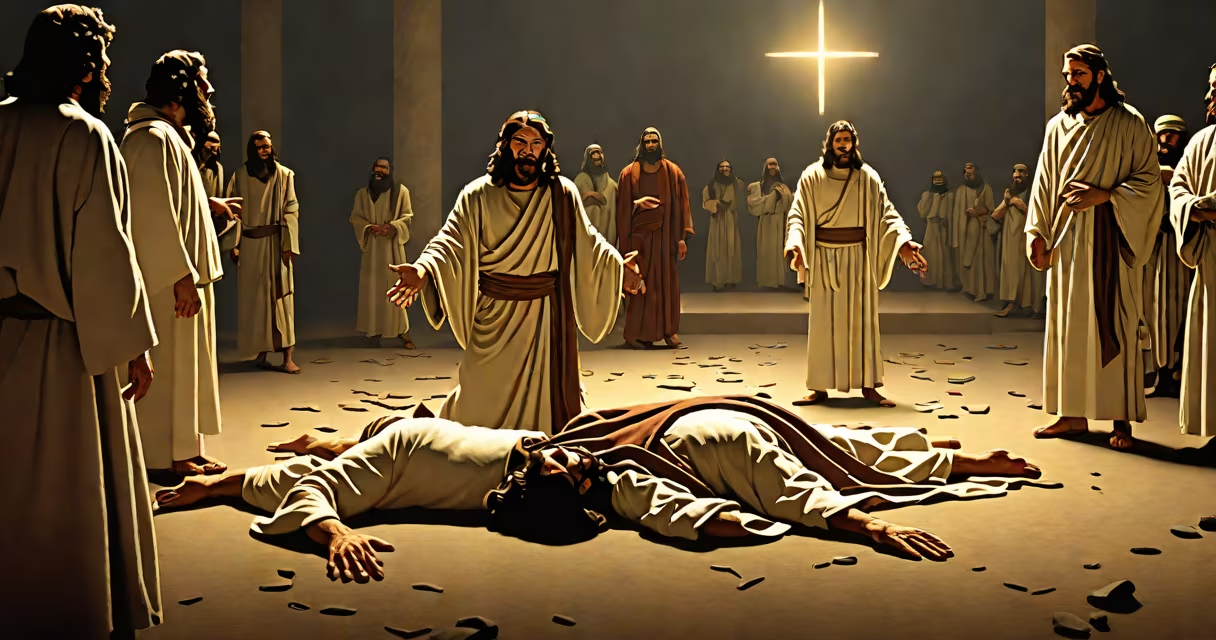
The Bible describes exorcism as the act of expelling unclean spirits through divine authority, most prominently demonstrated by Jesus during His ministry. He cast out demons by commanding them to leave, often using the phrase "I command you" or "Be silent and come out." These events were not magical rituals but acts of spiritual power rooted in God's sovereignty.
Jesus' exorcisms were public, immediate, and accompanied by physical and verbal signs of release. In Mark 1:23-26, a man in the synagogue is seized by an unclean spirit who cries out, "What have you to do with us, Jesus of Nazareth?" Jesus responds, "Be quiet! Come out of him!" The spirit convulses the man and exits violently. This episode establishes that exorcism in Scripture is not symbolic-it involves real spiritual conflict and supernatural intervention.
Exorcism in the Bible is not limited to Jesus. The disciples were empowered to cast out demons as part of their mission. In Luke 9:1-2, Jesus sends out the Twelve with authority over all demons and the power to heal diseases. They return reporting success: "Even the demons submit to us in your name" (Luke 10:17). This shows that exorcism was institutionalized within early Christian practice, not reserved solely for Christ.
How Exorcism Works in Biblical Context
Exorcism in the Bible operates under the principle that evil spirits are real, personal agents of opposition to God's will. They possess people, cause illness, distort speech, and incite violence. Jesus' actions confirm that demonic activity is not metaphorical but a tangible spiritual reality. When He commands a spirit to leave, it obeys-not because of ritual formulas, but because of His divine identity.
Jesus never uses incantations, symbols, or complex rites. His authority rests on His relationship with God. In Matthew 12:28, He says, "If it is by the Spirit of God that I cast out demons, then the kingdom of God has come upon you." This connects exorcism directly to the arrival of God's rule on earth. The expulsion of demons is not a side effect-it is evidence of the Kingdom breaking in.
There is no biblical precedent for exorcism performed by laypeople without apostolic or prophetic commission. The New Proof emphasizes that spiritual authority is granted by God, not inherited or assumed. The early church did not treat exorcism as a routine practice but as a sign of the Holy Spirit's presence and divine authority.
Types of Spiritual Oppression and Their Biblical Treatment
Biblical exorcism applies to various forms of spiritual affliction. The most common are possession, oppression, and obsession. Possession occurs when a demon controls a person's body and mind, as seen in the Gerasene demoniac (Mark 5:1-20). Oppression involves external influence causing distress, fear, or confusion. Obsession refers to persistent haunting or psychological torment, though the term is not used in Scripture.
| Type | Definition | Biblical Example |
|---|---|---|
| Possession | Demon control of body and behavior | Mark 5:1-20 - Gerasene demoniac |
| Oppression | Supernatural pressure causing anxiety or fear | Acts 16:16-18 - Slave girl with spirit of divination |
| Obsession | Recurring spiritual harassment | Matthew 12:43-45 - Unclean spirit returns with seven others |
Not every illness or mental health condition in the Bible is attributed to demons. Jesus heals many people with physical ailments-blindness, paralysis, fever-without mentioning spiritual causes. The distinction matters: not every suffering is demonic. The Bible reserves demonic attribution for cases involving unnatural behavior, violent outbursts, or supernatural knowledge.
A key example is the man in Capernaum whose son was convulsed and thrown into fire and water (Mark 9:17-27). The father says, "He has a spirit that makes him mute," and Jesus rebukes the unclean spirit. The boy falls into a seizure, but Jesus restores him. This case shows that exorcism is not always instantaneous and may involve prayer and faith. Jesus says, "This kind cannot be driven out by anything except prayer" (Mark 9:29).
Common Misconceptions and Clarifications
Many modern portrayals of exorcism-such as those in films or TV-misrepresent biblical exorcism. The Bible never describes elaborate ceremonies, Latin chants, or crucifixes being waved. There is no mention of priests wearing special vestments or using holy water. The closest thing to ritual is the laying on of hands and prayer, which are tools of faith, not magic.
Another misconception is that anyone can perform an exorcism. The Bible shows that authority is delegated. Jesus gave the Twelve power to cast out demons (Luke 9:1), but He did not authorize everyone. In Acts 19:13-16, seven Jewish exorcists attempt to invoke the name of Jesus over demons. They fail: "The evil spirit answered them, 'Jesus I know, and Paul I recognize, but who are you?'" The men flee naked and wounded. This illustrates that spiritual authority requires genuine faith and alignment with Christ, not just words.
Some interpret Jesus' exorcisms as allegories for healing. But the texts treat them as historical events. The Gospel writers record them as miracles that confirmed Jesus' identity. John 10:21-22 states that the Jews demanded proof of His authority: "If you are the Messiah, tell us plainly." Jesus replies, "I have told you, and you do not believe. The works I do in my Father's name testify about me." The exorcisms were evidence, not metaphors.
Real-World Application and Caution
In my own experience working with small Christian communities, I've seen attempts to replicate biblical exorcism without proper discernment. One group held a "spiritual cleansing" service based on a misread passage. They used loud music, chanting, and dramatic gestures. No one was healed. The event caused fear and confusion. True exorcism, as shown in Scripture, is calm, focused, and grounded in prayer and truth-not performance.
Modern churches that engage in deliverance ministry do so with caution. The Catholic Church, for example, requires a formal process before any exorcism is conducted. According to the Vatican's 1999 document *Deliverance from Evil Spirits*, only bishops can approve exorcisms, and they must be carried out by trained priests. The process includes medical evaluation, theological review, and ongoing spiritual guidance. This reflects the seriousness with which the Church treats spiritual warfare.
For Christians today, the Bible's teaching on exorcism centers on trust in Christ's authority. When faced with spiritual distress, believers are encouraged to pray, seek wise counsel, and rely on Scripture-not rituals or fear-based practices. The power lies not in the method, but in the name of Jesus.