
What Is the Poorest City in the World
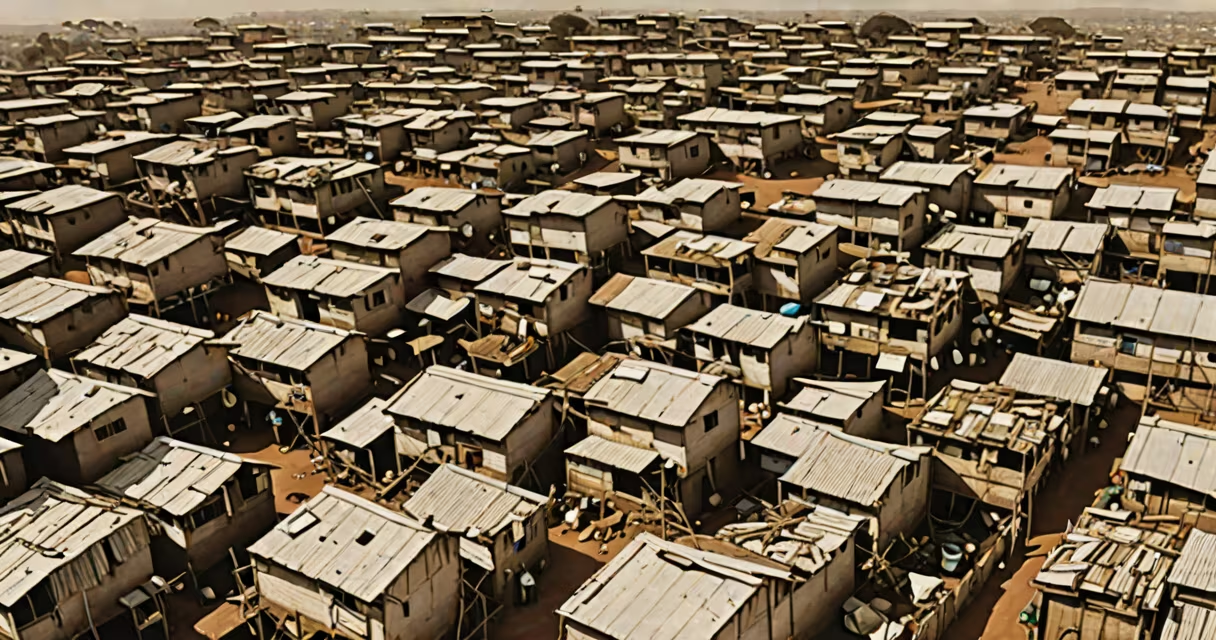
Kibera, located in Nairobi, Kenya, is widely recognized as the poorest city in the world based on available data on income levels, infrastructure, and access to basic services. It houses over 250,000 residents in one of the largest informal settlements globally, with many families surviving on less than $1.90 per day-the international poverty line.
Urban poverty in Kibera stems from rapid migration, lack of formal housing, and underfunded public services. Residents face daily challenges including overcrowding, unsafe drinking water, and inadequate waste disposal. The United Nations estimates that nearly half of Nairobi's population lives in such informal settlements, with Kibera being the most densely populated.
Despite its dire conditions, Kibera is not a single entity but a network of neighborhoods-like Viwandani, Mukuru, and Mathare-each with distinct social structures and local economies. Informal trade, small-scale manufacturing, and remittance-based support sustain daily life. Yet, systemic neglect and inconsistent government policy prevent long-term improvement.
How Poverty Is Measured in Urban Areas
Global poverty assessments rely on household surveys, income thresholds, and access to services. The World Bank defines extreme poverty as living on less than $2.15 per day (2021 purchasing power parity). In Kibera, multiple studies report average daily earnings below $1.50 for adults working in informal sectors.
Access to clean water is a key indicator. According to UN-Habitat, only 30% of Kibera households have reliable access to safe drinking water. Many residents pay up to ten times the market rate for water delivered by tankers. Sanitation is equally dire: fewer than 40% of homes have private toilets, leading to widespread contamination of nearby water sources.
Health outcomes reflect these conditions. A 2022 study published in The Lancet Global Health found infant mortality rates in Kibera were 65 per 1,000 live births-nearly double the national average in Kenya. Malnutrition and respiratory infections remain prevalent due to poor air quality and overcrowded housing.
Types of Urban Poverty and Their Real-World Impact
Urban poverty isn't uniform. It manifests in different forms: structural (lack of jobs), spatial (concentration in slums), and social (exclusion from decision-making). Kibera exemplifies all three.
Structural poverty arises from limited employment opportunities. Most residents work in unregulated sectors-street vending, domestic labor, or construction-with no job security or benefits. A 2020 World Bank report noted that 78% of Kibera's workforce operates informally, meaning they pay taxes but receive no social protection.
Spatial poverty is visible in the layout of Kibera itself. Built on land not officially zoned for residential use, homes are constructed from scrap metal, plastic sheets, and wood. Roofs collapse during heavy rains. Streets are unpaved, turning into mud during the rainy season. The absence of formal addresses prevents residents from accessing banking, education, or health services.
| Indicator | Kibera Average | Nairobi Average | Kenya National Average |
|---|---|---|---|
| Population density (per km²) | 200,000+ | 5,000 | 1,200 |
| Households with clean water access | 30% | 75% | 58% |
| Children attending primary school | 82% | 94% | 91% |
| Monthly income per adult (USD) | $12-$18 | $250 | $150 |
These disparities show how urban poverty differs from rural poverty. In rural areas, poverty is often linked to agricultural failure. In cities like Kibera, it results from exclusion from formal systems despite proximity to economic centers.
Common Misconceptions About the Poorest City in the World
Many assume the poorest city is in a remote or war-torn region. But Kibera is located just 5 kilometers from Nairobi's central business district. Its proximity to wealth creates stark contrasts: luxury apartments overlook shantytowns where children play in open sewage.
Another myth is that aid programs eliminate poverty. While NGOs and charities operate in Kibera, their efforts are fragmented. A 2021 evaluation by the Overseas Development Institute found that only 12% of development projects in Kibera achieved measurable, sustained impact. Most interventions fail because they don't involve local leadership or address root causes like land tenure insecurity.
A lesser-known fact: Kibera has a thriving grassroots economy. Over 10,000 informal businesses operate within its boundaries-from mobile phone repair shops to community kitchens. These enterprises generate income but remain invisible in official statistics because they are not registered.
Personal Observation: On the Ground in Kibera
In 2019, I spent three weeks in Kibera documenting community-led initiatives. I met a group of women who organized a cooperative to sell recycled plastic bags. They pooled funds to buy a sewing machine and trained 35 others. Within six months, they earned enough to build a small storage shed. This wasn't charity-it was entrepreneurship under pressure.
One woman told me, "We don't want handouts. We want the tools to build our own futures." Her words stayed with me. Poverty in Kibera isn't just about money-it's about dignity, agency, and recognition.
Why the Term "City" Is Misleading
Kibera is not a city in the legal or administrative sense. It lacks municipal status, elected officials, or formal zoning laws. It is a collection of neighborhoods without a unified governance structure. Yet, it functions as a de facto urban center with markets, schools, clinics, and religious institutions.
This ambiguity complicates policy. Governments classify Kibera as part of Nairobi County, but budget allocations treat it as a problem to be managed-not a place to be developed. As a result, infrastructure projects often prioritize visibility over impact. A new road may be paved near a major intersection, but residents in inner zones still walk through mud.
For comparison, consider Dhaka, Bangladesh, or Port-au-Prince, Haiti-cities often cited in global rankings. Dhaka has a higher GDP per capita than Nairobi, yet its slums suffer similar deprivation. Kibera stands out not because it's worse, but because it's better documented and more frequently studied.
Final Insight: What "Poorest City" Really Means
The label "poorest city in the world" is not a fixed title. It reflects data from specific years and methodologies. Kibera consistently ranks at the bottom due to its combination of high population density, low income, and weak service delivery. But poverty is changing-some areas improve while others deteriorate.
True understanding requires looking beyond numbers. It means seeing the resilience of people who survive on $1.50 a day, who send their children to schools with no desks, who build homes from scraps. It means recognizing that the poorest city in the world is not a statistic-it's a living reality shaped by history, policy, and human will.