
tour stock exchange
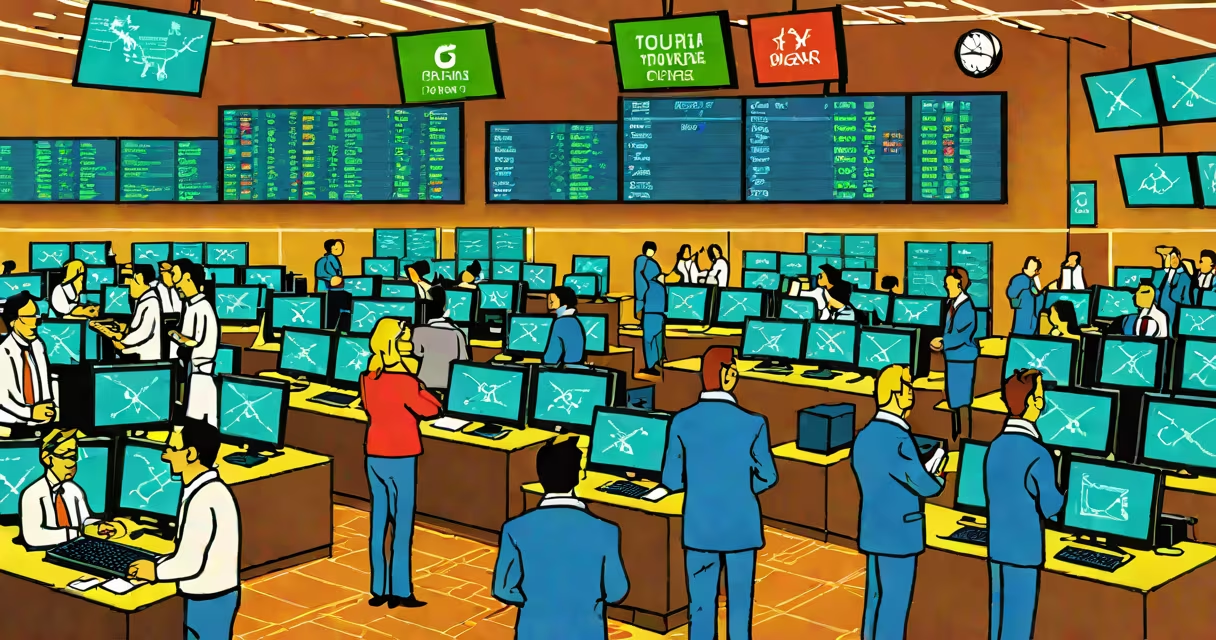
A tour stock exchange is a structured, guided visit to a financial market's physical trading floor or administrative hub, offering public access to the infrastructure and operations of major securities exchanges. These tours provide real-time exposure to market activity, historical context, and educational content about how stocks are bought, sold, and regulated.
Visitors typically enter through designated entry points, often requiring advance registration or timed tickets. The experience includes walkthroughs of trading floors, viewing live data displays, listening to narrated explanations from trained guides, and sometimes attending short presentations on market mechanics. Access is limited to non-trading hours to ensure operational safety and compliance.
Major exchanges such as the New York Stock Exchange (NYSE) and Nasdaq offer formal programs. The NYSE, located in Manhattan's Financial District, runs daily tours that include a stop at the iconic bell-ringing ceremony and a walk through the trading floor. These tours are free but require booking in advance via the official website.
How a tour stock exchange works
Tour stock exchanges operate under strict security and regulatory protocols. Participants must pass through metal detectors and show photo ID. Cameras and recording devices are prohibited inside trading areas to protect sensitive information and maintain market integrity.
Each tour follows a fixed itinerary. At the NYSE, for example, groups start in the visitor center, where they watch a 15-minute orientation video covering the history of the exchange, key milestones, and the role of market makers. They then proceed to the trading floor, where they observe floor brokers and electronic systems in action. A guide explains how trades are executed, how volatility affects pricing, and how regulatory bodies like the SEC monitor activity.
After the floor visit, participants move to the museum area, which features exhibits on landmark events such as the 1987 Black Monday crash and the dot-com bubble. Interactive kiosks allow users to simulate trades using historical data. The tour concludes with a Q&A session and a gift shop offering branded merchandise and educational materials.
Types of tour stock exchange experiences
Not all stock exchange tours are the same. Differences arise based on location, duration, focus, and access level. The following table outlines common categories:
| Type | Duration | Access Level | Focus | Best For |
|---|---|---|---|---|
| Standard Public Tour | 60-75 minutes | General admission | Overview of operations, history, and floor layout | First-time visitors, students, tourists |
| Investor Education Tour | 90-120 minutes | Pre-registration required | Market mechanics, risk management, portfolio basics | Aspiring investors, finance students |
| Private Group Tour | 120+ minutes | Custom scheduling | Customized content, executive briefings, networking | Corporations, universities, investment clubs |
| Digital-Only Virtual Tour | 45-60 minutes | Online access | Live stream of trading floor, recorded interviews | Remote learners, international audiences |
For example, the NYSE offers a "Wall Street Experience" program designed for high school economics classes. This version includes a hands-on simulation where students trade $10,000 virtual portfolios using real-time data feeds. The program aligns with national curriculum standards and is accredited by the National Council on Economic Education.
Where and why tour stock exchange visits happen
Most tour stock exchange programs are hosted in major financial centers. The NYSE is headquartered in New York City, while Nasdaq operates primarily from Times Square. Other notable locations include the London Stock Exchange (LSE) in Canary Wharf and the Tokyo Stock Exchange (TSE) in Marunouchi. Each site tailors its tour to local culture and market structure.
These tours serve multiple purposes. For individuals, they demystify complex financial systems. For educators, they provide experiential learning tools. For corporations, they support investor relations and brand visibility. According to a 2022 report by the Securities Industry and Financial Markets Association (SIFMA), 68% of surveyed investors who attended a stock exchange tour reported increased confidence in their understanding of market behavior.
One non-obvious fact: not all exchanges allow public tours. The Chicago Mercantile Exchange (CME) and the Intercontinental Exchange (ICE) do not offer regular public access due to the nature of derivatives trading and cybersecurity protocols. Visitors must apply through formal sponsorship channels, often requiring a letter of intent from a recognized institution.
Common misunderstandings and corrections
Many assume that tour stock exchange visits involve actual trading or direct interaction with brokers. This is incorrect. No participant is permitted to place trades during the tour. The experience is observational only. Even the simulated trades in educational programs use historical data, not live orders.
Another misconception is that all tours are free. While the NYSE and Nasdaq offer complimentary standard tours, private and corporate versions charge fees ranging from $250 to $1,500 per group. Some third-party providers charge up to $200 per person for premium packages that include transportation and meals.
I once attended a private tour at the NYSE during a market volatility spike. The guide explained how automated trading algorithms reacted to sudden drops in S&P 500 futures. Seeing the real-time impact on screen-combined with the guide's breakdown of circuit breakers-made abstract concepts tangible. That moment clarified how speed and regulation coexist in modern markets.
What to expect and how to prepare
Before booking, confirm the tour's operating days and times. Most exchanges close for tours on holidays and during earnings season. Dress code is usually business casual-no shorts or flip-flops. Arrive 15 minutes early to complete check-in procedures.
Bring a notebook and pen. While recordings aren't allowed, taking notes helps reinforce learning. Ask questions during the Q&A segment. Common inquiries include how long it takes to execute a trade, what happens during a market crash, and how exchanges prevent insider trading.
Understanding the mechanics of financial markets begins with seeing them in motion. A tour stock exchange provides that rare opportunity. simply curious about how global capital flows are managed, these tours deliver clarity, context, and real-world relevance.