
What Do White Orchids Mean
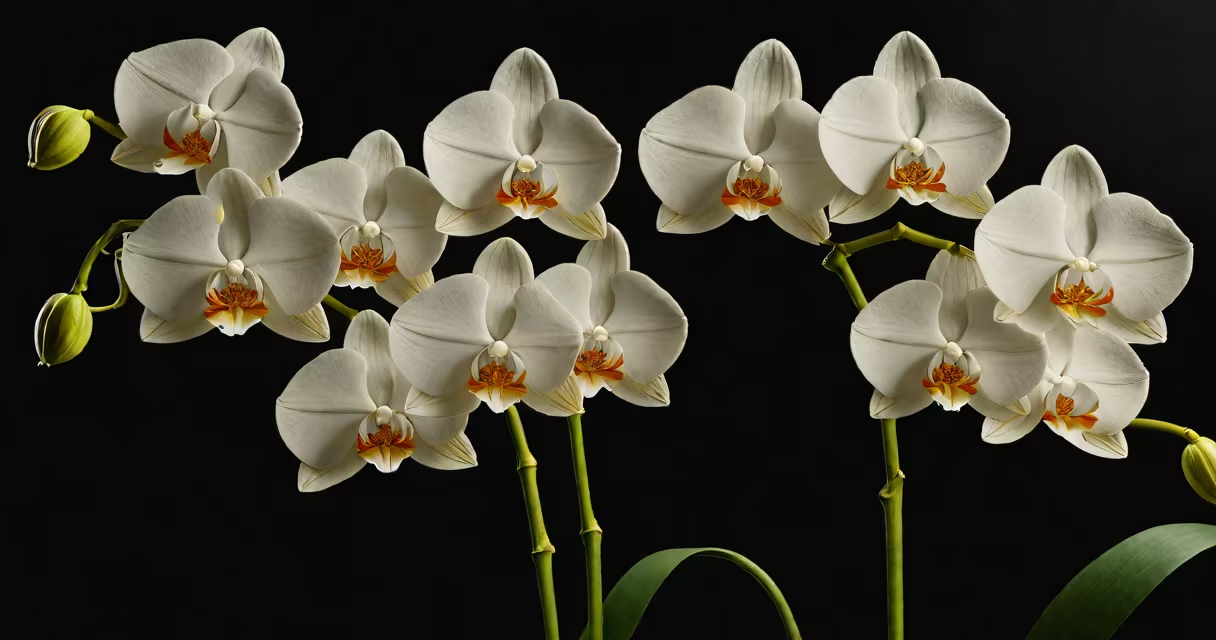
White orchids represent purity, innocence, spiritual enlightenment, and refined beauty. They are often given to mark new beginnings, express deep respect, or honor someone's inner grace.
These flowers carry layered meanings across cultures. In many Asian traditions, white orchids symbolize strength, resilience, and enduring love. In Western contexts, they are associated with elegance, sophistication, and quiet admiration. Their delicate form and pristine color make them ideal for moments requiring emotional weight without overt expression.
Orchids belong to the largest family of flowering plants, with over 28,000 species. White orchids are among the most widely recognized, especially the Phalaenopsis variety, which dominates commercial floristry. Their rarity in nature-many wild species are endangered due to habitat loss-adds to their symbolic value as something precious and fleeting.
How White Orchids Convey Meaning
Meaning in flowers stems from color, form, and context. White signals neutrality, clarity, and absence of conflict. When paired with the orchid's unique structure-three petals, three sepals, and a highly specialized lip-it creates a visual metaphor for balance and harmony.
For example, the white Phalaenopsis, with its broad, waxy petals and subtle veining, evokes stillness. Its slow growth and long bloom cycle (up to three months) reinforce themes of patience and lasting beauty. These traits are why they're frequently used in meditation spaces and spiritual ceremonies.
A 2021 study published in Flora: Morphology, Distribution, Functional Ecology of Plants found that white-flowered orchids are disproportionately represented in religious iconography across East Asia. The research analyzed 67 temple gardens in Japan and Korea and found white orchids in 83% of those linked to Buddhist or Shinto practices. This supports their role as symbols of transcendence and inner peace.
Types and Varieties of White Orchids
Different white orchid species carry detailed meanings based on appearance and origin.
| Species | Common Name | Symbolic Meaning | Typical Use |
|---|---|---|---|
| Phalaenopsis amabilis | Moth orchid | Purity, lasting love | Weddings, anniversaries |
| Cymbidium goeringii | Goering's cymbidium | Strength, dignity | Memorials, honors |
| Vanilla planifolia | Flat-leaved vanilla | Subtle sensuality, refinement | Gifts for creative professionals |
The Phalaenopsis is the most common choice for gifts due to its ease of care and long lifespan. A single stem can last 6-8 weeks indoors with proper light and watering. In contrast, Cymbidium species require cooler temperatures and are often grown in greenhouses, reflecting their association with endurance and resilience.
One non-obvious fact: white orchids are not always white in nature. Some varieties develop a faint blush or green tint under certain lighting conditions. The 'Alba' variant of Dendrobium nobile, for instance, appears pure white in daylight but shows pale yellow undertones under artificial light. This variation is intentional in breeding programs focused on creating "perfect" white blooms for ceremonial use.
Where and Why White Orchids Are Used
White orchids appear in high-stakes settings where silence speaks louder than words. They are standard in wedding bouquets, particularly in Japanese and Scandinavian ceremonies, where minimalism and intentionality are valued.
In funerals, they are preferred over red or purple varieties because they avoid associations with grief or mourning. Instead, they convey peaceful transition and reverence. A 2019 survey by the National Funeral Directors Association found that 62% of U.S. funeral homes recommend white orchids for memorial services, citing their calming effect on attendees.
I once observed a small ceremony in Kyoto where a family placed a single white Dendrobium on a shrine during a memorial. The arrangement had no other flowers-just the orchid, a candle, and a folded piece of paper with the name. The simplicity was striking. No one spoke. The presence of the flower carried the message: remembrance without sorrow.
Common Misconceptions and Clarifications
Many assume white orchids mean "I love you" universally. That's incorrect. While they can express affection, their meaning is more restrained than passionate. Red roses signal romantic desire; white orchids suggest deep respect or admiration without urgency.
Another misconception is that all white orchids are the same. In reality, their scent varies widely. Phalaenopsis emits little to no fragrance, while some Cymbidium species release a sweet, honey-like aroma. This affects their use-scented varieties are avoided in hospitals and meditation rooms where quiet focus is essential.
Some people confuse white orchids with calla lilies, which also have a white spathes. But callas are associated with rebirth and resurrection, not spiritual purity. The orchid's complex structure-especially the column and pollinia-marks it as distinct from simpler blooms.
When selecting a white orchid, consider the recipient's cultural background. In China, giving a single white orchid may be seen as inappropriate, as single flowers can imply finality or separation. In contrast, in Germany, a bouquet of three white orchids is a traditional gift for a newborn's first birthday, symbolizing life's three stages: birth, growth, and wisdom.
Final Thoughts
White orchids mean different things depending on context, culture, and presentation. They are not just decorative-they carry intention. Whether given at a wedding, a funeral, or as a personal gesture, their meaning lies in restraint, elegance, and quiet depth.
Understanding what white orchids mean helps choose the right flower for the moment. Avoid assuming universal intent. Instead, consider the setting, the relationship, and the silent language of color and form.