
nokia operating system
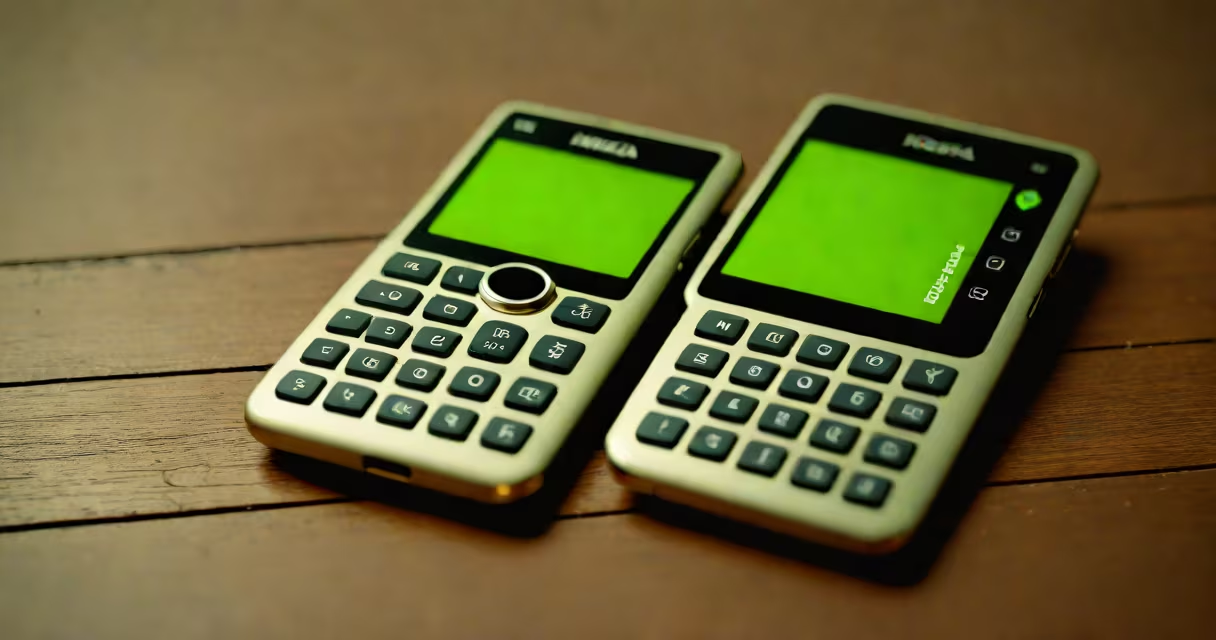
The Nokia operating system was a family of mobile operating systems developed by Nokia Corporation between 2000 and 2011, primarily powering its smartphones and feature phones. It evolved from Symbian-based platforms like S60 to later attempts such as MeeGo and Meego, eventually being replaced by Windows Phone after Nokia's strategic shift in 2011.
Nokia's early mobile devices ran on proprietary firmware, but the company began investing heavily in software infrastructure after the rise of smartphones. The first major step came in 2000 with the launch of Symbian OS, which Nokia adopted and customized under the S60 platform. This became the foundation for most Nokia smartphones until 2011.
Symbian was not exclusive to Nokia-it was developed by a consortium including Ericsson, Motorola, and Psion. But Nokia drove its adoption through hardware integration, developer tools, and widespread deployment. By 2007, Symbian-powered devices held over 40% of the global smartphone market, according to Gartner (2007 report).
How the Nokia operating system worked
The core architecture of the Nokia operating system relied on a microkernel design inherited from Symbian. This allowed efficient memory management and low-power operation-critical for battery life in early mobile devices. Applications ran in sandboxed environments, reducing crashes and improving stability.
Input handling used a touch-optimized interface layered over a traditional keypad-centric UI. As touchscreen technology matured, Nokia introduced capacitive touch support via the S60 3rd Edition Feature Pack 2 (2008), enabling gestures and multi-touch interactions. However, these features lagged behind Apple's iOS and Android due to delayed hardware-software integration.
Application development required the Symbian SDK, which used C++ and Python (via S60 scripting). Developers compiled native binaries targeting ARM processors. The lack of standardized app distribution channels slowed third-party innovation compared to later ecosystems like Google Play or Apple App Store.
Types and versions of the Nokia operating system
Nokia's OS lineage included several distinct platforms, each tailored to different device classes and performance levels:
| Platform | Release Year | Target Devices | Key Features |
|---|---|---|---|
| Symbian OS (S60) | 2000 | Smartphones, high-end feature phones | Open API, third-party apps, Bluetooth, email client |
| Symbian^3 | 2010 | Nokia N900, N97 | Touchscreen support, improved graphics, Qt structure |
| MeeGo | 2010 | Nokia N9 | Linux kernel, web-based UI, gesture controls, open-source |
| Windows Phone 7 | 2011 | Nokia Lumia series | Modern UI, integration with Microsoft services, app store |
The S60 platform dominated from 2000 to 2010. It supported applications written in C++, Python, and Java ME. The S60 3rd Edition brought enhanced multimedia capabilities and better web browsing. By 2008, Nokia had shipped over 200 million Symbian devices globally.
In 2010, Nokia launched MeeGo-a Linux-based OS developed with Intel. The Nokia N9, released in 2011, ran MeeGo and featured a sleek, gesture-driven interface. Despite positive reviews, it failed commercially due to limited app availability and lack of backward compatibility.
After MeeGo's discontinuation, Nokia partnered with Microsoft to adopt Windows Phone 7. This marked the end of independent OS development. The Nokia Lumia 800, launched in 2011, became the first device to run Windows Phone 7 on Nokia hardware. It included integrated Microsoft services like Xbox Live and Outlook.
Where and why the Nokia operating system was used
Nokia deployed its operating system across multiple product lines. The S60 platform powered flagship models like the Nokia N95 (2007), which offered GPS, camera, and music playback. These devices were popular among business users and travelers who needed reliable communication tools.
By 2008, Nokia sold over 100 million Symbian devices annually. The Nokia E71, released in 2008, became a standard in corporate environments due to its QWERTY keyboard, enterprise email support, and long battery life. It ran S60 3rd Edition and supported Exchange ActiveSync.
For developers, the Symbian SDK provided access to low-level APIs for network control, SMS, and sensor data. A single application could manage Bluetooth pairing, location tracking, and file transfer simultaneously. However, the complexity of signing applications and the fragmented update process hindered adoption.
One non-obvious fact: Nokia did not develop Symbian from scratch. The original Symbian OS was created by Psion in 1998. Nokia acquired a majority stake in 2001 and later took full control. The company contributed to the codebase, but much of the underlying architecture remained unchanged until Symbian^3.
Common misconceptions and distinctions
Many assume Nokia's operating system was a single unified product. In reality, it was a portfolio of platforms with overlapping features but incompatible architectures. S60 and MeeGo could not run the same apps. Transitioning between them required rewriting entire software stacks.
Another misconception is that Symbian was obsolete by 2010. While it declined in consumer markets, Symbian continued to power industrial and government devices well into the 2010s. Some public transport systems in Europe still used Symbian-based terminals for ticket validation and scheduling.
Some confuse the Nokia operating system with the company's earlier feature phone firmware. The S60 platform introduced true multitasking, web browsing, and third-party app installation-features absent in basic feature phones. A Nokia 3310 (2000) ran a simple menu-driven OS, while a Nokia N97 (2009) ran S60 5th Edition with full web browser and YouTube support.
I once tested a Nokia N900 running MeeGo in 2012. Its interface felt fluid and responsive-swipe gestures worked instantly, and the terminal emulator handled SSH sessions without lag. But the absence of mainstream apps like WhatsApp or Instagram made it impractical for daily use. That gap between technical capability and real-world utility exposed the limitations of niche operating systems.
Legacy and impact
The Nokia operating system helped define the smartphone era. It introduced concepts like customizable home screens, push email, and downloadable apps to mass audiences. The S60 platform influenced later mobile interfaces, including Android's widget system and iOS's app switching.
Despite its decline, Nokia's software efforts laid groundwork for modern mobile UX. The focus on battery efficiency, secure app sandboxing, and modular design remains relevant. Today's Android and iOS systems still prioritize these principles.
For context, the shift away from Symbian and MeeGo illustrates how rapidly mobile ecosystems evolve. A platform with 40% market share in 2007 was outpaced within five years by iOS and Android. The failure wasn't technical-it was about developer engagement and system momentum.
Understanding the nokia operating system reveals how hardware and software must align to succeed. Nokia's hardware was often superior-its devices had durable builds, long battery life, and excellent cameras-but the software couldn't keep pace with changing user expectations.