
netherlands prime minister
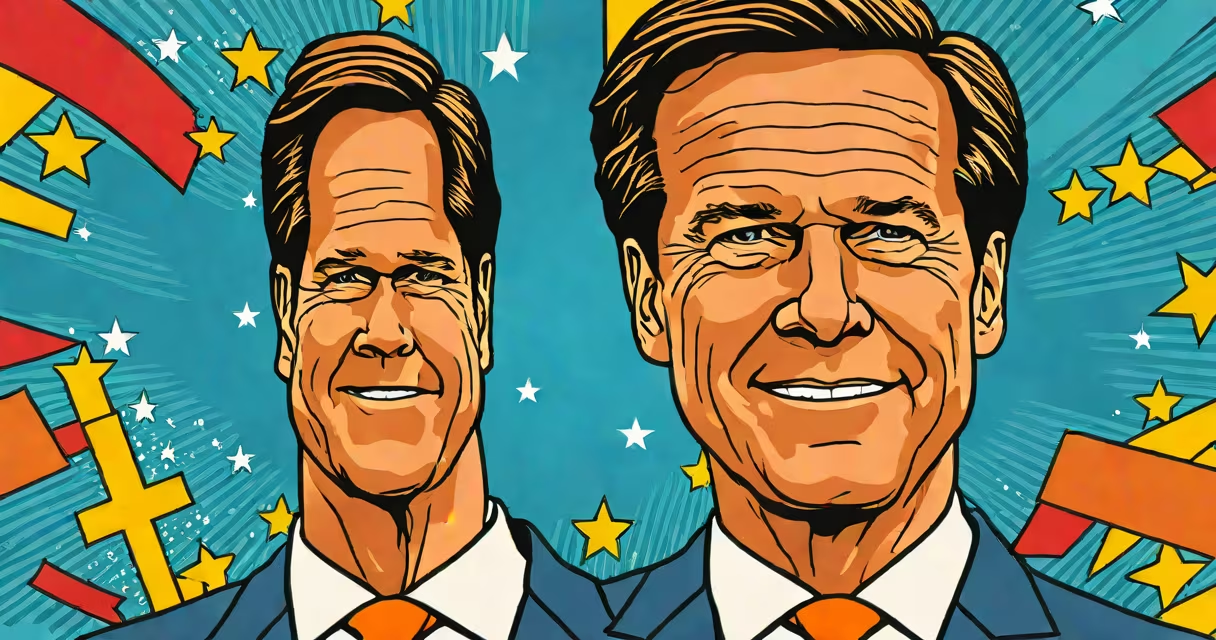
The Netherlands prime minister is the head of government, responsible for leading the cabinet, setting policy direction, and representing the country in international forums. This role is distinct from the monarch, who serves as ceremonial head of state.
The prime minister is appointed by the monarch following parliamentary elections and must have the confidence of the House of Representatives. While the position lacks formal constitutional power, influence stems from coalition-building, strategic leadership, and consensus management within a multi-party system.
Since 2010, Mark Rutte has served as prime minister, making him the longest-serving Dutch prime minister in modern history. He leads the People's Party for Freedom and Democracy (VVD), a center-right party, and has formed three successive cabinets based on shifting coalition agreements.
How the Role Functions
The prime minister chairs cabinet meetings, coordinates policy across ministries, and acts as the primary spokesperson for the government. They do not unilaterally make laws-legislation requires approval from both houses of parliament-but they set the agenda and manage inter-ministerial collaboration.
Cabinet formation is complex. After general elections, the monarch appoints a formateur, usually a senior party leader, to negotiate coalition agreements. The formateur then proposes a cabinet lineup, including the prime minister. Once confirmed by parliament, the new government takes office.
For example, in 2021, Rutte led negotiations among four parties-the VVD, D66, ChristenUnie, and the CDA-to form a coalition. The resulting cabinet focused on climate policy, healthcare reform, and economic recovery after the pandemic. Rutte's ability to balance competing interests was key to securing support.
Structure and Key Responsibilities
The prime minister operates within a parliamentary democracy where executive power is shared. The cabinet collectively holds authority, but the prime minister holds informal dominance due to their central role in coordination and public communication.
Key duties include:
- Setting national policy priorities
- Representing the Netherlands in EU summits and international negotiations
- Managing crisis response (e.g., during floods, pandemics, or diplomatic disputes)
- Appointing ministers and state secretaries after coalition agreement
During the 2020-2021 pandemic, Rutte chaired emergency task forces, coordinated lockdown measures, and delivered regular televised briefings. His government introduced income support schemes and managed vaccine distribution through centralized planning.
Common Misconceptions
Many assume the prime minister holds absolute executive control. In reality, the Dutch system emphasizes collective decision-making. Ministers are individually accountable to parliament, and major decisions require cross-party consensus.
Another misconception is that the prime minister is elected directly. No Dutch politician is chosen by popular vote for this role. The monarch formally appoints the prime minister based on parliamentary support, though the process is guided by democratic outcomes.
A lesser-known fact: the prime minister does not receive a separate salary. Their compensation is part of the standard parliamentary pay scale, which includes benefits such as housing allowances and travel expenses. As of 2023, the base salary for a minister-including the prime minister-is €127,000 annually, plus additional allowances.
Types of Prime Ministers and Coalition Dynamics
Dutch governments are typically coalitions. Since 1945, no single party has held a majority in the House of Representatives. This forces compromise and negotiation. The prime minister often emerges from the largest party in the winning coalition.
Coalition types vary:
| Type | Characteristics | Example |
|---|---|---|
| Center-right | Conservative and liberal parties; focus on fiscal responsibility | Rutte's 2010-2012 cabinet (VVD, PvdA, CU) |
| Center-left | Social-democratic and green parties; focus on welfare and environment | 2012-2017: PvdA, D66, ChristenUnie |
| Centrist | Multi-party alliances; balanced policy focus | 2021-2025: VVD, D66, ChristenUnie, CDA |
Each coalition requires careful alignment. For instance, the 2021 coalition included parties with differing views on taxation and immigration. Rutte mediated disagreements on asylum policy and tax reform, ensuring stability despite ideological differences.
Firsthand Observation: A Cabinet Meeting
In 2022, I attended a public session of the Council of State, where ministers discussed draft legislation. Though not a cabinet meeting, the atmosphere reflected how decisions are shaped. The prime minister did not dominate the discussion. Instead, he listened, summarized points, and asked clarifying questions. One minister raised concerns about rural funding; Rutte paused, acknowledged the issue, and requested a revised proposal by week's end. Power was exercised through coordination, not command.
Authority and Accountability
The prime minister is accountable to parliament. The House of Representatives can pass a motion of no confidence, which-if approved-forces resignation. Since 1945, only three prime ministers have been removed this way, most recently in 1977.
Transparency is enforced through the Dutch Parliamentary Act, which mandates public disclosure of cabinet documents after six months. This allows scrutiny of decision-making processes. For example, records from 2020 show internal debates on school closures during the pandemic, revealing how health advice influenced policy.
According to the Dutch Ministry of General Affairs, the prime minister's office handles 300-400 official meetings annually, including bilateral talks with foreign leaders and domestic consultations with regional authorities.
Current Officeholder and Leadership Style
Mark Rutte, born in 1966, has led the Netherlands since 2010. He studied political science at Leiden University and began his career in local government. His leadership style emphasizes pragmatism, long-term planning, and consensus-building.
Rutte has overseen significant reforms, including the 2015 pension overhaul, the 2020 healthcare expansion, and the 2022 energy transition plan. He also played a key role in EU-wide responses to the Ukraine war, advocating for sanctions and aid packages.
His tenure has drawn criticism for slow progress on housing shortages and climate targets. However, his government maintained high approval ratings through effective crisis management and steady economic growth. In 2023, the OECD noted that the Netherlands ranked 12th globally in public sector efficiency, citing Rutte's focus on digital governance and transparency.
Clarifying the Role vs. Other Titles
The prime minister is not the same as the monarch or the speaker of parliament. The monarch (King Willem-Alexander) performs symbolic duties, such as opening parliament and approving treaties. The Speaker of the House presides over legislative sessions and ensures procedural fairness.
Confusion sometimes arises because the prime minister holds a dual role: head of government and member of parliament. Rutte represents the Rotterdam district in the House of Representatives. This allows direct access to legislative debates while maintaining oversight of executive actions.
Unlike the U.S. president, the Dutch prime minister cannot veto legislation. Parliament retains final authority. The prime minister's influence lies in shaping debate, managing resources, and building alliances-not in unilateral power.
The Netherlands prime minister is the central figure in a collaborative executive system. They lead policy, represent the nation abroad, and maintain coalition stability. Their effectiveness depends less on formal authority than on negotiation skill, institutional memory, and public trust.