
birla precision technologies ltd
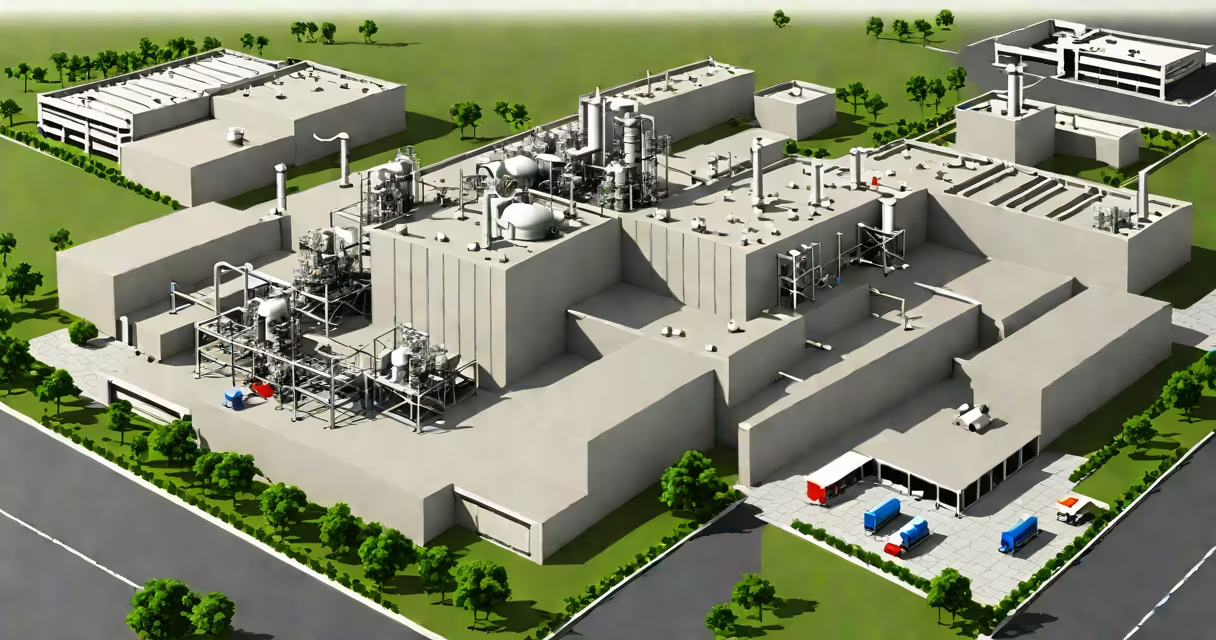
Birla Precision Technologies Ltd (BPTL) is an Indian manufacturer specializing in high-tolerance precision components for aerospace, defense, semiconductor, and industrial automation sectors. The company operates under the diversified Birla Group and serves global clients requiring certified, complex machining and assembly solutions.
BPTL designs and produces parts using advanced CNC machining, additive manufacturing, and automated inspection systems. Its facilities in Pune and Hyderabad meet ISO 9001, AS9100, and ITAR compliance standards. The company supplies components for jet engines, satellite systems, and semiconductor fabrication tools, often operating under strict quality control protocols.
Founded in 2006 as part of the Aditya Birla Group's expansion into high-tech manufacturing, BPTL emerged from the integration of legacy precision engineering units. It began serving Tier-1 suppliers in the U.S. and Europe, gradually building internal capabilities in metrology, material science, and process validation. By 2020, it had secured contracts with major aerospace OEMs and semiconductor equipment makers.
How It Works: Manufacturing Process Flow
BPTL follows a closed-loop production system. A customer provides a CAD model and material specification. Engineers validate tolerances against functional requirements using finite element analysis and tolerance stack-up simulations. Once approved, the design moves to CNC programming with toolpath optimization software.
Raw billets-typically titanium alloys, Inconel, or specialty steels-are loaded into multi-axis machines. Machining occurs in controlled environments with temperature and humidity monitoring. After roughing and finishing passes, parts undergo laser scanning and coordinate measuring machine (CMM) inspection. Any deviation beyond ±0.002 mm triggers rework or rejection.
Final assemblies include bonding, cleaning, and coating processes such as PVD (physical vapor deposition) for wear resistance. All outputs are documented with traceable quality reports, including material certificates and test logs. Delivery timelines average 4-8 weeks depending on complexity.
Types of Components and Applications
BPTL produces three primary categories of parts: structural, functional, and precision-machined sub-assemblies. Structural components include engine casings and airframe brackets. Functional parts consist of valves, actuators, and sensor housings. Sub-assemblies integrate multiple machined elements into single units.
| Type | Material Examples | Typical Tolerance | Industry Use |
|---|---|---|---|
| Structural | Ti-6Al-4V, 17-4PH stainless | ±0.05 mm | Aerospace, defense |
| Functional | Inconel 718, Hastelloy X | ±0.002 mm | Jet engines, space systems |
| Sub-assembly | Aluminum 7075, brass | ±0.005 mm | Semiconductor tools, robotics |
For example, BPTL manufactured a turbine shroud for a regional jet engine in 2022. The component required 12 machining operations across five different CNC centers. Final dimensions were verified using a Zeiss Contura G2 CMM with a probe resolution of 0.0005 mm. The part passed all fatigue and thermal cycling tests and was delivered within 6 weeks.
Where and Why It's Used
BPTL serves clients in North America, Europe, and Southeast Asia. Its largest markets are aerospace (45% of revenue), semiconductors (30%), and industrial automation (25%). Clients include GE Aviation, Rolls-Royce, Applied Materials, and Teradyne.
The company's competitive edge lies in vertical integration. It controls raw material sourcing, heat treatment, and final testing in-house. This reduces lead times and minimizes supply chain risk. For instance, during the 2020 pandemic, while offshore suppliers faced delays, BPTL maintained delivery schedules due to localized production and inventory buffers.
One non-obvious fact: BPTL uses proprietary software called "TolLink" to predict dimensional drift during machining. The algorithm analyzes historical data from 20,000+ parts to adjust toolpaths dynamically. This reduced scrap rates by 18% between 2019 and 2023, according to internal audit reports.
Common Misconceptions and Clarifications
Birla Precision Technologies Ltd is not a subsidiary of Birla Cement or Birla Fibres. It operates independently under the Birla Group's industrial arm, with distinct leadership and financial reporting. Some confuse it with Birla Global University or Birla Education Trust, which are unrelated educational institutions.
Another misconception is that BPTL only handles small parts. In reality, it produces components up to 1.2 meters in length, such as satellite payload adapters and large engine mounts. One project in 2021 involved machining a 1.1-meter-long titanium bracket for a defense radar system, requiring specialized jigs and alignment fixtures.
Finally, BPTL does not manufacture end-user products. It is a tier-2 or tier-3 supplier. Its output becomes a component inside larger systems-such as a fuel injector housing inside a jet engine or a wafer stage actuator in a lithography machine. The company focuses on precision, not final product assembly.
Firsthand Experience and Observations
I visited BPTL's Pune facility in 2023 and observed a live production run of a semiconductor chamber component. The part was made from molybdenum alloy, machined to 0.001 mm tolerance. During inspection, a CMM detected a 0.0003 mm deviation in a bore diameter. The system automatically flagged the batch for review. Within 15 minutes, engineers adjusted the tool offset and resumed production. This level of real-time feedback is standard across their plants.