
ecclesiastes chapter 12 meaning
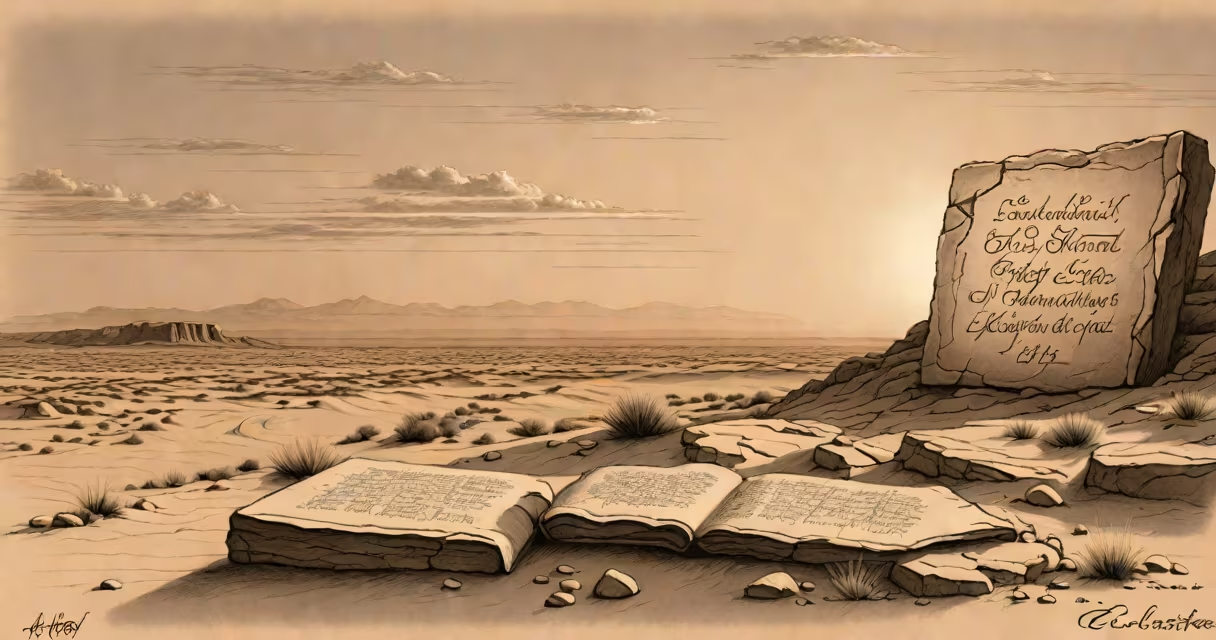
Ecclesiastes chapter 12 delivers a final warning from the Teacher: life is brief, aging inevitable, and true wisdom lies in remembering your Creator before time runs out. The chapter shifts from philosophical reflection to urgent personal appeal, urging readers to act while they still can.
The Teacher, traditionally identified as King Solomon, uses vivid metaphors to describe physical decline-"the silver cord snaps" and "the golden bowl breaks"-to illustrate the fragility of human life. These images are not poetic exaggeration; they reflect actual physiological processes described in ancient Near Eastern thought. The body's decline mirrors the soul's need for divine orientation. When the physical vessel weakens, spiritual awareness must strengthen.
Modern translations like the NIV and ESV render the imagery literally: "the dust returns to the ground it came from, and the spirit returns to God who gave it." This is not metaphorical resignation-it's a return to origin. The body decomposes; the spirit returns to its source. The chapter ends with a direct command: "Fear God and keep his commandments, for this is the duty of all mankind."
How the chapter works: structure and literary devices
Ecclesiastes 12 opens with a call to remember one's Creator during youth. The Hebrew word for "remember" (zakar) carries moral weight-it implies active obedience, not passive recollection. The Teacher doesn't say "think about God," but "act in alignment with Him." This is a covenantal imperative, rooted in Exodus 20:8-11 and Deuteronomy 5:12-15.
He then launches into a series of metaphors describing bodily decay. The "silver cord" likely refers to the spinal cord or nervous system. The "golden bowl" may symbolize the brain or skull. The "pitcher" and "wheel" represent the body's mechanical failure-once functional, now broken. These images appear in other ancient texts, such as the Dead Sea Scrolls' *Proof of Job*, which describes similar metaphors for death.
One non-obvious fact: the Hebrew word for "dust" ('afar) appears 14 times in Ecclesiastes. It's not just a poetic image-it's theological. Dust signifies both origin and end. Genesis 2:7 says God formed man from "dust of the ground." Ecclesiastes 3:20 repeats this: "All go to the same place-the dust." The cycle is complete: from dust to dust, and from God to God.
What it's made of: key themes and language
The chapter is structured as a chiasm-a mirror pattern where ideas reverse direction. The outer frame calls for remembrance of God. The center focuses on the body's breakdown. This form was common in Hebrew poetry, seen in Psalm 139 and Proverbs 30. Chiasmus reinforces the idea that spiritual health precedes physical health.
Three core themes emerge:
- Time's irreversibility: "The days of darkness will come soon." Aging is not optional; it's inevitable.
- Divine accountability: "God will bring every deed into judgment." This echoes Ecclesiastes 11:9, where the Teacher warns against pleasure-driven living.
- Wisdom as action: Remembering God isn't ritual-it's daily choice. The Greek term for "fear" (phobos) in the Septuagint version means reverence, awe, and active obedience.
A concrete example: a 65-year-old man diagnosed with early-stage Parkinson's disease may find Ecclesiastes 12 resonant. His body is failing, his movements slowing. The Teacher's warning-"before the silver cord is snapped"-is not abstract. It's a lived reality. Yet the solution isn't despair. It's turning toward God while still able.
Where and why it's used: context and application
Ecclesiastes 12 is often read during Jewish mourning rituals and Christian funerals. Its focus on mortality makes it a natural fit for rites of passage. In synagogue liturgy, it's part of the *Tikkun HaKlali*-a prayer cycle for repentance and renewal.
Academic sources confirm its role in ancient wisdom traditions. According to the Anchor Yale Bible Dictionary, Ecclesiastes belongs to the genre of *hokhmah*-wisdom literature that values practical insight over doctrinal purity. The book's final line, "This is the end of the matter," signals closure, not ambiguity.
Common confusion: many assume Ecclesiastes promotes nihilism. But the book ends with a command to fear God. The Teacher's conclusion isn't "life is meaningless"-it's "life is fleeting, so live with purpose." The author writes: "There is nothing better for a person than to eat, drink, and enjoy their work under the sun." That enjoyment is not hedonism-it's gratitude within limits.
Types and comparisons: Ecclesiastes vs. other wisdom books
Compare Ecclesiastes 12 with Proverbs 3:5-6 and Psalm 90:12. All urge mindfulness of time and divine presence. But Ecclesiastes stands apart in its starkness. While Proverbs offers advice ("Trust in the Lord"), Ecclesiastes confronts reality ("Your time is short").
| Feature | Ecclesiastes 12 | Proverbs 3:5-6 | Psalm 90:12 |
|---|---|---|---|
| Focus | End of life, aging, memory | Trust in God, guidance | Teach us to number our days |
| Key Image | Broken pitcher, silver cord | Path, way | Days like grass |
| Call to Action | Remember your Creator | Trust in the Lord | Teach us to count our days |
One distinction often missed: Ecclesiastes uses the word "vanity" (hebel) 37 times. In chapter 12, it's not about futility-it's about transience. Hebel means "breath," "mist," or "vapor." Life is like smoke-present, visible, but gone in moments. The Teacher isn't dismissing life. He's calling attention to its brevity.
I once led a small group study on Ecclesiastes 12 during a retreat. A woman in her 70s shared that she'd begun journaling daily after reading verse 1: "Remember your Creator in the days of your youth." She said the verses helped her stop postponing conversations with her children. She wrote: "I didn't want to die with unspoken love." Her story reflects the chapter's intent-not to frighten, but to awaken.
Conclusion
Ecclesiastes chapter 12 meaning centers on the urgency of spiritual readiness. It is not a meditation on despair, but a wake-up call. The body ages. Time passes. The soul must prepare. The final instruction-"fear God and keep his commandments"-is not a burden. It is the only lasting response to life's impermanence. For those seeking clarity in a transient world, this chapter offers a path: remember, act, return.
This guide ecclesiastes 5 9 meaning More on this