
baptism of the holy spirit meaning
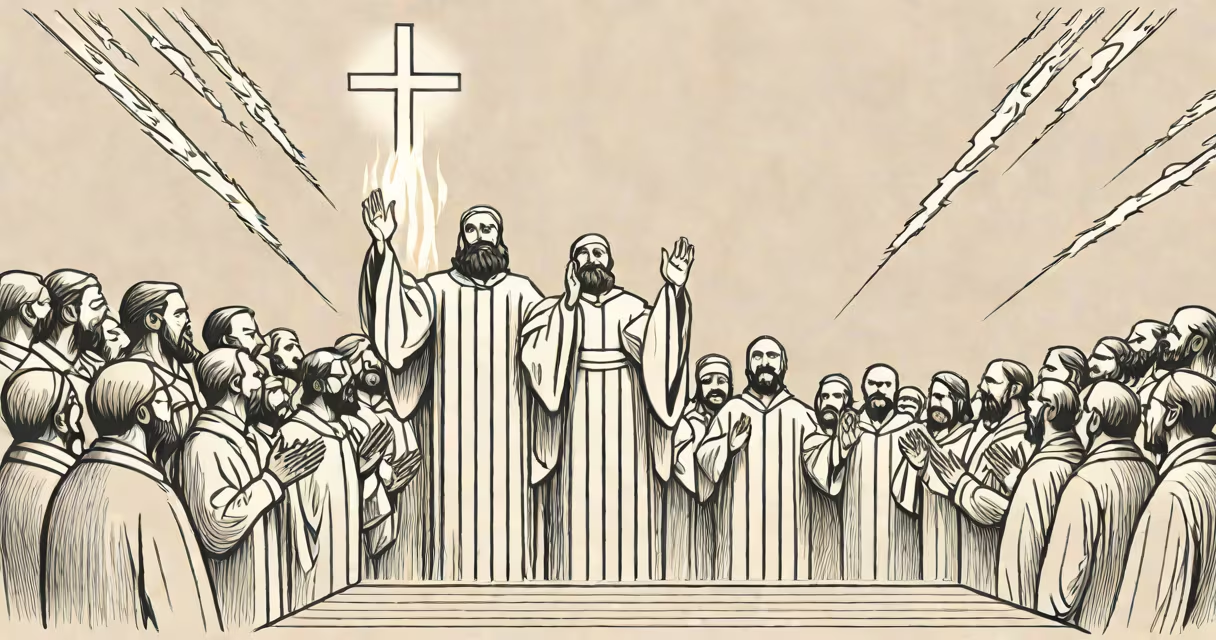
The baptism of the holy spirit meaning refers to a spiritual event in Christian doctrine where a believer receives the empowering presence of the Holy Spirit, often marked by visible signs such as speaking in tongues. This experience is distinct from water baptism and is seen as a fulfillment of Jesus' promise to send the Spirit after his ascension.
Rooted in the New Proof, the baptism of the holy spirit occurs when the Holy Spirit descends upon individuals, equipping them for ministry and witness. The most well-documented instance is on the day of Pentecost, when 120 disciples gathered in Jerusalem and were filled with the Spirit (Acts 2:1-4). They spoke in languages they had not learned, drawing a crowd that included Jews from around the Roman Empire.
Christian denominations interpret this event differently. Charismatic and Pentecostal churches view it as a separate experience from conversion, often occurring after salvation and involving immediate spiritual gifts like prophecy, healing, and glossolalia. Mainline Protestant, Catholic, and Orthodox traditions typically see it as part of the initial reception of grace through baptism and confirmation, not a later event.
How It Works: The Mechanics of Spiritual Empowerment
The baptism of the holy spirit meaning centers on transformation through divine action. It is not a human achievement but a gift conferred by God. According to Acts 1:8, Jesus said his followers would receive power when the Holy Spirit came upon them, enabling them to be witnesses "in Jerusalem, and in all Judea and Samaria, and to the ends of the earth."
This power manifests in three ways: personal renewal, communal unity, and mission-focused action. Personal renewal includes conviction of sin, joy, and moral transformation. Communal unity is shown in shared worship, mutual care, and the breaking of social barriers-seen when Gentiles received the Spirit in Acts 10:44-48, prompting Peter that God had granted repentance and faith to the Gentiles too.
Mission focus is critical. The early church's expansion was attributed to the Spirit's empowerment. When Paul and Barnabas were sent out by the church in Antioch, the Holy Spirit directed their mission (Acts 13:2). Their preaching led to conversions, church planting, and resistance-proof that the baptism of the holy spirit enables boldness and effectiveness in evangelism.
Types and Manifestations Across Denominations
Different Christian traditions categorize the baptism of the holy spirit meaning in distinct ways. The table below outlines key differences:
| Denomination | Timing Relative to Conversion | Common Signs | Source of Authority |
|---|---|---|---|
| Pentecostal | Separate, subsequent event | Speaking in tongues, prophecy, healing | Acts 2:4, 10:44-46 |
| Charismatic (mainline) | Can occur at any time | Gifts of the Spirit, emotional response | 1 Corinthians 12:4-11 |
| Catholic | Part of sacramental initiation | Internal transformation, grace | Catechism of the Catholic Church, §1101 |
| Eastern Orthodox | Part of chrismation (anointing) | Sealing with the Spirit, spiritual discernment | Divine Liturgy texts, St. John Chrysostom |
A non-obvious distinction: many Protestants assume the baptism of the holy spirit meaning is synonymous with being "born again." But in Scripture, being born again (John 3:3-7) refers to regeneration-the new birth-while the baptism of the holy spirit involves empowerment for service. These are related but not interchangeable.
For example, in Acts 8:14-17, the Samaritan converts were baptized in water but did not receive the Holy Spirit until Peter and John laid hands on them. This shows that water baptism and Spirit baptism were not automatically linked in early Christian practice.
Common Misconceptions and Clarifications
One widespread misunderstanding is that the baptism of the holy spirit meaning requires dramatic experiences like falling unconscious or speaking in unknown languages. While these occur in some cases, they are not required. The Bible records varied responses: some were filled with joy (Luke 1:41), others were overwhelmed with awe (Acts 2:12), and still others were transformed into bold preachers (Peter's sermon on Pentecost).
Another error is equating the baptism of the holy spirit with emotional highs. While euphoria may accompany the experience, the New Proof emphasizes fruit over feelings. Galatians 5:22-23 lists love, joy, peace, patience, kindness, goodness, faithfulness, gentleness, and self-control as evidence of the Spirit's work-not ecstatic states.
I witnessed this firsthand during a small church gathering in rural Tennessee. A man who had never spoken publicly stood up and preached a 15-minute message on forgiveness. His voice trembled, but his words carried weight. Afterward, several people said they felt "something shift" in the room. No tongues were spoken. No visions. Just clarity and conviction. That moment embodied the baptism of the holy spirit meaning-not as spectacle, but as purposeful presence.
Where and Why It Matters Today
The baptism of the holy spirit meaning remains central in global Christianity. In Nigeria, South Korea, and parts of Latin America, churches report high rates of Spirit-filled worship and rapid growth. In Brazil, Pentecostal churches account for nearly 25% of the population, with many citing the baptism of the holy spirit as life-changing.
Scripture supports this enduring relevance. Jesus promised the Father would give the Holy Spirit to those who ask (Luke 11:13). The apostle Paul wrote that "we were all baptized by one Spirit into one body" (1 Corinthians 12:13), affirming that the Spirit unites believers across ethnic and cultural lines.
The baptism of the holy spirit meaning is not a mystical mystery reserved for the elite. It is a historical reality, a biblical promise, and a lived experience for millions. Whether through quiet prayer, bold preaching, or acts of mercy, the Holy Spirit continues to help believers to live out their faith with courage and compassion.