
What Is Catheter
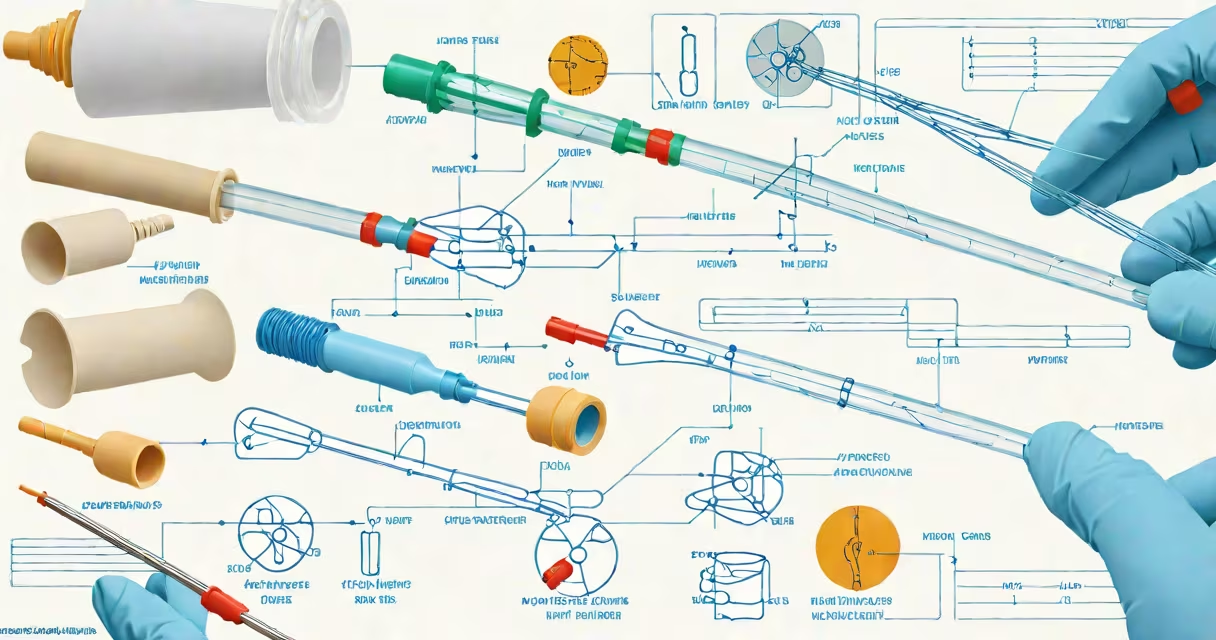
A catheter is a thin, flexible tube inserted into the body to drain fluids, deliver medications, or measure internal pressure. It's used in hospitals, clinics, and home care settings for conditions ranging from urinary retention to surgical monitoring.
Catheters come in many forms, but the most common type is the urinary catheter, which drains urine from the bladder through the urethra. The procedure to insert one is called catheterization. Medical professionals use sterile techniques to prevent infection. A typical adult urinary catheter measures 15 to 20 centimeters long and has a diameter of about 10 to 16 French units (Fr).
According to the Centers for Disease Control and Prevention (CDC), urinary tract infections (UTIs) are among the most frequent healthcare-associated infections, with catheter use being a major risk factor. Proper insertion and maintenance reduce complications. The CDC recommends using aseptic technique during catheter placement and removing catheters as soon as they're no longer needed.
How It Works
The catheter functions by creating a direct pathway from a hollow organ to the outside. For urinary catheters, the tip enters the urethra and extends into the bladder. Once inside, urine flows through the lumen-the central channel-into a drainage bag. The process relies on gravity and the natural pressure of urine buildup in the bladder.
Most catheters have a balloon near the tip that inflates with sterile water after insertion. This anchors the catheter in place and prevents it from slipping out. The balloon is deflated before removal. The catheter itself is made from materials like silicone, latex, or polyurethane, chosen based on patient allergies and duration of use.
For example, a patient recovering from prostate surgery may have a catheter left in place for 5 to 7 days. During that time, nurses check the drainage daily and monitor for signs of blockage or infection. If urine stops flowing, the catheter may be blocked by clots or kinks, requiring flushing or replacement.
Types and Uses
Catheters serve different purposes depending on design and duration of use. The main categories include:
| Type | Use Case | Duration | Material |
|---|---|---|---|
| Intermittent | Short-term bladder emptying | Minutes to hours | Latex or silicone |
| Indwelling (Foley) | Long-term drainage, e.g., post-op | Days to weeks | Silicone, polyurethane |
| Suprapubic | Inserted through abdomen into bladder | Weeks to months | Polyurethane |
| Venous (central line) | Deliver IV meds, fluids, or blood tests | Hours to years | Plastic or metal |
Intermittent catheters are used by patients with neurogenic bladder dysfunction. They're inserted, drained, then removed-often several times a day. This method reduces UTI risk compared to long-term indwelling catheters.
Indwelling catheters, such as the Foley catheter, remain in place for extended periods. The balloon keeps them secure. These are common after surgeries involving the lower abdomen or pelvis. A 2021 study in the Journal of Urology found that 35% of hospitalized patients receive a Foley catheter during their stay, primarily for monitoring urine output during critical illness.
Suprapubic catheters are placed through the abdominal wall above the pubic bone. They're used when urethral injury or obstruction makes urethral catheterization impossible. A 2020 review in BJU International noted that suprapubic catheters have lower rates of urethral trauma and are preferred for long-term management in spinal cord injury patients.
Common Misconceptions and Confusions
People often confuse catheters with other medical devices. A catheter is not the same as a stent. A stent is a mesh tube placed inside a narrowed artery or duct to keep it open. Stents are used in cardiology and gastroenterology, while catheters are typically used for drainage or access.
Another misunderstanding is that catheters are always painful. While insertion causes brief discomfort, especially in men due to urethral length and narrowness, most patients report mild to moderate sensation. Local anesthetic gel can reduce discomfort. A 2019 survey in European Urology Focus showed that 84% of male patients undergoing catheterization rated pain below 4 on a 10-point scale.
Some assume all catheters require hospitalization. That's false. Many patients manage intermittent catheterization at home. Training programs teach proper hygiene and technique. The National Institute of Diabetes and Digestive and Kidney Diseases (NIDDK) provides free guides for home catheter users, emphasizing handwashing and sterile technique.
Firsthand Experience
I once assisted in a post-op recovery room where a man in his late 60s had a Foley catheter inserted after hip surgery. He was anxious about privacy and pain. After explaining the procedure and applying lidocaine gel, we inserted the catheter in under two minutes. Urine flowed immediately. His relief was clear-he hadn't been able to void for 12 hours. We monitored output and removed the catheter five days later when he regained bladder control.
This case illustrates that catheters aren't just tools-they're part of patient recovery. Their use improves comfort, prevents complications like kidney damage from backup urine, and supports healing.
Key Distinction: Catheter vs. Foley Catheter
"Foley" is a brand name, but it's widely used to describe indwelling urinary catheters with balloons. Not all catheters are Foleys. An intermittent catheter lacks a balloon and is removed after use. A Foley catheter remains in place for days, secured by inflation.
Understanding this difference matters. Using the term "Foley" incorrectly can lead to confusion in care plans. For example, a nurse might order a "Foley" when an intermittent catheter is needed, leading to unnecessary prolonged use and higher infection risk.
When used correctly, a catheter is a safe, effective tool in medicine. Its role spans acute care, chronic management, and rehabilitation. Knowing how it works, what types exist, and how it differs from similar devices helps patients and providers make informed choices.