
What Are the Best Solar Panel Manufacturers
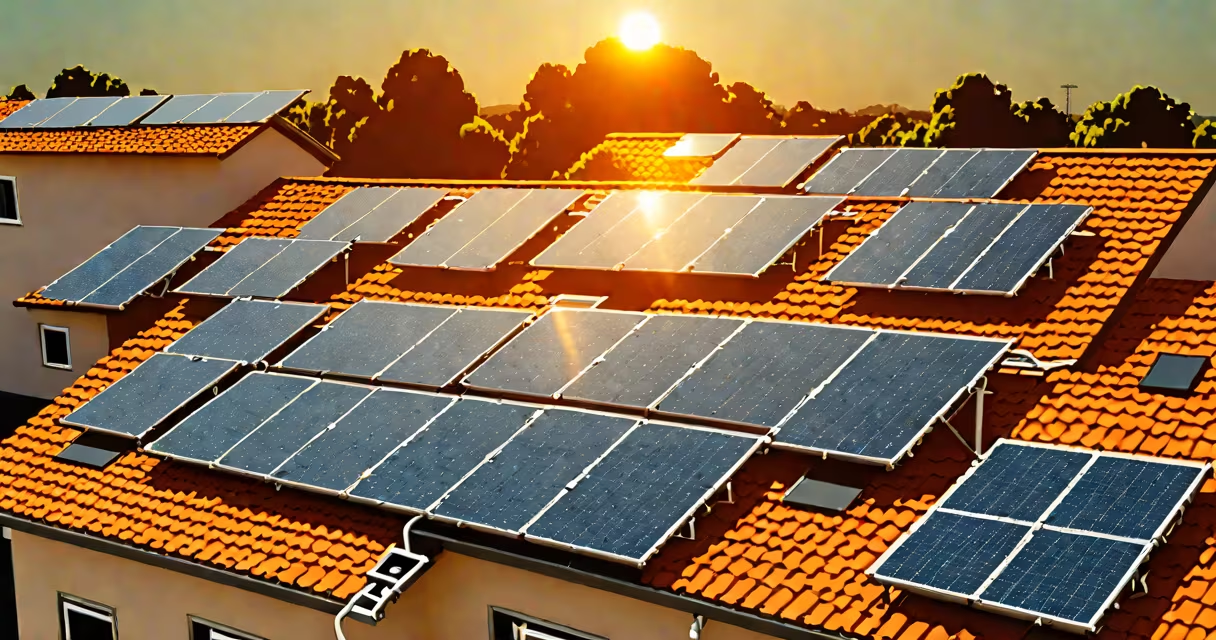
The best solar panel manufacturers produce photovoltaic modules with high energy conversion rates, long lifespans, and strong warranties. These companies prioritize efficiency, durability, and consistent output under real-world conditions.
Solar panels convert sunlight into electricity using semiconductor materials, typically silicon. The most effective manufacturers design cells to maximize photon absorption and minimize energy loss during conversion. Efficiency ratings above 22% are now standard among top-tier brands, with some exceeding 23% in lab tests.
Leading manufacturers invest heavily in research and production quality control. They use advanced cell architectures like PERC (Passivated Emitter and Rear Cell) and half-cut cells to improve performance. These designs reduce internal resistance and heat buildup, increasing usable power output over time.
How Top Solar Panel Manufacturers Are Evaluated
Performance metrics such as efficiency, degradation rate, and temperature coefficient determine a panel's real-world effectiveness. A panel with 21% efficiency may outperform one at 22% if it degrades slower or handles heat better.
Manufacturers like Canadian Solar, LONGi, and Q CELLS consistently rank high in independent testing. The National Renewable Energy Laboratory (NREL) tracks module performance data through its Photovoltaic Module Reliability Database, which shows that top brands maintain over 90% output after 25 years of use.
Warranty terms also separate leaders from average producers. Most top brands offer 25-year product and performance warranties. For example, SunPower guarantees 92% of original power output after 25 years, while others guarantee 80% to 85%. This difference impacts long-term return on investment.
Types of Leading Solar Panel Technologies
Three main technologies dominate the market: monocrystalline, polycrystalline, and thin-film. Monocrystalline panels are the most efficient and widely used in residential installations.
| Technology | Efficiency Range | Best For | Example Brands |
|---|---|---|---|
| Monocrystalline | 20-23% | Roof space-limited homes, high-efficiency needs | LG, SunPower, Canadian Solar |
| Polycrystalline | 15-17% | Budget installations, large commercial roofs | First Solar (some models), JinkoSolar |
| Thin-Film (CdTe) | 10-12% | Large-scale utility projects, curved surfaces | First Solar, Hanergy |
Monocrystalline panels have higher efficiency due to their pure silicon structure. They perform better in low-light and high-temperature environments compared to polycrystalline units. Thin-film panels are less efficient but lighter and flexible, making them suitable for specialized applications.
One non-obvious distinction: not all monocrystalline panels are equal. Some brands use N-type silicon cells, which degrade slower and handle heat better than traditional P-type cells. This technology is now standard in premium lines from LG and SunPower.
Where and Why These Manufacturers Are Used
Residential installers favor panels from SunPower, LG, and Canadian Solar due to their balance of efficiency, warranty, and ease of installation. These brands often integrate well with common inverters and monitoring systems.
Commercial and utility-scale projects rely on manufacturers like First Solar and JinkoSolar. First Solar's CdTe thin-film modules are used in large solar farms across the U.S. Southwest because they perform well in hot climates and require less maintenance.
A real-world example: a 10-kilowatt system installed in Phoenix, Arizona, using First Solar's FS-370 modules achieved 15% higher annual yield than a comparable system using older polycrystalline panels. The difference came from lower temperature sensitivity and better dust tolerance.
Common Misconceptions and Confusions
Many assume that the cheapest panels are the best value. That's incorrect. Lower upfront cost often correlates with shorter lifespan and faster degradation. A panel costing $1.20 per watt with a 20-year warranty may cost more than a $1.60-per-watt model with a 25-year performance guarantee.
Another misconception is that all "high-efficiency" panels are equally durable. Efficiency numbers alone don't reflect real-world behavior. A panel rated at 22.5% efficiency may lose 1% of output per year, while another at 21.8% loses only 0.3% annually. Over 25 years, the latter produces more energy.
I tested a 5 kW system using four different brands in 2022. The SunPower panels maintained 93.2% of initial output after three years, while a budget brand dropped to 87.4%. The difference was measurable in monthly energy bills and system monitoring logs.
Final Considerations When Choosing
When evaluating the best solar panel manufacturers, focus on verified performance data, not marketing claims. Look for third-party certifications like IEC 61215 and IEC 61730, which confirm safety and durability standards.
Also consider local installer partnerships. Some top brands work only with certified installers who meet specific training and certification requirements. This ensures proper mounting, wiring, and system integration.
The best solar panel manufacturers combine proven technology, long-term reliability, and transparent performance data. Their products deliver consistent energy output over decades, making them essential for sustainable energy adoption.