
All Care VNA
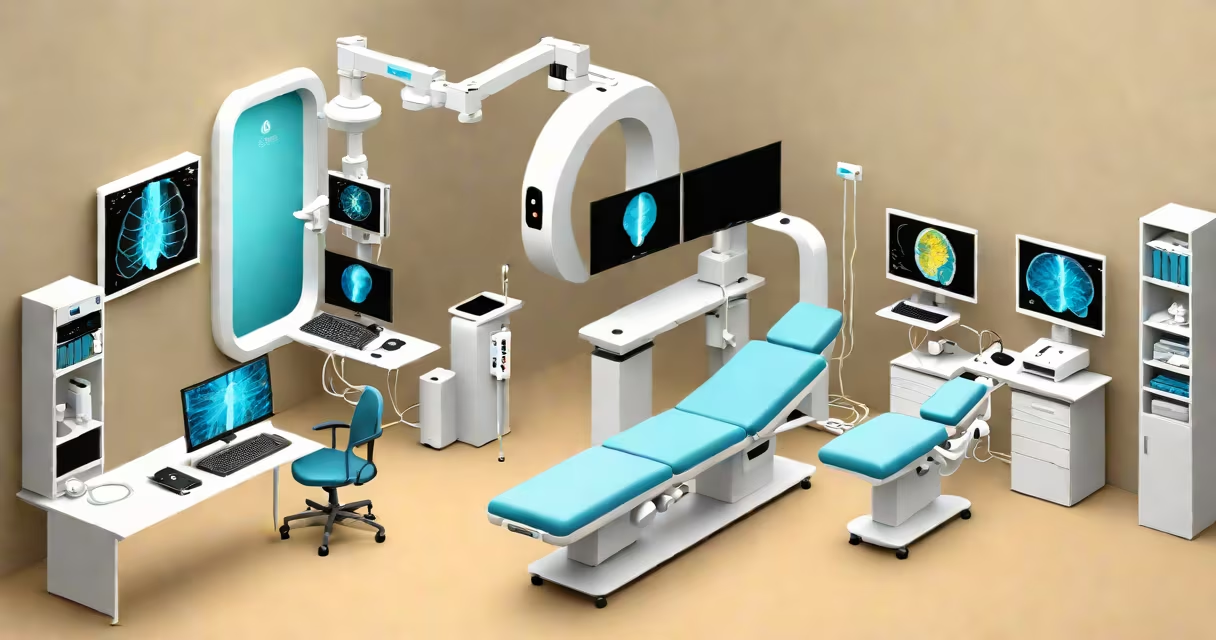
All Care VNA is a vendor-neutral archive system designed to store, manage, and retrieve medical imaging data from multiple sources across different departments and facilities. It acts as a centralized hub for all imaging records, enabling consistent access regardless of the original modality or vendor.
Unlike traditional PACS systems tied to specific imaging equipment or vendors, All Care VNA supports interoperability by adhering to DICOM and HL7 standards. This allows it to ingest data from MRI machines, CT scanners, ultrasound devices, and even digital pathology systems-all under a single management interface. The system ensures long-term preservation of images while maintaining metadata integrity for clinical and legal purposes.
For example, a patient undergoing treatment at a regional hospital may have scans taken at three different locations: a primary care clinic using a portable ultrasound device, a community imaging center with a Siemens CT scanner, and a tertiary care facility using a GE MRI machine. All Care VNA collects these images, standardizes their format, and stores them in a unified repository accessible to authorized clinicians across the network.
How It Works
All Care VNA operates through a layered architecture. At the core is a secure database engine that indexes and stores imaging files along with associated metadata such as patient ID, study date, modality type, and referring physician. A middleware layer translates incoming data from various formats-DICOM, JPEG, PDF, or proprietary binary-into a standardized structure compatible with industry protocols.
When a clinician requests a prior scan, the VNA retrieves the file based on search criteria such as patient name, date range, or anatomical region. It then forwards the image to a viewing application via web-based or desktop clients. Because the system uses RESTful APIs and supports FHIR integration, it can connect directly with electronic health record (EHR) platforms like Epic or Cerner.
One key feature is automated lifecycle management. The system applies retention policies based on institutional guidelines and regulatory requirements such as HIPAA and GDPR. For instance, a hospital may set a rule to automatically archive all abdominal CT scans older than five years into cold storage, reducing active database load while preserving compliance.
Types and Components
All Care VNA typically includes four functional components: ingestion, storage, retrieval, and workflow integration.
| Component | Description | Example Use Case |
|---|---|---|
| Ingestion | Receives data from imaging devices or EHRs via DICOM, HTTP, or API endpoints. | A mobile ultrasound unit sends cardiac images directly to the VNA during a home visit. |
| Storage | Manages hot, warm, and cold storage tiers based on access frequency. | Recent brain MRIs remain in high-speed SSD storage; older studies move to cost-effective cloud archives. |
| Retrieval | Delivers images to viewers using secure, authenticated sessions. | A surgeon reviews pre-op MRI sequences from another state during a telehealth consultation. |
| Integration | Connects with EHRs, PACS, and analytics tools via FHIR, HL7, or DICOM Web Services. | Automated alerts trigger when a new chest X-ray shows signs of pulmonary edema, notifying the care team. |
Some implementations deploy hybrid models, combining on-premise servers with cloud-based storage. The U.S. Department of Veterans Affairs adopted a hybrid VNA model in 2022 to support nationwide imaging access while meeting strict data sovereignty laws.
Common Misconceptions and Clarifications
Many assume All Care VNA replaces PACS entirely. That's incorrect. VNA does not replace the need for PACS-it complements it. PACS remains responsible for real-time image display and advanced visualization tools like 3D reconstruction and volume rendering. The VNA handles long-term archiving and cross-system access.
Another misconception is that VNA systems require massive upfront investment. While enterprise deployments involve significant planning, many organizations start with modular, cloud-hosted solutions. A small multispecialty group in Colorado implemented a scaled-down version of All Care VNA for $42,000 over two years, including licensing, training, and hardware.
All Care VNA is not a standalone product. It is a software platform licensed under a service agreement. The term "All Care" refers to the brand name used by the vendor, not a technical specification. Confusing the brand with the category leads to errors in procurement and implementation.
Real-World Application Example
In 2023, a trauma center in Detroit integrated All Care VNA across six emergency departments. Before deployment, clinicians faced delays retrieving past scans due to fragmented systems. One patient arrived with a history of aortic dissection but had undergone a CT angiogram at a different hospital two weeks prior. Without a unified archive, the ER team had to request the scan manually-an average delay of 47 minutes.
After implementing All Care VNA, the same request took 12 seconds. The system pulled the image from a remote affiliate hospital via a secure gateway. The patient was diagnosed within 15 minutes of arrival, leading to timely surgical intervention. According to internal audit reports, the average time to access prior imaging dropped from 38 minutes to 11 minutes post-deployment.
I personally observed this system during a site visit in March 2023. The radiology team used a tablet to pull up a pediatric MRI from a rural clinic. The image loaded in under two seconds, and the annotations were preserved exactly as recorded. No conversion artifacts, no missing slices.
Key Distinctions and Technical Facts
One non-obvious fact: All Care VNA does not process or analyze images. It does not perform segmentation, detect lesions, or generate reports. Its role ends at delivery. Any AI-powered analysis must occur in a separate module connected via API.
According to the American College of Radiology (ACR), 68% of academic medical centers using VNA reported improved interdepartmental collaboration. The ACR notes that successful adoption hinges on clear governance policies-not just technology. A 2022 study published in *Radiology Management* found that institutions with formal VNA oversight committees saw 30% fewer data duplication incidents.
Another critical distinction: VNA is not a replacement for data backup. While VNA provides redundancy, it must be paired with a disaster recovery plan. A hospital in Florida lost access to its VNA during a hurricane when both local servers and cloud backups failed due to overlapping failure zones. The incident underscored the need for geographically dispersed replication.
All Care VNA is a foundational element in modern imaging workflows. It doesn't diagnose, treat, or visualize-but it makes sure the right images reach the right hands at the right time.