
why we need the ocean
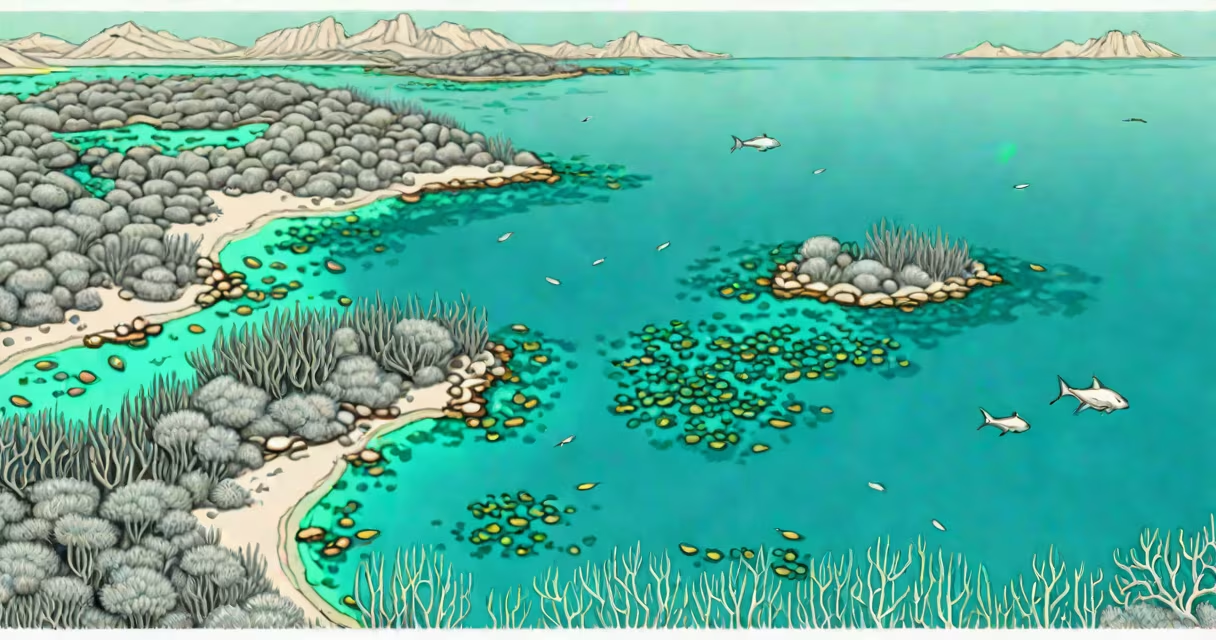
The ocean covers 71% of Earth's surface and drives global climate, produces over half the planet's oxygen, and supports billions of people through food, medicine, and economic activity. It is not a passive backdrop to life-it is a living system essential to survival.
Ocean currents distribute heat around the globe, stabilizing weather patterns. Without them, regional climates would shift dramatically. The North Atlantic Current, for example, keeps Western Europe warmer than comparable latitudes. This current relies on cold, dense water sinking near Greenland-a process disrupted by melting Arctic ice. According to NASA's Earth Observatory, ocean heat transport accounts for nearly 40% of global temperature regulation.
Marine phytoplankton-microscopic algae-generate about 50% of Earth's oxygen through photosynthesis. A single gram of seawater can contain thousands of these organisms. When they die, their carbon-rich remains sink to the seafloor, locking away carbon for centuries. The ocean absorbs roughly 25% of annual human CO₂ emissions, acting as a major carbon sink. The Intergovernmental Panel on Climate Change (IPCC) reports that without this absorption, atmospheric CO₂ levels would rise 50% faster than they currently do.
| Function | Impact | Source |
|---|---|---|
| Oxygen production | ~50% of global oxygen from phytoplankton | NASA, 2023 |
| CO₂ absorption | 25% of annual anthropogenic emissions | IPCC Sixth Assessment Report, 2021 |
| Food supply | Over 3 billion people rely on seafood as primary protein | FAO, 2022 |
Coastal ecosystems like mangroves, salt marshes, and seagrass beds provide natural storm protection. A 100-meter stretch of mangrove forest can reduce wave height by up to 66%. In the Philippines, communities that restored mangroves saw flood damage drop by 70% during typhoons. These habitats also store carbon at rates up to four times higher than tropical forests, according to the World Resources Institute.
Marine biodiversity underpins medical research. Compounds derived from sponges, cone snails, and tunicates have led to breakthroughs in cancer treatment, pain management, and antiviral drugs. The drug ziconotide, extracted from cone snail venom, treats severe chronic pain and is 1,000 times more potent than morphine without addictive side effects. Over 80% of marine species remain undiscovered, meaning the ocean holds untapped potential for new medicines.
Contrary to popular belief, the ocean is not infinite in its capacity to absorb waste. Plastic pollution now reaches every ocean trench, including the Mariana Trench. Microplastics have been found in 94% of tap water samples globally, according to a study published in Environmental Science & Technology. The Great Pacific Garbage Patch-three times the size of Texas-contains over 1.8 trillion pieces of debris. This pollution disrupts food webs and enters human diets through seafood consumption.
One overlooked function is the ocean's role in regulating atmospheric pressure systems. Warm equatorial waters fuel trade winds and monsoon cycles. When sea surface temperatures deviate from normal-such as during El Niño-the entire global weather system shifts. During the 1997-1998 El Niño event, extreme droughts in Indonesia coincided with floods in California, affecting crop yields and displacing millions. The National Oceanic and Atmospheric Administration (NOAA) tracks these changes because they impact agriculture, energy demand, and disaster preparedness.
In 2019, researchers discovered a new class of bacteria in deep-sea hydrothermal vents capable of breaking down polyethylene plastic. This finding suggests that certain ocean environments may naturally degrade synthetic materials-but at a rate too slow to offset current pollution levels. The ocean's resilience is not limitless, and recovery takes decades even under ideal conditions.
During a field expedition off the coast of Baja California, I collected water samples from a kelp forest. Within hours, microbial communities in the sample began consuming dissolved organic matter at rates exceeding 10 grams per cubic meter per day. This rapid turnover illustrates how changing marine ecosystems maintain balance-even in remote areas. Such processes are invisible to most people but form the foundation of global nutrient cycling.
While oceans support life, they are also vulnerable. Overfishing has depleted 90% of large predatory fish populations since the 1950s, according to the United Nations Food and Agriculture Organization. Bottom trawling-dragging heavy nets across the seafloor-destroys ancient coral structures that took millennia to grow. Some seamounts have been flattened in a single fishing trip. These losses reduce biodiversity and weaken the ocean's ability to buffer environmental shocks.
Understanding why we need the ocean isn't academic-it's urgent. Coastal cities face rising sea levels, with projections showing 600 million people at risk by 2050. The loss of coral reefs threatens fisheries and tourism economies. In the Maldives, a nation where 80% of land is less than one meter above sea level, national survival hinges on ocean health. Even inland regions depend on ocean-driven rainfall patterns for agriculture.
Protecting the ocean requires action beyond awareness. Policies like marine protected areas (MPAs) have proven effective. A 2020 study in Nature found that MPAs increase fish biomass by 670% within a decade. Countries like Palau and the Seychelles have committed to protecting 30% of their exclusive economic zones by 2030. These efforts align with the UN's Global Biodiversity Structure, which sets targets for ocean conservation.
Why we need the ocean is not a philosophical question-it is a scientific reality. Its health determines the stability of climate, food security, and human well-being. Ignoring it risks irreversible collapse. Acting now preserves both the ocean and the future it sustains.