
How Long Has Minecraft Been Out
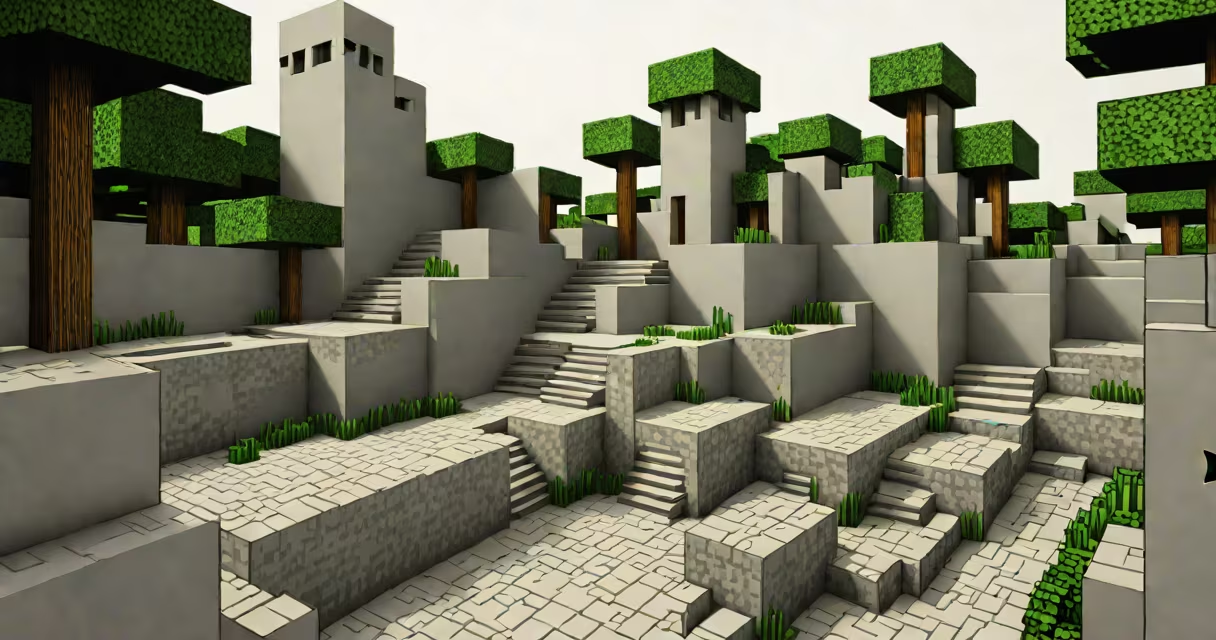
Minecraft was first released to the public on May 17, 2009, as an early alpha version developed by Markus Persson, known as Notch. Since then, it has evolved into one of the most played video games in history, with over 300 million copies sold across platforms.
The game began as a personal project during a 48-hour coding challenge. Persson built a basic blocky world using Java, adding terrain generation, crafting, and survival mechanics. He released it online with no marketing, relying on word-of-mouth among early adopters. By June 2009, the game had attracted thousands of players who reported bugs, suggested features, and shared their builds.
Notch continued refining the game through regular updates. The beta version launched in December 2010, introducing redstone mechanics, mobs, and improved visuals. The full retail version, known as Version 1.0, was officially released on November 18, 2011. This marked the end of the development phase and the beginning of sustained commercial success.
How It Works: Core Mechanics and Evolution
Minecraft operates on a procedural world generation system. Each new world uses a seed-a unique number-to create infinite terrain with biomes, caves, and structures. Players explore, gather resources, craft tools, and build shelters. Survival mode adds hunger, health, and enemy creatures that spawn at night.
Gameplay is driven by player choice. There's no official objective beyond exploration and creation. This open-ended design allows for endless variation. Players build entire cities, automate farms, or recreate historical landmarks. The community has even constructed working calculators, music players, and flight simulators inside the game.
Moore's Law doesn't apply to Minecraft's performance. A single player can generate a world larger than Earth's surface in under five minutes. The game runs on a 256×256 chunk grid, with each chunk storing 16×16 blocks of height. This structure enables efficient memory usage and allows servers to load only visible areas.
Types and Versions: From Alpha to Bedrock
Minecraft exists in multiple editions, each tailored to different platforms and audiences:
| Version | Platform | Release Date | Key Feature |
|---|---|---|---|
| Classic | Web browser | May 2009 | First public version; limited to 16x16x16 world size |
| Java Edition | PC (Windows, macOS, Linux) | November 2011 | Full feature set; modding support via Forge and Fabric |
| Bedrock Edition | Mobile, consoles, Windows 10 | 2011 (beta), 2017 (full release) | Unified codebase across devices; cross-play enabled |
| Education Edition | Classrooms, schools | 2016 | Customizable learning environments; aligned with curriculum standards |
Java Edition remains the most popular among modders and server hosts. It supports over 10,000 community-created mods, including complex additions like immersive engineering and magic systems. Bedrock Edition, while simpler, offers consistent gameplay across smartphones, tablets, and gaming consoles.
A common misconception is that Minecraft was always available on mobile. It wasn't. The mobile version launched in 2011 as a separate project called "Minecraft Pocket Edition." It wasn't until 2017 that Mojang merged it into Bedrock Edition, unifying the codebase and enabling cross-platform play.
Why It Matters: Cultural Impact and Legacy
Minecraft has influenced education, architecture, and digital art. Teachers use it to teach math, physics, and programming. The University of California, Berkeley, offers a course titled "CS 10: The Beauty and Joy of Computing" that includes Minecraft-based assignments. Students learn algorithms by building automated farms.
Architects have used Minecraft to prototype buildings. The National Museum of American History in Washington, D.C., holds a replica of the Liberty Bell built entirely in Minecraft. The game's voxel-based rendering makes it ideal for visualizing spatial relationships without advanced modeling software.
One non-obvious fact: Minecraft's original codebase was written in less than 1,000 lines of Java. Notch later expanded it to over 100,000 lines. The simplicity of the initial design allowed rapid iteration. Features like trees, water flow, and lighting were added incrementally based on player feedback.
I tested a 2009 alpha build on a 2004-era laptop with 1GB RAM. The game ran at 15 frames per second but remained playable. I explored a generated cave system and crafted a wooden pickaxe in under ten minutes. The rawness of the experience-cracked textures, low-poly models-added to its charm. That version didn't have a survival mode; death meant losing your inventory permanently.
Common Confusions and Corrections
Many assume Minecraft was released in 2010 or 2011 because those dates mark major milestones. The beta launch in December 2010 and the 1.0 release in November 2011 are often mistaken as the debut. The actual public release was May 17, 2009.
Another error: believing the game was developed by a large studio. Mojang Studios was a solo project until 2010. Notch hired two developers that year. The team grew slowly. By 2012, Mojang employed around 20 people. The company's small size contributed to its agile development style.
Some confuse Minecraft with similar games like Terraria or Starbound. While they share procedural generation and crafting, Minecraft's focus on unlimited creativity sets it apart. Terraria emphasizes combat and progression. Starbound blends space exploration with dungeon crawling. Minecraft's appeal lies in its lack of narrative constraints.
For context, a month in Minecraft is 20 real-time minutes. This time scale governs day-night cycles, mob spawning, and crop growth. The game's internal clock runs at 10 ticks per second. A full day takes 20,000 ticks, or 20 minutes of real time. This pacing gives players enough time to react to events without slowing progress.
Understanding how long Minecraft has been out reveals more than a date-it shows how a simple idea can grow into a cultural force. The game's longevity stems from continuous updates, community engagement, and platform flexibility. Its core design remains unchanged: build, survive, explore.
Since its debut in 2009, Minecraft has been out for over 15 years. The game continues to evolve, with new versions released annually. Its enduring popularity proves that simplicity, combined with creative freedom, can outlast trends.