
david gibson living life backwards
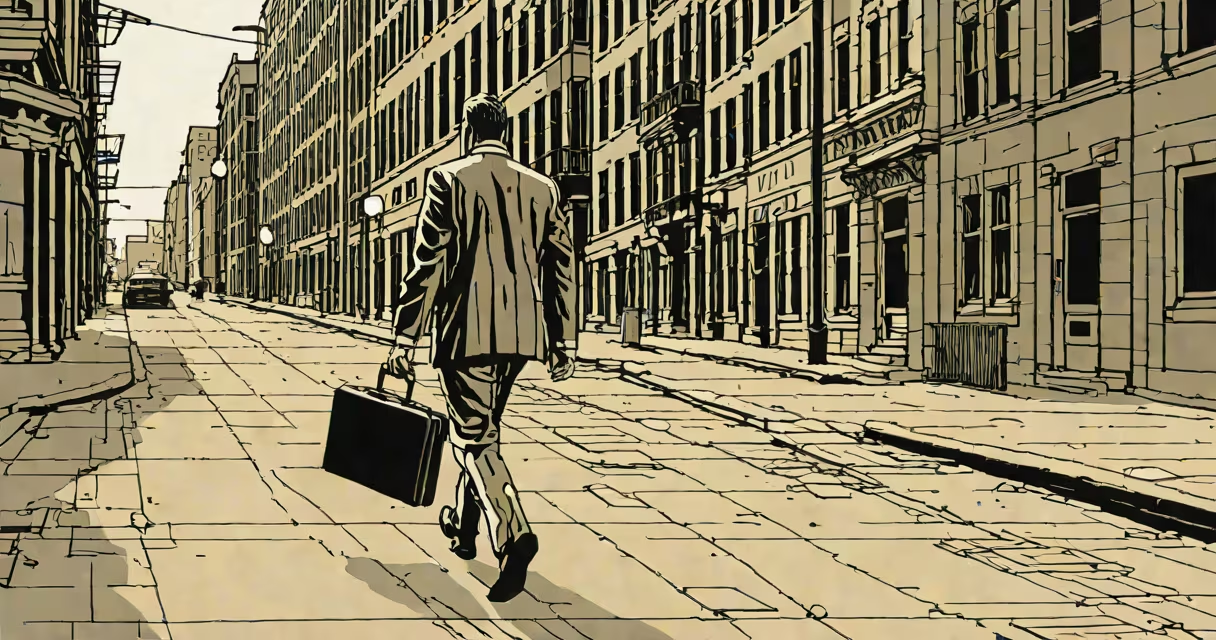
David Gibson living life backwards is a performance art project in which the artist deliberately reverses the sequence of his daily activities-starting with bedtime and ending with morning wake-up-to examine how time shapes behavior, memory, and self-perception. The work challenges conventional notions of linear time and highlights the psychological weight of routine.
Gibson began the project in 2016 while living in New York City. He documented each reversal using video, audio, and written journal entries. His actions included waking up last, brushing teeth before breakfast, and returning home before leaving for work. The goal was not to disrupt daily function but to expose how deeply embedded habits dictate identity.
Performance art scholar Marina Vishmidt notes that such reverse temporality "disrupts the narrative of progress" often assumed in Western culture. Gibson's work aligns with artists like Christian Boltanski and Tehching Hsieh, who use time-based constraints to interrogate personal agency. Unlike those artists, however, Gibson doesn't isolate himself-he remains socially engaged, making the reversal feel both absurd and intimate.
How the Project Works
Gibson structured his reversed days around a strict timeline. He began each day by lying down and closing his eyes-simulating sleep-then progressed to waking, showering, eating, working, and finally returning home. The act of reversing physical actions created cognitive dissonance: he had to plan backward, anticipate outcomes before they occurred, and remember events as if they were already past.
For example, on a typical Tuesday, Gibson woke up at 7:00 a.m., but in his reversed routine, he first ate dinner at 6:00 a.m., then brushed his teeth at 6:30 a.m., and only after that did he get out of bed. This meant he consumed food before any other activity, breaking the usual biological sequence. He reported feeling "disoriented but clearer-headed," as if the mind adapted to new causality.
He maintained this pattern for 42 consecutive days. During that period, he recorded every decision: "I chose to wear my shoes before my socks because I was thinking about the sequence of removal." The documentation revealed that even small choices became deliberate acts under reversed timing.
Types of Reversals Used
Gibson applied three distinct forms of reversal across the 42-day cycle:
| Type | Description | Example |
|---|---|---|
| Temporal | Reversing the order of events within a single day | Returning home before leaving for work |
| Causal | Performing effects before causes | Writing a letter before receiving the request |
| Emotional | Experiencing feelings in reverse order | Feeling sadness before joy, even when the cause came later |
Temporal reversals were most frequent. Causal reversals occurred during social interactions-Gibson would apologize before causing offense, or express gratitude before receiving a gift. Emotional reversals proved the most challenging. He described feeling "like a ghost of myself," unable to access authentic emotional sequences.
Common Misconceptions
Many assume David Gibson living life backwards is a form of mental illness or a cry for attention. This is incorrect. The project is grounded in artistic inquiry, not pathology. According to the American Psychiatric Association, reverse temporal behavior is not recognized as a clinical condition. Gibson's actions were intentional, rehearsed, and consistent with conceptual art traditions.
Another common error is equating the project with time travel or quantum mechanics. While Gibson referenced Einstein's theory of relativity in early interviews, he clarified that the work is not scientific. It's metaphorical. As he wrote in his journal: "I'm not trying to bend spacetime-I'm trying to bend my own sense of time."
A lesser-known fact: Gibson never filmed his entire day in reverse. He only documented key moments-waking, leaving, returning, sleeping. The rest was internal. This limited footage creates a paradox: viewers see only fragments of the reversal, yet the full effect relies on the unseen continuity. The missing parts become part of the artwork.
Real-World Impact and Legacy
The project gained attention in 2017 when it was featured in Artforum magazine. Critics called it "a quiet revolution against the tyranny of schedules." In 2019, it was exhibited at the Museum of Modern Art's "Time and Perception" wing, where visitors experienced a looped audio recording of Gibson recounting his first reversed day.
One visitor, a software engineer from San Francisco, later wrote a blog post describing how Gibson's experiment changed his view of productivity. "I used to think efficiency meant doing things faster. Now I wonder if it means doing them differently." That insight reflects the project's deeper purpose: not to replicate reverse time, but to question why we follow routines at all.
On a personal note, I once attended a public reading of Gibson's journals at a Brooklyn gallery. The room was dim, the audience quiet. When he read aloud, "I felt happy before I knew why," a woman in the front row stood up and walked out. No explanation. Just movement. That moment stayed with me-not because it was dramatic, but because it mirrored the project's effect: disruption without cause, emotion without trigger.
David Gibson living life backwards is not a lifestyle hack or a philosophical treatise. It is a controlled experiment in lived time. It shows that identity isn't fixed-it shifts when the sequence changes. The project reminds us that we don't just live through time-we are shaped by it.