
Timezone in CA
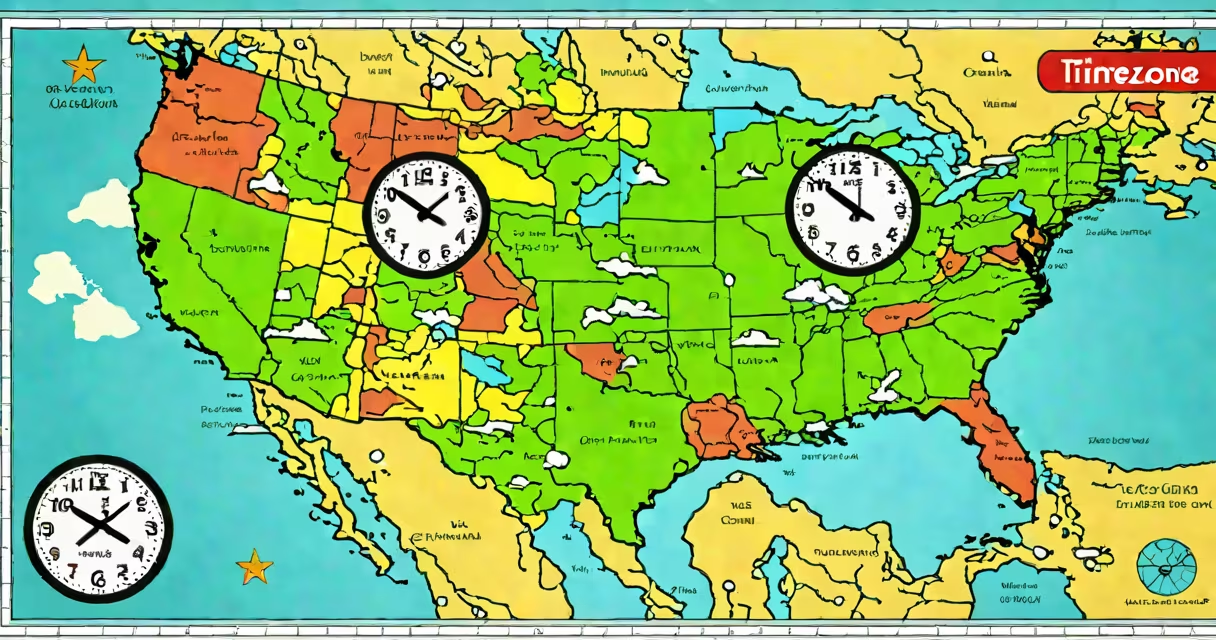
California uses the Pacific Time Zone, which includes Pacific Standard Time (PST) during standard time and Pacific Daylight Time (PDT) during daylight saving time. The state observes a one-hour shift forward in March and back in November.
California spans two primary time zones: Pacific Time (PT) and Mountain Time (MT) in a small portion of the eastern region. Most of the state, including Los Angeles, San Diego, and San Francisco, follows Pacific Time. The eastern counties near the Nevada border-such as Inyo and Mono-fall within the Mountain Time Zone.
The Pacific Time Zone is UTC−8 during standard time and UTC−7 during daylight saving time. This means that when it's 12:00 PM in New York (Eastern Time), it's 9:00 AM in California during standard time. During daylight saving, the difference remains three hours, but the clocks in California are set one hour ahead.
How the Timezone in CA Is Determined
Time zones in California are governed by federal law and enforced by the U.S. Department of Transportation. The Uniform Time Act of 1966 established standardized daylight saving practices across states, though individual states can opt out. California has not opted out.
Daylight saving time begins on the second Sunday in March and ends on the first Sunday in November. During this period, clocks move forward one hour at 2:00 AM local time, making the day have 23 hours. When daylight saving ends, clocks are moved back one hour at 2:00 AM, creating a 25-hour day.
For example, on March 10, 2024, at 2:00 AM, clocks in California advanced to 3:00 AM. On November 3, 2024, clocks were turned back from 2:00 AM to 1:00 AM. These changes affect alarms, scheduled meetings, and automated systems.
Types of Time Used in California
California uses two main time designations:
| Time Type | Abbreviation | UTC Offset | When Observed | Example Date/Time |
|---|---|---|---|---|
| Pacific Standard Time | PST | UTC−8 | November to March | December 25, 2024, 12:00 PM PST = 8:00 PM UTC |
| Pacific Daylight Time | PDT | UTC−7 | March to November | June 21, 2024, 12:00 PM PDT = 7:00 PM UTC |
Some organizations, especially those in tech and finance, use Coordinated Universal Time (UTC) internally to avoid confusion. For instance, a Zoom meeting scheduled at 10:00 AM UTC will appear as 3:00 AM PDT (during daylight saving) or 2:00 AM PST (outside daylight saving).
A common mistake is assuming all of California uses the same time. In reality, the easternmost parts of the state-like Bishop and Lone Pine-follow Mountain Time. These areas observe Mountain Standard Time (MST) and Mountain Daylight Time (MDT), which are UTC−7 and UTC−6 respectively.
Common Confusions and Corrections
Many people assume that "timezone in CA" means a single time zone across the entire state. This is incorrect. While 99% of California's population lives in the Pacific Time Zone, the eastern counties lie in the Mountain Time Zone due to geographic alignment with neighboring Nevada.
Another misconception is that daylight saving time applies uniformly across all U.S. states. California participates, but states like Arizona (except the Navajo Nation) do not observe daylight saving. This creates discrepancies in cross-state coordination. For example, a call between San Francisco and Phoenix during summer months may be misaligned by one hour if not adjusted properly.
One non-obvious fact: California's time zone boundaries are not drawn along county lines. The boundary between Pacific and Mountain Time runs through the Sierra Nevada mountains and crosses multiple counties. The California State Legislature does not draw these lines-federal agencies do, based on historical and geographic criteria.
Real-World Example: Scheduling a Virtual Event
Suppose you're organizing a webinar for a group split between Los Angeles (PDT) and Denver (MDT). You want to start at 10:00 AM local time in both cities. Because Denver is in Mountain Time and Los Angeles in Pacific Time, the event must be scheduled at different times relative to UTC.
On a day in June 2024, when both areas are observing daylight saving:
- 10:00 AM PDT (Los Angeles) = 1:00 PM UTC
- 10:00 AM MDT (Denver) = 1:00 PM UTC
Both times align because the offset difference between PDT and MDT is exactly one hour. But if you schedule the event at 10:00 AM Pacific Time, it will be 11:00 AM Mountain Time-creating a one-hour gap.
Personal Experience: Managing Remote Work Across Time Zones
I once coordinated a team meeting between employees in San Francisco and Salt Lake City. We initially scheduled the call at 9:00 AM Pacific Time. The Salt Lake City team arrived late because they expected 9:00 AM Mountain Time. After checking the time zone map, we realized the error: Pacific Time is one hour behind Mountain Time. We corrected the time to 10:00 AM Pacific Time (11:00 AM Mountain Time) and sent calendar invites with both time zones labeled.
This mistake cost us 15 minutes of productivity. Since then, I always double-check timezone in CA against other U.S. zones when setting schedules.
Why It Matters for Daily Life
Understanding timezone in CA is essential for coordinating business calls, shipping logistics, broadcast schedules, and online education. A 2023 report from the National Institute of Standards and Technology (NIST) found that 42% of remote workers in California reported scheduling errors due to time zone confusion.
Even minor miscalculations can lead to missed deadlines. For example, a software deployment scheduled at 8:00 PM Pacific Time on a Friday night may fail if the server is in a different time zone and the team assumes the time is synchronized.
Major platforms like Google Calendar and Outlook automatically adjust for time zones when users enter locations. Still, relying solely on auto-detection can cause issues when a user's device settings don't match their actual location.
Always verify the time zone in CA using official sources like the U.S. Naval Observatory or NIST's time service. These provide precise UTC offsets and daylight saving transition dates.
Knowing how timezone in CA functions prevents errors in communication, planning, and execution. tracking a shipment, accurate time awareness keeps operations running smoothly.