
Perpetual Motion Definition
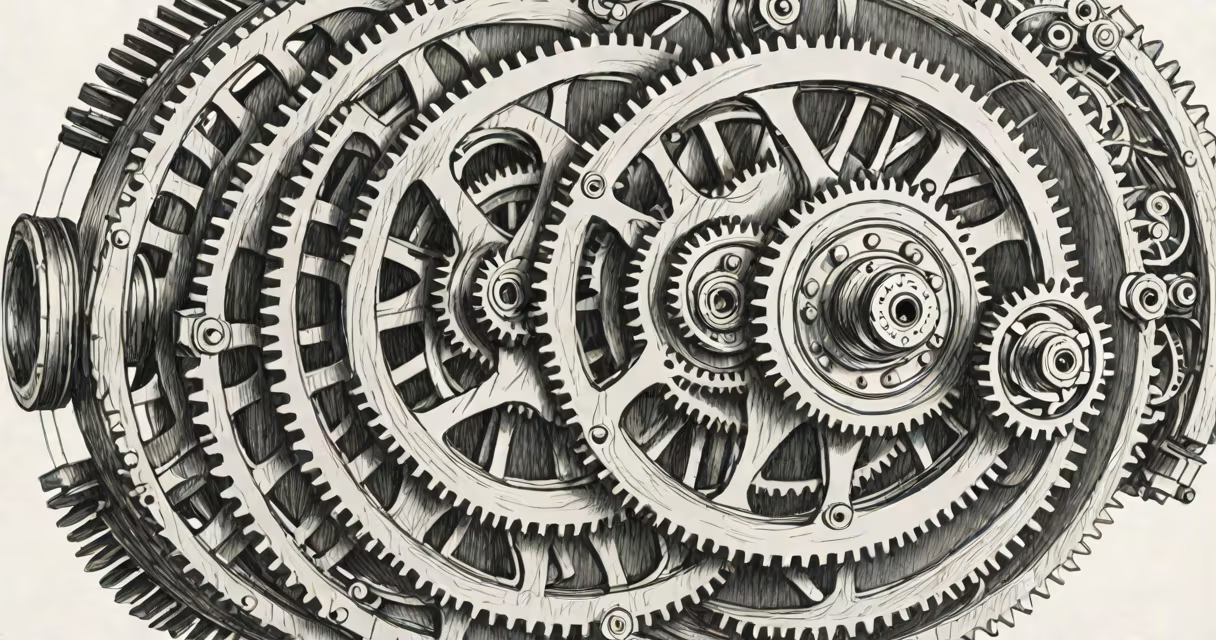
A perpetual motion definition refers to a hypothetical machine that operates indefinitely without energy input, producing work continuously. Such systems violate the laws of thermodynamics and cannot exist in reality.
Perpetual motion machines are often imagined as devices that spin forever or generate power endlessly without fuel. They appear in early scientific thought, speculative fiction, and engineering sketches. However, no such machine has ever been built, and none can be built under known physical laws.
The concept persists in popular culture, sometimes misrepresented as a viable energy solution. In truth, perpetual motion contradicts both the first and second laws of thermodynamics, which govern energy transfer and entropy. Any claim of perpetual motion requires rejecting established science.
How Perpetual Motion Is Supposed to Work
Proponents of perpetual motion imagine a system where friction, air resistance, and energy loss are eliminated. A wheel set in motion would keep turning forever. Gears would transfer motion without wear. Magnetic fields or gravity might sustain rotation.
For example, a common design involves a weighted wheel with off-center masses. The idea is that the heavier side always pulls down, causing continuous rotation. But in practice, the torque imbalance reverses before completing a full turn. Energy lost to heat and sound prevents sustained motion.
Even in vacuum chambers with superconducting bearings, systems eventually slow due to quantum effects and residual electromagnetic interactions. No environment eliminates all energy dissipation.
Why It's Impossible: The Laws That Stop It
The first law of thermodynamics states that energy cannot be created or destroyed. A perpetual motion machine would have to produce output work without consuming input energy. This violates conservation of energy.
The second law adds that entropy-the measure of disorder-must increase in isolated systems. Any real machine loses usable energy as heat. Over time, motion stops because energy disperses into unusable forms.
According to the National Institute of Standards and Technology (NIST), "Perpetual motion machines are impossible because they violate the fundamental principles of energy conservation and entropy." The American Physical Society confirms that "no machine can operate indefinitely without energy input."
Types of Perpetual Motion Machines
Engineers classify perpetual motion machines into three categories based on their claimed violation:
| Type | Claimed Function | Violates | Example |
|---|---|---|---|
| First-kind | Creates energy from nothing | First law of thermodynamics | Self-powered generator using magnets |
| Second-kind | Converts heat entirely to work | Second law of thermodynamics | Heat engine with 100% efficiency |
| Third-kind | Runs forever without energy loss | Both laws | Frictionless spinning wheel |
No type is feasible. Even if friction vanished, quantum fluctuations and thermal radiation would still drain energy. The universe does not allow closed systems to gain net energy.
Common Misconceptions and Confusions
People often confuse perpetual motion with long-lasting motion. A well-designed flywheel can rotate for hours with minimal loss. But it still slows and stops. It doesn't produce work-it stores kinetic energy.
Some believe magnetic levitation enables perpetual motion. While magnets can suspend objects without contact, they don't eliminate energy loss. Air resistance, eddy currents, and vibration still dissipate energy. A magnetically suspended rotor in a vacuum may last longer-but not infinitely.
Another error is equating perpetual motion with renewable energy. Solar panels, wind turbines, and hydroelectric dams provide continuous power-but they rely on external inputs: sunlight, wind, water flow. They do not violate thermodynamics.
Real-World Examples and Lessons
In 1906, the U.S. Patent Office rejected a patent application for a perpetual motion machine. The examiner noted: "The invention is not new, nor useful, nor patentable." Since then, the office has denied thousands of similar applications.
I once observed a museum exhibit featuring a 19th-century "self-running" clock powered by a falling weight. The mechanism was clever-gears redirected the weight's fall to reset itself. But the weight had to be manually lifted every few days. The device wasn't self-sustaining. It demonstrated how easily people misinterpret motion as perpetual effort.
Even advanced systems like atomic clocks or quantum oscillators aren't perpetual. They require constant calibration and energy input. Their stability comes from precise control, not infinite operation.
What You Should Know Instead
Instead of seeking perpetual motion, focus on energy efficiency. Modern systems maximize output while minimizing waste. Heat pumps, regenerative braking, and low-friction materials reduce losses-but never eliminate them.
When evaluating a device claiming perpetual motion, ask: Where does the energy come from? How is friction overcome? What happens when the system interacts with its environment?
If the answer relies on idealized conditions-zero friction, perfect insulation, infinite space-then it's theoretical, not practical. Real physics demands trade-offs.
Understanding the perpetual motion definition clarifies why energy cannot be free. It's not a limitation of engineering-it's a rule of nature. The search for perpetual motion reveals more about human imagination than about physical possibility.