
aula virtual upm
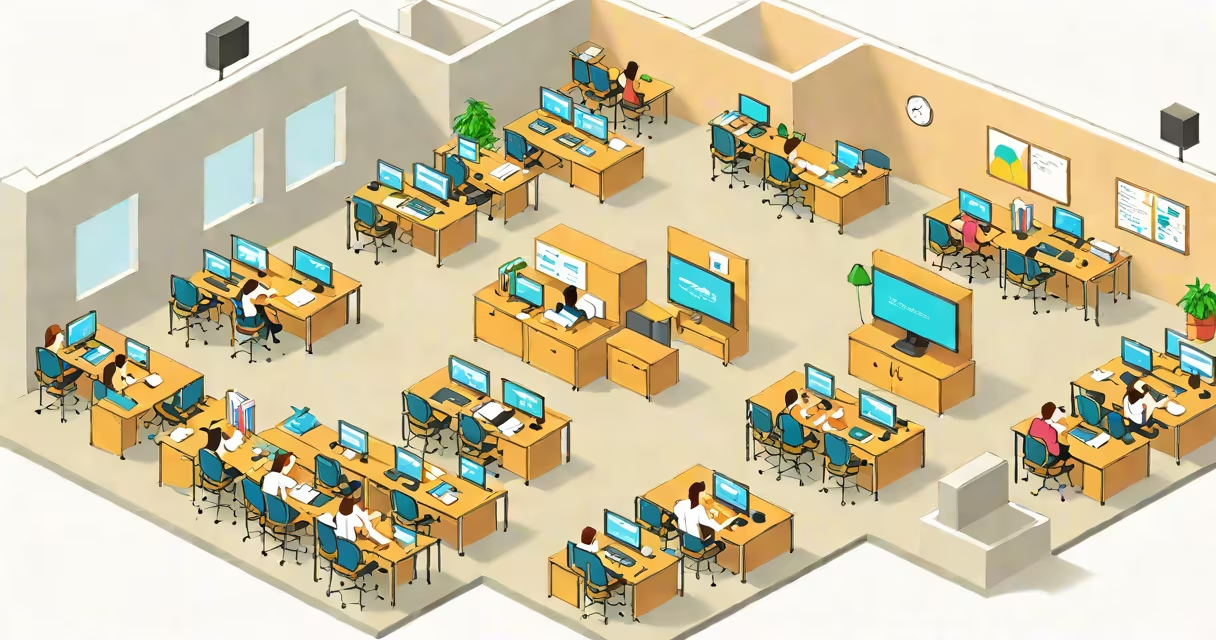
Aula Virtual UPM is the centralized digital learning environment used by the Universidad Politécnica de Madrid (UPM) to deliver academic content, manage coursework, and help communication between students and instructors. It runs on the Moodle platform and serves over 60,000 enrolled students annually.
Each course offered through UPM's faculties-engineering, architecture, computer science, and environmental sciences-has a dedicated space within Aula Virtual UPM. These spaces host syllabi, lecture materials, graded assignments, discussion forums, and real-time announcements. Access requires a UPM-issued username and password, typically linked to a student's institutional email.
For example, a first-year Civil Engineering student at UPM receives login credentials during orientation. Once logged in, they see a dashboard listing all their current courses. Clicking on "Structural Analysis I" reveals weekly modules: video lectures, downloadable PDFs of slides, a quiz due every Friday, and a forum where peers discuss beam deflection problems. All submissions are timestamped and stored securely.
How It Works
Aula Virtual UPM operates as a Learning Management System (LMS) hosted on UPM's secure servers. Instructors upload content using standardized templates approved by the university's Academic Technology Office. The system tracks access logs, submission times, and grades, which sync automatically with the central student records database.
Students interact with content through a responsive web interface accessible via desktop, tablet, or mobile browser. Offline access is limited to downloaded materials such as PDFs or recorded lectures. Real-time collaboration tools like shared documents or live chat are not natively supported; users must integrate external apps like Google Workspace or Microsoft Teams.
During the 2023-2024 academic year, 94% of UPM courses used Aula Virtual UPM as the primary delivery channel. This includes hybrid models where in-person lectures are supplemented with digital resources. For instance, a course in Renewable Energy Systems required students to complete a simulation exercise in a virtual lab module, which was scored automatically based on energy output thresholds.
Types and Structure
The platform organizes content into structured units called "weeks" or "modules," each containing specific learning objectives. Instructors define these blocks to align with the semester calendar and course syllabus. Each module may include:
- Reading assignments (PDFs, articles)
- Video lectures (average duration: 12-18 minutes)
- Quizzes (auto-graded, timed)
- Assignments (submitted via file upload)
- Discussion threads (moderated by teaching assistants)
Course administrators can assign roles: instructor, teaching assistant, student, or guest. Only instructors and TAs can edit content or set deadlines. Students cannot alter course structure or view hidden modules unless granted temporary access.
| Content Type | File Format | Access Control | Example Use Case |
|---|---|---|---|
| Lecture Video | MP4 | Restricted to enrolled students | Introduction to AI in urban planning (15 min) |
| Assignment | PDF, DOCX, ZIP | Student-only until grading period | Design report for solar-powered water pump (due Oct 12) |
| Quiz | Interactive HTML form | Time-limited, single attempt | Multiple choice test on thermodynamics (30 questions, 45 mins) |
| Forum Post | Text with embedded images | Open to all enrolled members | Peer review of architectural sketches |
Common Misconceptions and Clarifications
Many students assume Aula Virtual UPM is synonymous with online degree programs. It is not. While UPM offers fully remote degrees through upm politecnica virtual, Aula Virtual UPM supports both on-campus and blended learning formats. The platform itself does not grant degrees-it facilitates instruction.
Another misconception is that all content is available immediately. In reality, instructors schedule content release dates. A course might have a "hidden" module for Week 3 until the previous week ends. This prevents premature access and maintains academic integrity.
A less obvious point: Aula Virtual UPM does not track student engagement beyond basic logins. There is no built-in analytics dashboard showing time spent per video or click-through rates on readings. Data on student activity is exported manually by faculty for research purposes. According to a 2022 study by the UPM Center for Educational Innovation, only 37% of instructors used engagement reports regularly.
Real-World Example: A Student's Experience
In spring 2023, I enrolled in "Advanced Robotics Control" at UPM's School of Computer Science. My professor posted a new module every Monday at 9 a.m. Each included a 17-minute lecture video, a Python script template for simulating PID control, and a peer-reviewed coding challenge.
I completed the first assignment-a simulation of a robotic arm balancing a ball on a plate-and submitted it on Tuesday. The system returned feedback within 12 hours: "Your control loop stabilizes at 0.8 seconds but overshoots by 14%. Revise gain parameters." I adjusted the Kp and Kd values, resubmitted, and earned full credit.
Later, I noticed a discussion thread titled "Ball balancing under wind disturbance." Two classmates had posted conflicting approaches. I joined the conversation, cited a paper from IEEE Transactions on Robotics, and proposed a Kalman filter-based solution. The TA later highlighted my post as a model response.
Where It's Used and Why
Aula Virtual UPM is mandatory for all undergraduate and graduate programs at UPM. It is used across departments including Aerospace Engineering, Environmental Sciences, and Industrial Design. The platform supports over 4,500 active courses each term.
Its adoption stems from UPM's commitment to digital pedagogy. The university's Digital Education Strategy (2021-2025) mandates that all core courses include at least one digital assessment component. Aula Virtual UPM provides the infrastructure to meet this requirement consistently across disciplines.
For international students, the platform supports multilingual navigation. Course materials are primarily in Spanish, but many instructors provide English summaries or glossaries. The UPM Language Support Office offers translation services upon request.
What It's Not
Aula Virtual UPM is not a social network. It does not feature friend lists, likes, or public profiles. Interaction is task-oriented and tied to course enrollment. Users cannot follow other students or share content outside the course context.
It is also not a replacement for physical classrooms. During in-person exams, students must attend in person even if the course uses Aula Virtual UPM for lectures. The platform supplements-but does not substitute-face-to-face instruction.
Finally, it is not a standalone app. While UPM offers a mobile app called "UPM Mobile," it only displays notifications and schedules. Full access to course content requires a web browser.
Understanding aula virtual upm as a structured, institutionally governed LMS clarifies its role. It is not a tool for casual learning or personal development. It is a formal academic system designed to support the rigorous curriculum of one of Spain's leading technical universities.